The artist’s retrospective at Museion marks what would have been his ninetieth birthday and aims at something like payback
In the Central Pavilion of the 1972 Venice Biennale, an edition that foregrounded participatory practices, Franco Vaccari presented Exhibition in Real Time No. 4, Leave a Photographic Trace of Your Passing on These Walls (1972): a functional photobooth plus a multilingual sign inviting visitors to use it, for a nominal fee, and pin their little portrait on the wall. By show’s end, 6,000 people had done so. The Modena-born Vaccari died last December, and if you know him at all it’s likely through the photobooth work. Otherwise he seems to have sought a fringe position in creative life, hewing to marginal modes of photography and film, displacing authorship and frequently switching stylistic approaches; in terms of legacy and art-historical recognition, this ducking-and-diving paid off too well. Feedback, a retrospective that distributes myriad lens-based works, installations, books, archival material, etc across two floors, marks what would have been his ninetieth birthday and aims at something like payback.
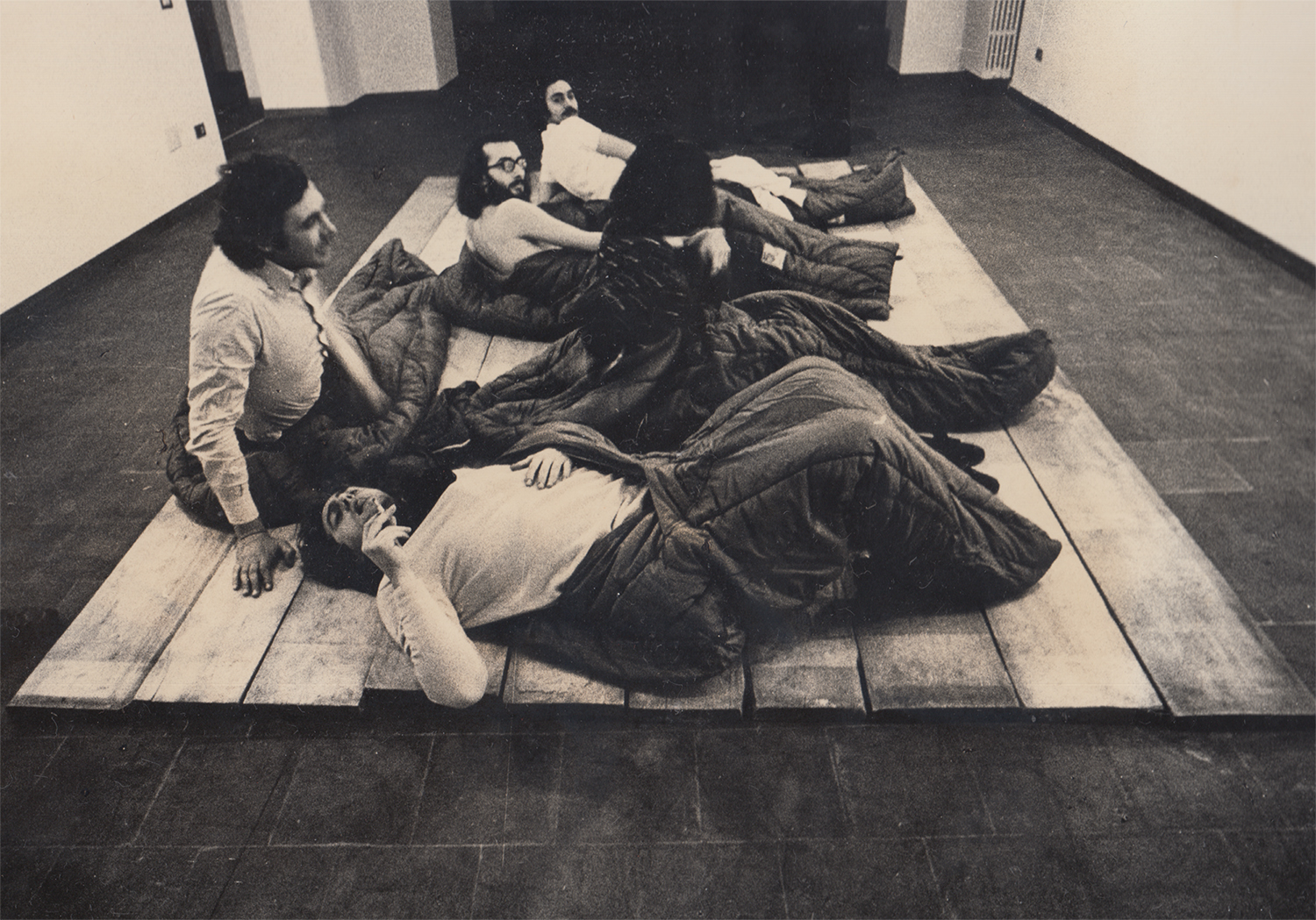
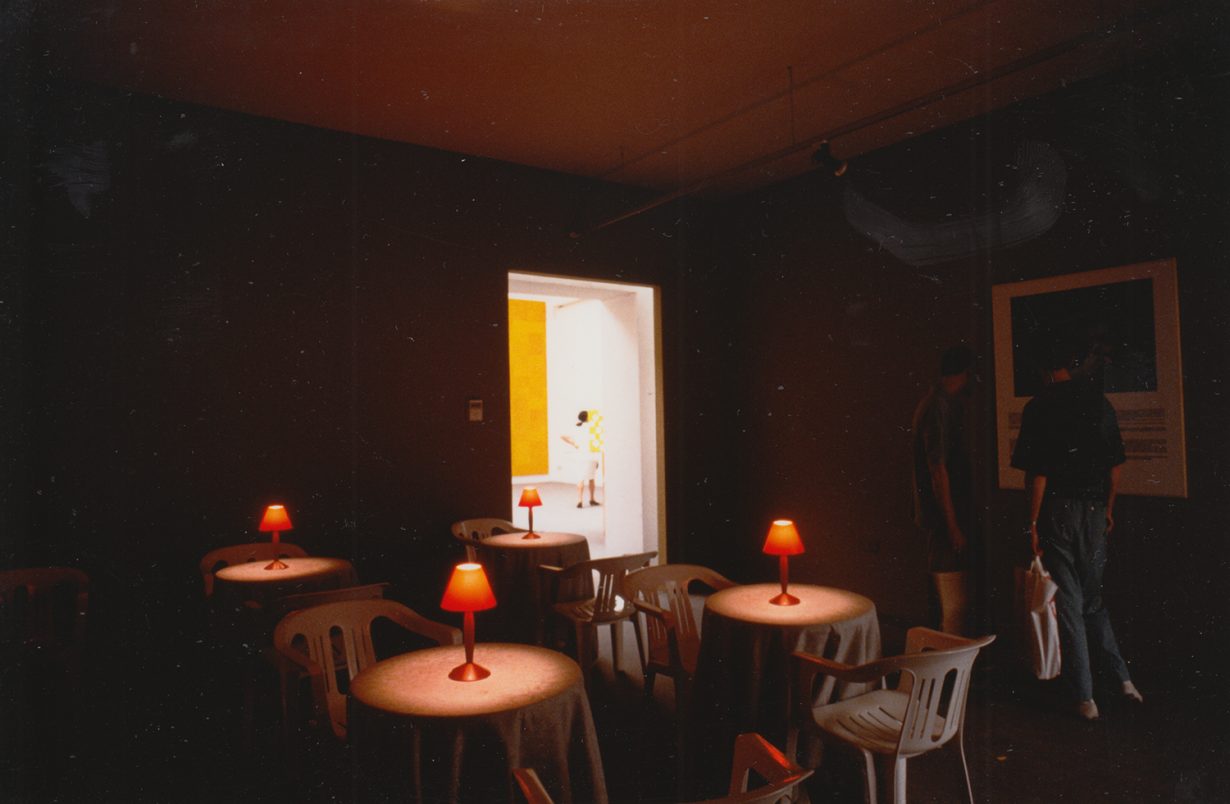
One of the host institution’s rationales for Vaccari’s revival, inevitably, alongside its privileging of the human body in an increasingly disembodied age, is that he anticipated the ‘relational aesthetics’ of the 1990s. Well, so did any number of other artists – from Allan Kaprow to the beer-distributing Tom Marioni, for example – though Vaccari must still have looked contemporary, if not uncommonly politicised, when he returned to the Venice Biennale in 1993 with Exhibition in Real Time No. 21, Bar Code – Code Bar. In exchange for caffeination, this functional café-as-artwork – its tables, lamps and coffee machine now recreated – invited visitors to sign postcards petitioning for the release of then-jailed Italian activist Silvia Baraldini. Accumulative, people-powered actions can assume many guises, this show asserts: as far back as the film-to-video Underground (1966–67), Vaccari was framing graffiti in public toilets as a kind of found poetry; in Exhibition in Real Time No. 10, Dreams No. 1 (1975), rebooted here with its participatory dimension intact, he created an environment in which people could stay overnight on sleeping rolls in a Brescia gallery, read short textual prompts that might influence their dreams and write up said reveries the day after. (Carsten Höller, maker of numerous sleepover-based pieces during the past decade, knows this work; or ought to.)
An invisible thread here, then, involves using media to materialise the intangible interiorities of others: the desire to be seen via a photobooth image, the related wish to share your dreams, the I-was-here impulse of graffiti. A viewer might usefully hold onto this – the power of unsanctioned forms of cultural articulation – amid Vaccari’s feinting diversity elsewhere: completely blacked-out enterable rooms, sometimes festooned with air-filled plastic bags (Dark Sculpture, 1968); artisan-made wooden caricatures of other artists, including a wildly tumescent Warhol (Homages,1973); creepy 8mm collage videos with seesawing Stockhausen soundtracks (Blue Placenta,1968). Sometimes, to underscore his preference for ‘low’ media and undermine any sense that the artist is a superior being, Vaccari adopts an actual low vantage-point when photographing, as in the series Modena Seen from a Dog’s Perspective (1967–68). His performative modesty has limits – it’s his name on the artworks, and on the big retrospective he sanctioned before his passing – but Vaccari’s signature trick is to refuse fancy technique and make something that feels substantial in other ways.
That’s borne out by one of the show’s most moving if calculative inclusions, where the other participants are primarily Vaccari’s own family. Housed in a jerry-built shed with its own title, Mini Cinema (2003), it’s a projected mixture of old home-movie footage and more recent images of Vaccari holding up old photographs for scrutiny and preservation; sometimes you see him reflected, ghostlike, in the photo frames. The montage is nonchronological and pell-mell, a dreamlike spill of memories: imagery of Vaccari’s second wife and children, Italian concert crowds in bleachers and snippets of softcore pornography, with a soundtrack (Krautrock, hippie stuff, Fripp & Eno) that suggests someone rifling through their cherished vinyl. All of which would feel engaging, though a bit anonymous, until you learn that the film is entitled Provision of Memories for the Advent of Alzheimer’s and is thus a storing of fragments against ruin. Vaccari didn’t have Alzheimer’s at this point; he did get it later. In 2003, he was just doing what he often did – strategically minor imagery, the feelings and desires swirling around it as big as can be.
Feedback. The Environments of Franco Vaccari is on view at Museion, Bolzano, through 13 September
From the May 2026 issue of ArtReview – get your copy.