Genuine Fake Premium Economy at London’s ICA warns: beware marketing, beware art, beware of being broke when you choose the latter
Genuine Fake Premium Economy centres on a generational condition: coming of age as both millennial and as artist in the wake of the 2008 financial crisis; a warning to a younger generation of already pessimistic Gen Zs, delivered in a retroactive, superstitious, very American vocabulary. Akin to Adam McKay’s film The Big Short (2016), the show invokes nostalgic symbols of the pre- and postcrash world – hedge fund managers, false confidence, preppiness, 9/11 – that together seemingly preach a tenet: beware marketing, beware art, beware of being broke when you choose the latter.
The two-room show’s humour strikes hardest when part of a self-implicating, heavily fictionalised biography. Buck Ellison’s Jack’s Office (2026) is a sonnet on marketing and self-determination, less a narrative about identity than a hyperspecific 2020s ‘starter pack’ meme; a vitrine contains fragments of ‘Jack’s’ fictional life – armpit hair, notes about ransom insurance, image of a black Labrador, all arranged casually, without chronology. Jack’s Office undeniably draws on the class-coded photography of Ellison’s day job, depicting WASP with other privileged communities across America, but its biographical aspect shifts his satire up a notch, into a self-satisfied autofiction.
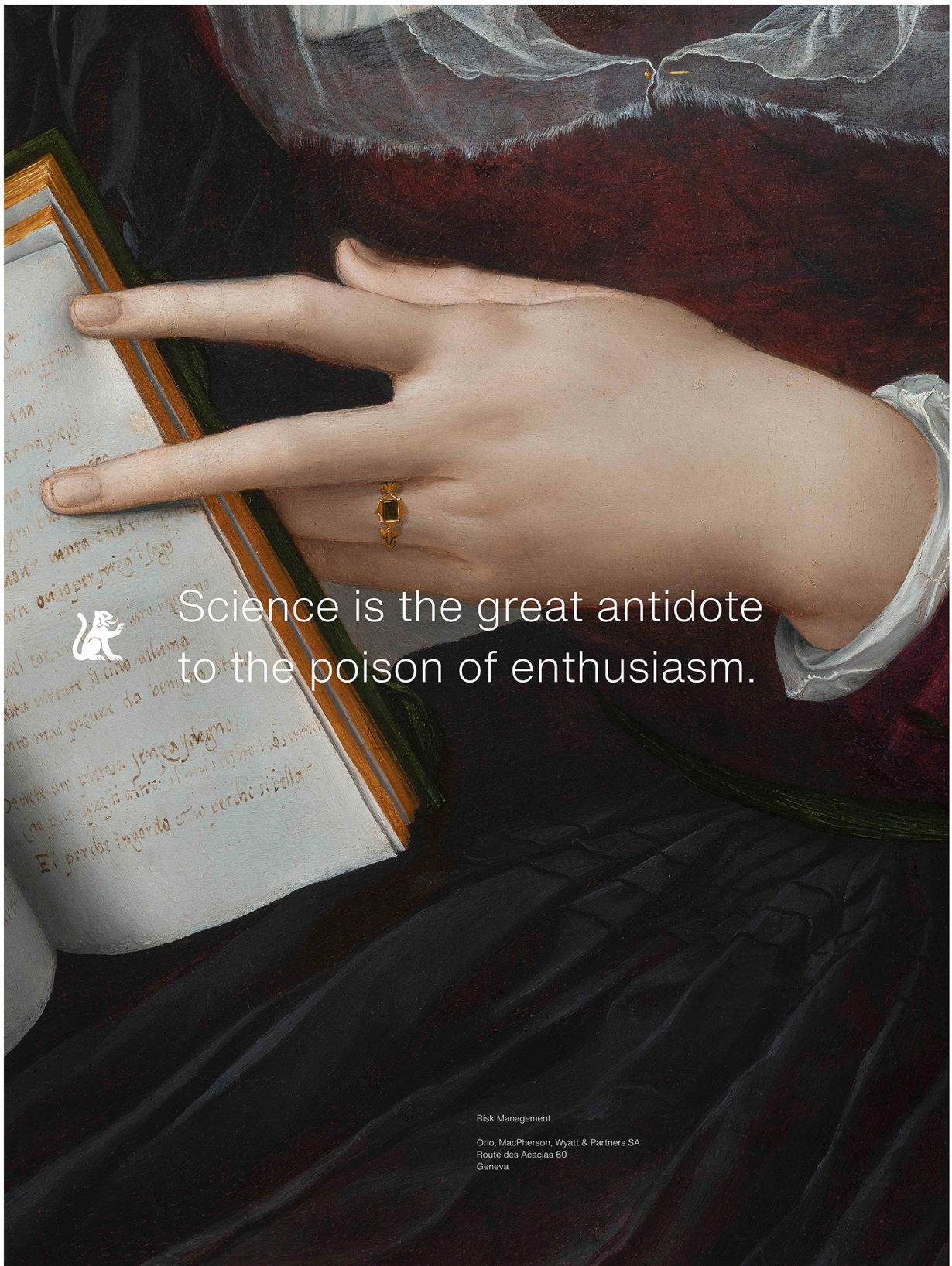
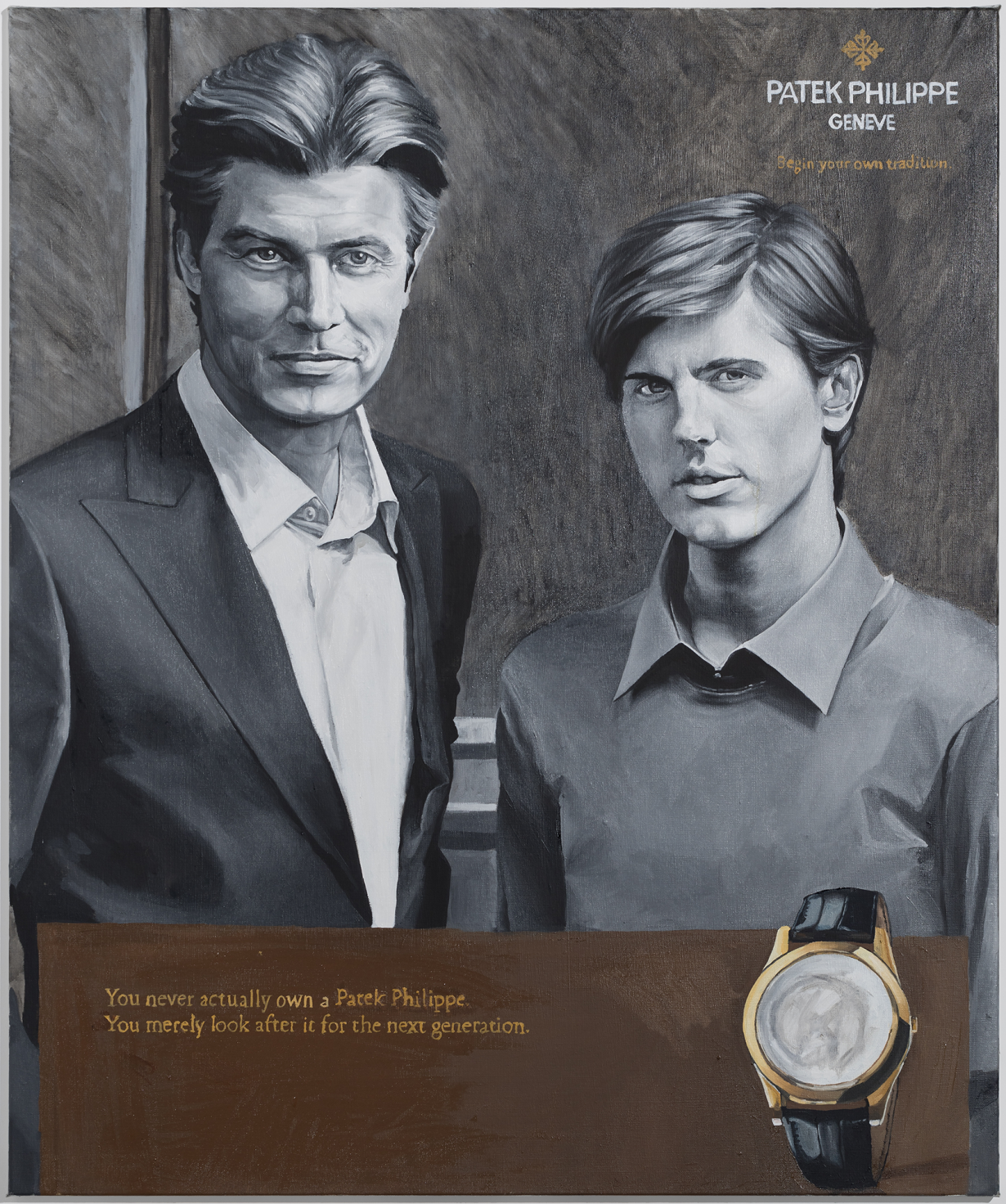
Speaking of WASPs, the fiscal repercussions of economic dynasty are played off one another in Jasmine Gregory’s painted recreations of Swiss watch brand Patek Philippe’s advertisements (Investment Piece No. 10 and 11, both 2026) and Ellison’s small lightbox advertisements (Science, Virtue and Hands, all 2026) which combine Copley, Bronzino and Manet paintings overlaid with the obtuse, falsely erudite slogans (‘Science is the great antidote to the poison of enthusiasm’) of his fictional bank, Orlo & Co. Subverting advertising messages isn’t new. For a show that examines the superficiality of marketing, it contains a fair amount of the superficial. Investment Piece No. 10 and 11 are paintings of advertisements – two works are fairly cosmetic renderings of ads, save for one angry, greyscale abstracted ‘erasure’ of text below the main tagline, ‘for the next generation’.
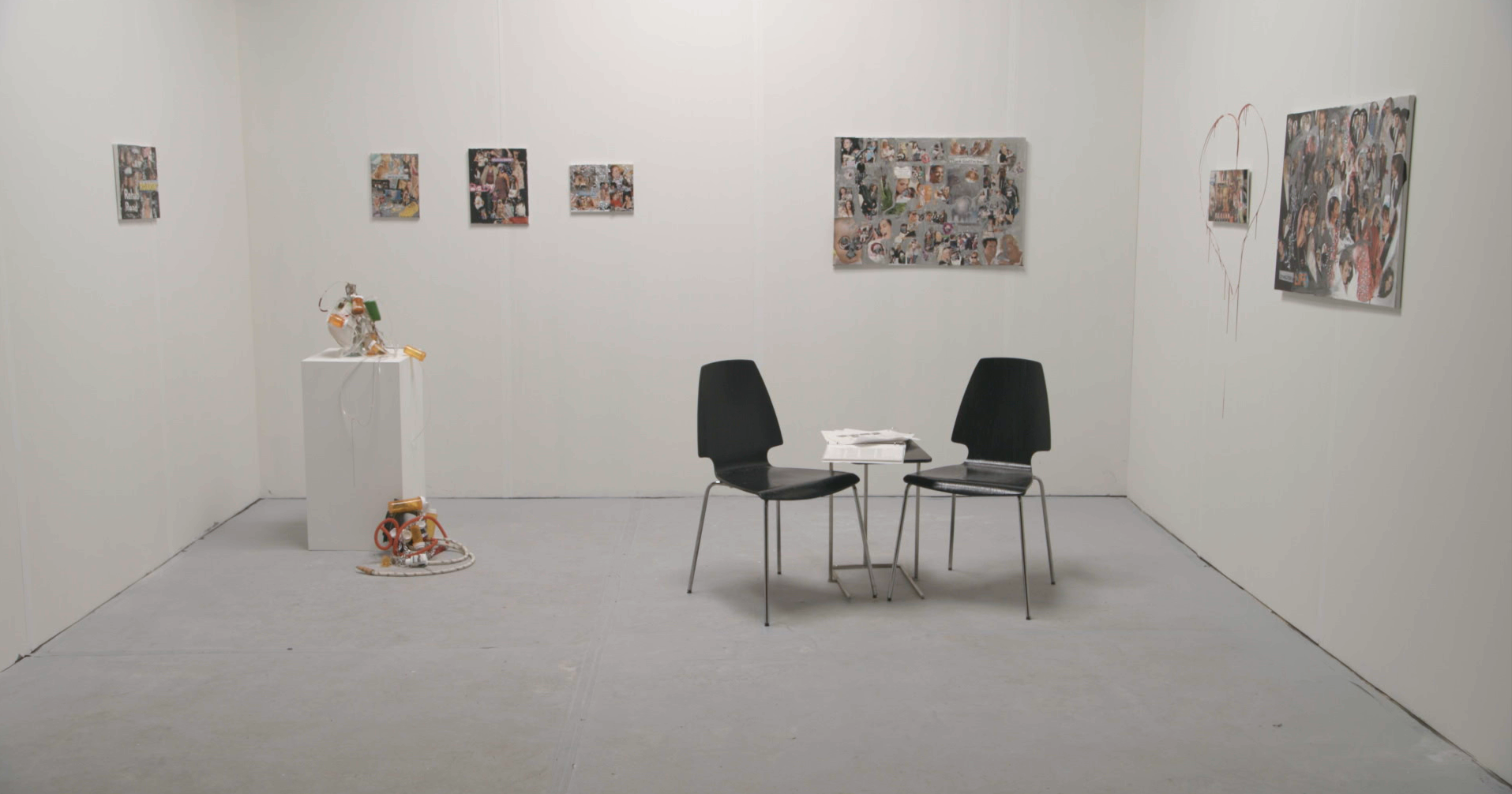
It’s an exhibition with easter eggs; Jack, of Jack’s Office, mimicking a Lehman Brothers exec, may well have traversed the halls of the fictionalised 2007 art fair depicted in Jenna Bliss’s showstopping videowork True Entertainment (2023–24), viewed from a large, hipster style vintage sofa. Set in an Art Basel-like art fair, Bliss’s film evokes the art bubble preburst, as it follows a fictional gallery – its manager, its art handlers and its artist (retired it-girl Lola Van Haas) – through tight shots, triangulated gazes and implied ‘eye-fucking’ between an intern and potential buyer. Gregory’s pop-psychological collages Conscious Uncoupling (Divorce) (2026) might resemble the work of True Entertainment’s Van Haas, who in one work employs glitter cutouts of Britney Spears mid-breakdown and newspaper lettering doctored to read: ‘Bin Laden Will Never Be Captured’. It is, unlike most video art at the ICA, truly entertaining – but less affecting than similar, nonsatirical videoworks documenting the consumable aesthetics of the era, such as K8 Hardy’s diaristic fashion self-portrait Outfitumentary (2001–12).
If this exhibition aims to alleviate the artworld’s hypocrisy by focusing on a single world event with a mixture of satire and sincerity, it half succeeds. The show’s strength is its open acceptance of naivety and acknowledgement of Bliss, Ellison and Gregory’s once-held belief in a meritocratic artworld. The three sell merchandise in the store: a babygrow featuring the Lehman Brothers logo, shot glasses marked ‘Divorce’ and a lighter emblazoned with the show’s title. They leave one wondering about the show’s use of irony, and its commenting upon an unfair artworld from within it. Does the message translate for a famously ‘sincere’ Gen-Z? Genuine Fake Premium Economy’s greatest asset is its immersive, rather than didactic, tactics.
Jenna Bliss, Buck Ellison & Jasmine Gregory, Genuine Fake Premium Economy is on view at the Institute of Contemporary Arts, London through 5 July
From the Summer 2026 issue of ArtReview – get your copy.