Through restagings and reconstitutions of Mike Kelley’s past performances, the artists question our relationship with images and reality
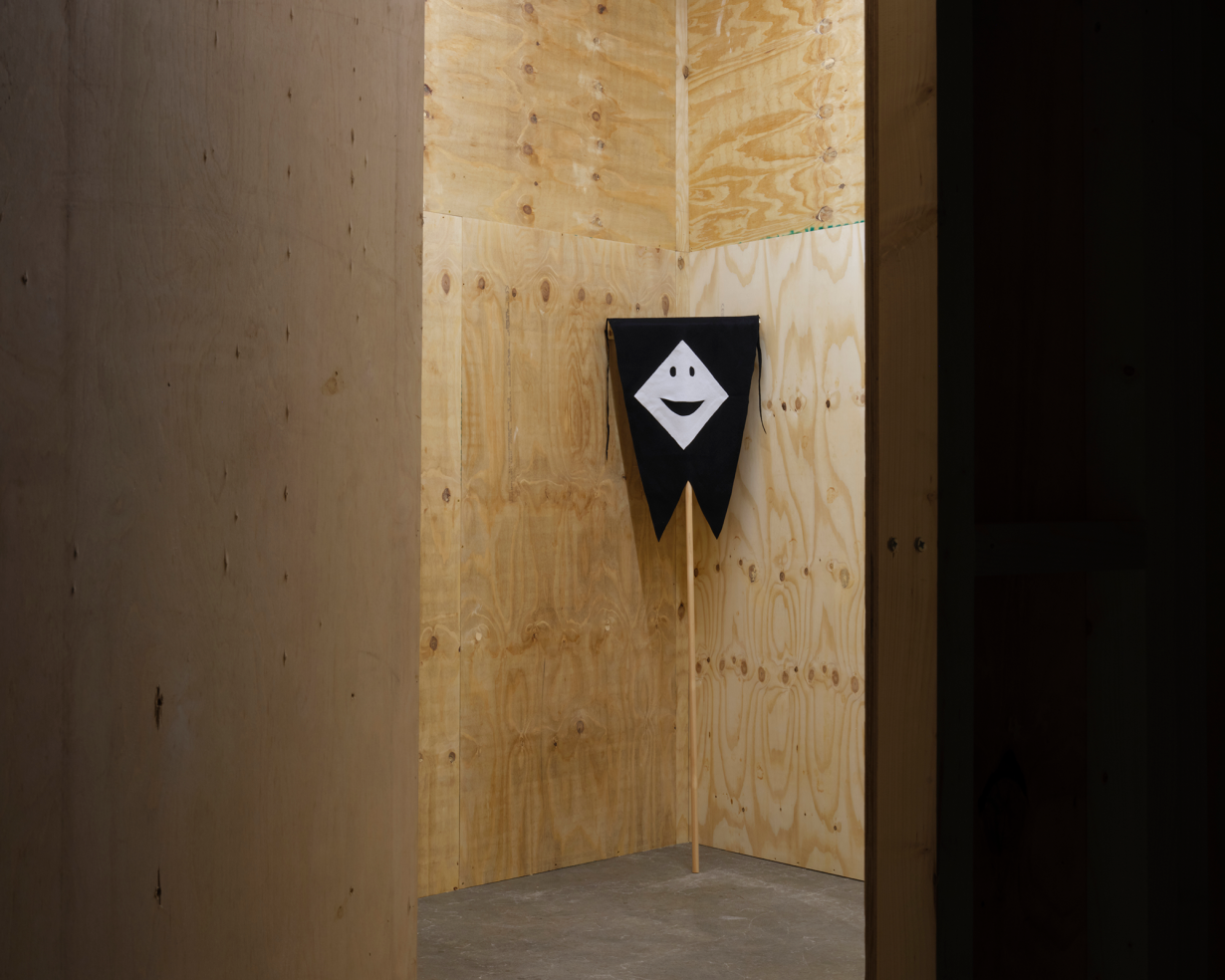
Before it became a graveyard of dead posts and deactivated accounts, Tumblr filled my screen with countless beguiling images, many of which, uncredited, were in fact documents from infamous fashion shows, performances and other works of contemporary art. This, however, was of secondary importance to me. What enthralled me were the images and the limitless possible histories they contained. Belfast-based veteran artists Mary McIntyre and Robert Anderson’s Reconstructions: A Room for Mike Kelley manifests a similar thraldom with the found image, this time using photographs of Mike Kelley’s performances from the 1970s to the 90s. Over the last ten years, the pair have reconstructed both the objects and the spaces of these photographs in painstaking detail, then photographed these reconstructions in turn to produce their own curious documents. In the Upper Gallery, versions of Kelley’s ‘perspectaphone’, a cartoonishly large megaphone-shaped instrument, and birdhouse props are displayed on a table, while photographs of the gymnasium-like spaces in which they might be used line the walls. Downstairs, a room built entirely out of plywood occupies most of the space, its door just ajar enough to slip inside, where a zigzag rug lies rumpled on the floor and a black flag with a smiley face leans suggestively against the wall. No performances are scheduled, however; viewers are left to wander the rooms with no guide but their own imagination. In a glass vitrine, select monographs on Kelley are opened on pages relating to the performances being referenced: one black-and-white photograph, presumably one of the found documents, shows Kelley reclining on the floor under a lamp. When I look up I see, in a picture on the wall to my left, what appears to be the same lamp, spilling its light over an empty floor.
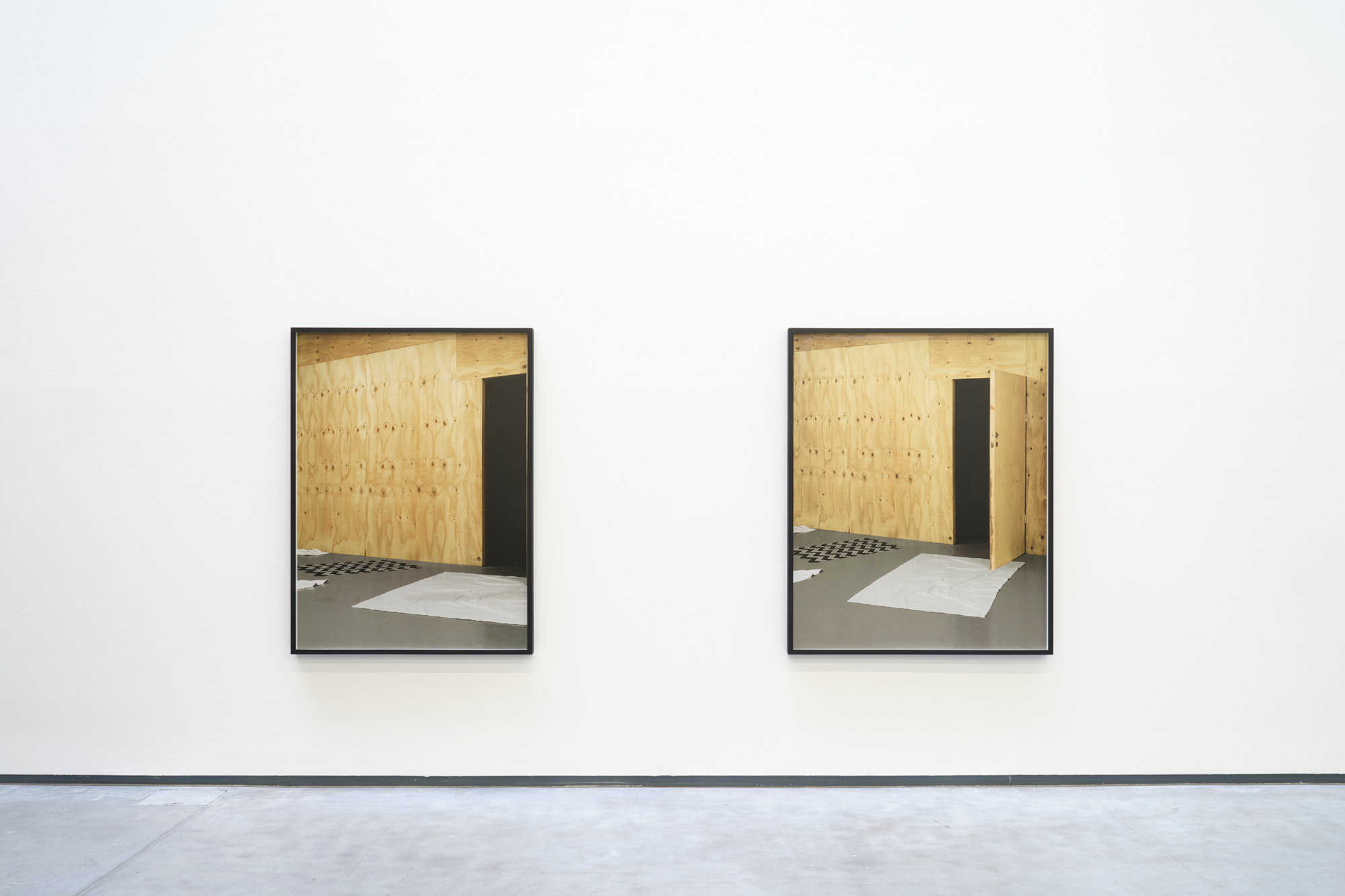
The result, thankfully, is more playground than funeral, with the objects and their environments taking centre stage. The figure’s absence is conductive; it welcomes a giddy charge into the room. Everything seems animated as if momentarily paused: a hoover coils its nozzle around itself; a door opens across a blanket, creating mini waves in the fabric; a potted plant holds up its fronds like a royal fool. These objects, among others, are present only in the photographs on the walls, and apart from the table of props, the space is empty. The photographic element, then, is where the spirit lives: each mise-en-scène has its own collection of blindspots and discoveries. The same plant appears in another photograph, greatly reduced in size and only partly visible, a mere side character in a grand theatre of objects; elsewhere, two photographs of the same dark doorway hang side-by-side, giving the impression of a roving, incomplete viewpoint: whereas a door’s hinge is visible in the second image, it’s cut off by the frame in the first so that it gapes like a hole torn out of the space. It’s a simple device, but by showing these different perspectives, the artists allow us to revel in the enchantments of details big and small, the endless ways of looking, and the power of attention.
Reconstructions arrives in the wake of a slew of posthumous exhibitions of the late Kelley, the most recent of which, the substantial 2023–25 touring retrospective Ghost and Spirit, did its best, through an audiovisual onslaught, to make it feel like the artist was still present. McIntyre and Anderson, who have both explored depictions of space and absence in their work, make no such effort. Kelley may have been the starting point, but he is not the goal. Introducing these photographs of the past into the present, a time where images proliferate at insane speeds, amounts to an inquiry into our relationship with reality, the frames we live in, the perspectives we accept and our dwindling capacity to see beyond them.
Mary McIntyre & Robert Anderson, Reconstructions: A Room for Mike Kelley is on view at The MAC, Belfast, through 18 October
From the September 2026 issue of ArtReview – get your copy.