The exhibition is at its best when work evokes the minutiae and anguish of emotional, embodied, everyday struggles
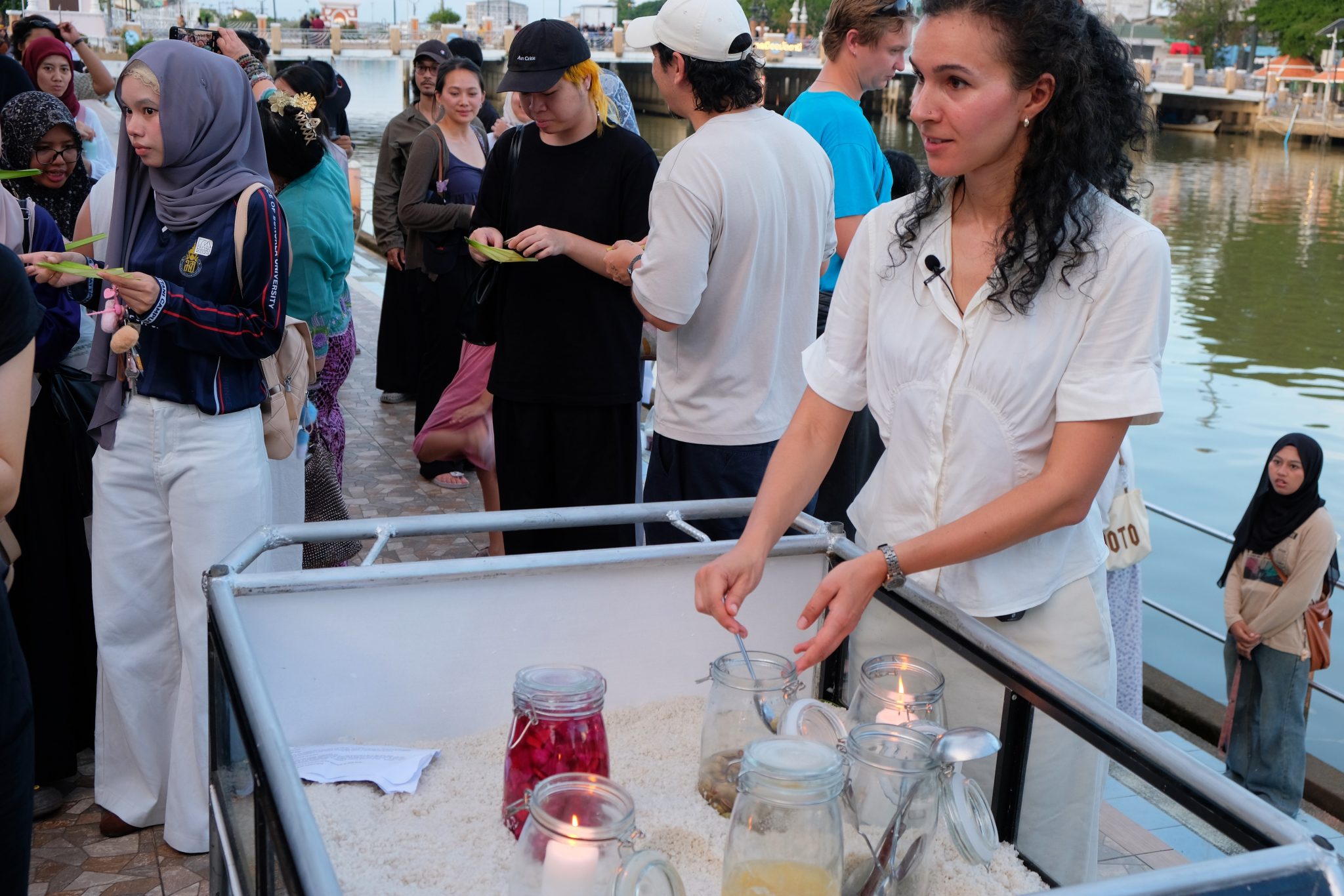
On a bridge over the Pattani River, near where it meets the Gulf of Thailand, the crisp scent of sea salt recently merged with its briny taste, courtesy of the artists Iris Sham and Louisa Mammeri. They began their Saturday-afternoon performance by handing out salt crystals to a crowd, then invoking a Malay proverb that loosely translates to ‘Tamarind on the mountain, salt in the sea, meet in one pot’: Garam di laut, Asam di Darat (2026), which draws its name from this proverb, then unfolded as a moveable food tasting, as the pair pushed a cart along the river’s edge while we gamely followed. At each of the three stops, they dished out morsels of fermented food – torch ginger flowers, bitter sator beans, lemons and kabees (pickled vegetables) – then waxed lyrical about the origins of these items and the dissolved salts in which they were bathed: the Southern Thai province of Pattani, Hong Kong and Palestine. Sham and Mammeri’s oratory tied the conflicts in these places with the flavour profiles and anthropology of each foodstuff – rendered each jar a microcosm of politics as well as biochemistry. Once my dry throat had cleared, the food left a hopeful aftertaste: even mismatched ingredients (and, by extension, arch enemies) can eventually reach a state of balance, it suggested.
Pattani Biennale 2026 is full of humble yet probing gestures: works in which contexts across the city of Pattani help tease out and situate a welter of transnational themes, and in which the texture of life in this part of Thailand – including a long-standing Muslim separatist movement and insurgency, among other realities – is invoked without resorting to luridness. Although there are plenty of contributions from further afield, particularly Malaysia, Indonesia, Laos, Myanmar and other remote parts of Thailand, the venues – including a home for juveniles, a university dorm, a park and a gallery beside the Pattani River – lend proceedings a rootedness, as do a number of field-research-led local projects. And input by community groups from the Deep South adds yet more heft to its widely cast net of solidarity.
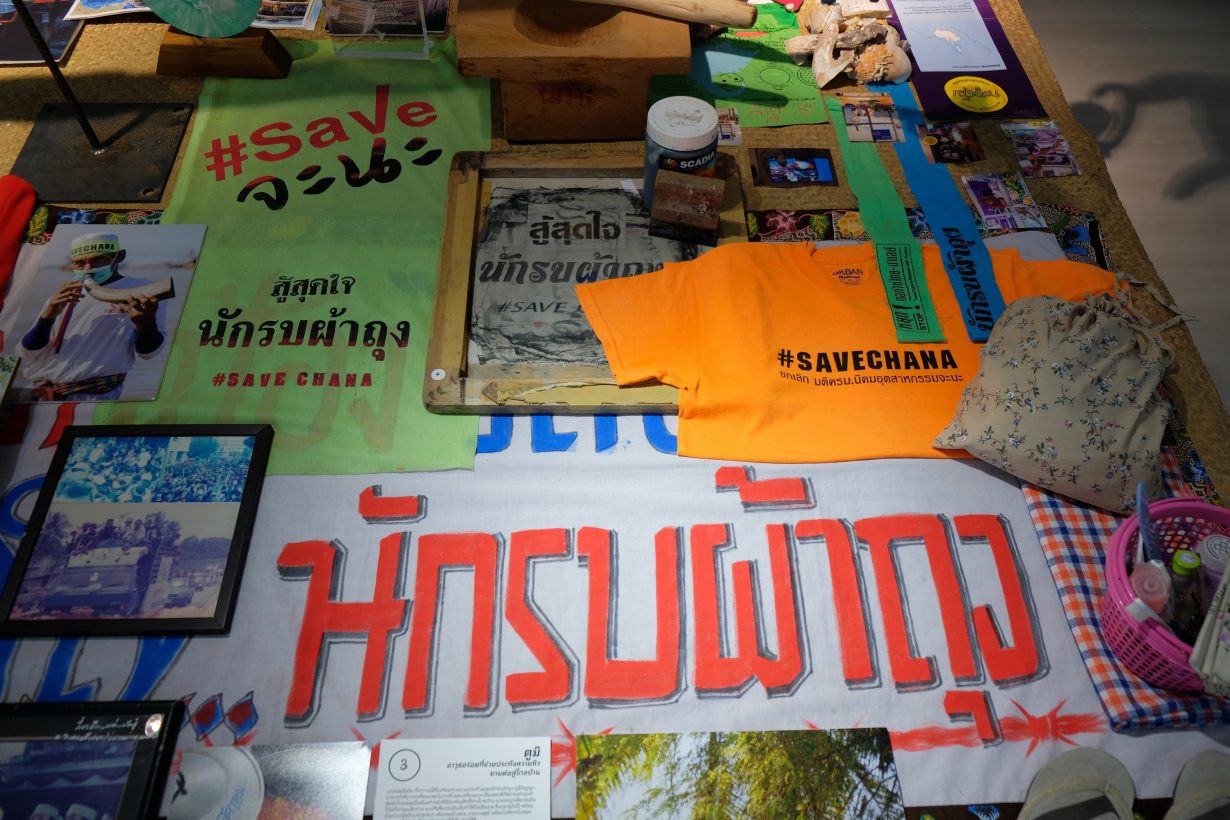
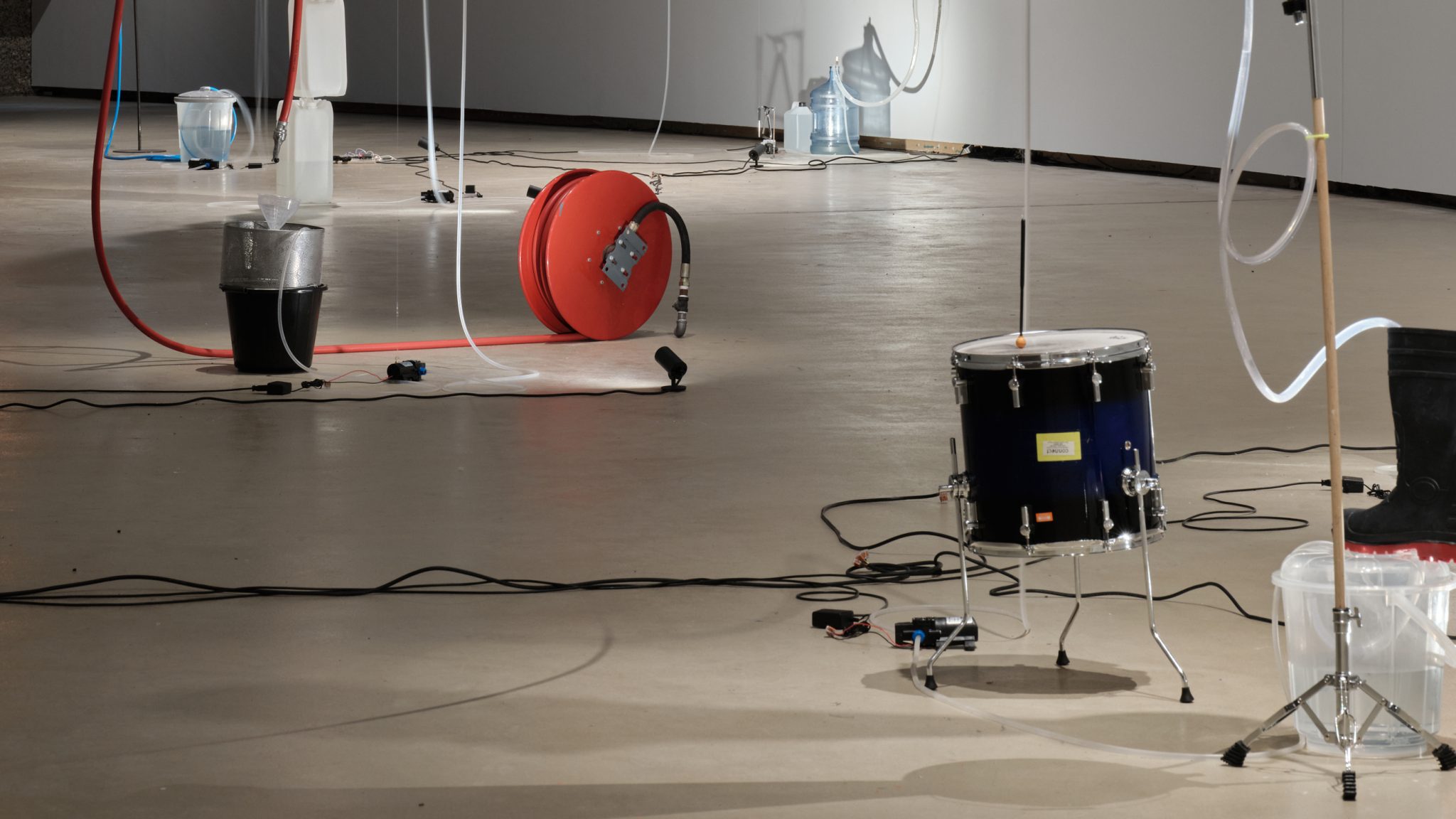
Pichai Pongsasaovapark’s Beyond Loss II (2026), for example, references the upending of the local fishing industry by government policy. Along the walls are monochrome murals of the 48 wooden trawlers recently decommissioned as part of an ongoing vessel buyout programme, then used as firewood to produce budu (fermented anchovy sauce). In a reference to the erasure of lifestyles and livelihoods caused by this policy – all in the name of sustainability – strung bottles of the stuff hang from the ceiling, along with plastic orbs resembling the stars seafarers once used as guides. Nearby, another work pairs a map of a controversial planned coastal project with shell-encrusted found objects, while downstairs, in an outdoor area overlooking the river, Tear Factory Boy contributes a commentary on warming sea temperatures: seven fish-cooler boxes that progressively get smaller and smaller. Add a display at the local university – a collection of paraphernalia from a local women’s collective fighting to save their coastal village from the effects of a proposed gas pipeline project, ringed by a fence of the colourful batik sarongs that have earned them their ‘Sarong Warrior’ moniker – and this show has plenty to say about community-led environmental movements in a part of Thailand in which distrust created by the insurgency tends, according to some reports, to hinder and heighten them.
While macro-themes weave and wend throughout this multipolar show, it’s at its best when work evokes the minutiae and anguish of emotional, embodied, everyday struggles against them – a different sort of saltiness. Oftentimes, the line between the contributors and ‘the stories of countless ordinary lives’ that curator Anuwat Apimukmongkon’s text centres is barely there, or absent. On opening weekend, members of the ‘Sarong Warriors’ broke out into song during a workshop. Momentarily, their defiant singing drifted through galleries where portraits by local prisoners hang on a wall, and phallic freestanding clay sculptures, made by young LGBTQ+ individuals under the guidance of artist Nitipong Nikaji (Identity, 2026), congregate on a floor. Responses to lives hard lived and the stifling of selfhood also flow through the rooms of the university dorm and home for juveniles. Many of the offerings by women and LGBTQ+ artists feel especially close to the bone, casting light on – and actively challenging – the Deep South’s distinct social mores.
Pattani Biennale 2026: Simple Poetry is on view across various venues, Pattani, through 1 November
From the Autumn 2026 issue of ArtReview Asia – get your copy.