For the inaugural Manufactory x ArtReview Writer’s Residency, Aram Masharqa traces how transport, industry and migration have shaped one of London’s strangest districts.
Park Royal, the largest existing industrial estate in the UK is a product of London’s rapid northwestern expansion in the twentieth century. Although infrastructure was never explicitly planned for the area, the railways and the canal that run through it provided the justification for Park Royal’s industrial development. Its first factories produced munitions for the First World War; later came all manner of other industries and businesses: the Guinness brewery, Renault’s car plant and, the only one still operating, McVitie’s round-the-clock biscuit production.
The A40 cuts directly through Park Royal and should have been a major driver of its rapid development. Instead, the narrow roads and alleyways of the industrial park itself couldn’t sustain the immense volume of traffic the A40 facilitated, and many factories relocated outside London. By an accident of timing, this decline coincided with the Lebanese Civil War, and many Lebanese immigrants settled around Park Royal, giving the area a new character that it retains today in its Arab supermarkets (Goodies is a local favourite) and countless shisha lounges. Now, plans for a new HS2 transport hub in nearby Old Oak Common mean the estate is earmarked for a whole new wave of development.
So, there is a Park Royal of the canal, of the trains, and of the motorways, each of them slightly different. I began travelling there by a different mode of transport each time, as a way to try and get closer to an area whose history has been shaped by movement: of goods, workers, industries, residents. Though I grew up nearby in Sudbury, my relationship to Park Royal as a ‘local’ has changed over the years. And in starting this project, I also became a temporary participant in the contemporary arts ecosystem housed in the various studio buildings nestled between the industrial estate’s warehouses, factories and logistics centres. Moving through the area in different ways became a way of looking again at a place I thought I knew, and of asking what its roads, railways and waterways might reveal about the communities and economies that have accumulated around them.
Entry 1: Walking the Grand Union Canal
Some time after I was old enough to explore London on my own, the canal came to my attention as a public access route. At that point, I knew Park Royal mainly as the Royale Leisure Park, which we only referred to by its amenities: the cinema, the gym, the Chinese buffet that is now a shisha lounge, and most importantly, the bowling alley. This was Park Royal to me: south of the A40, its identity reinforced by the proximity of the Park Royal underground station. The Big ASDA supermarket and the industrial park, meanwhile, would always be in an area known to me as ‘Deep Park Royal’, sitting north of the A40.
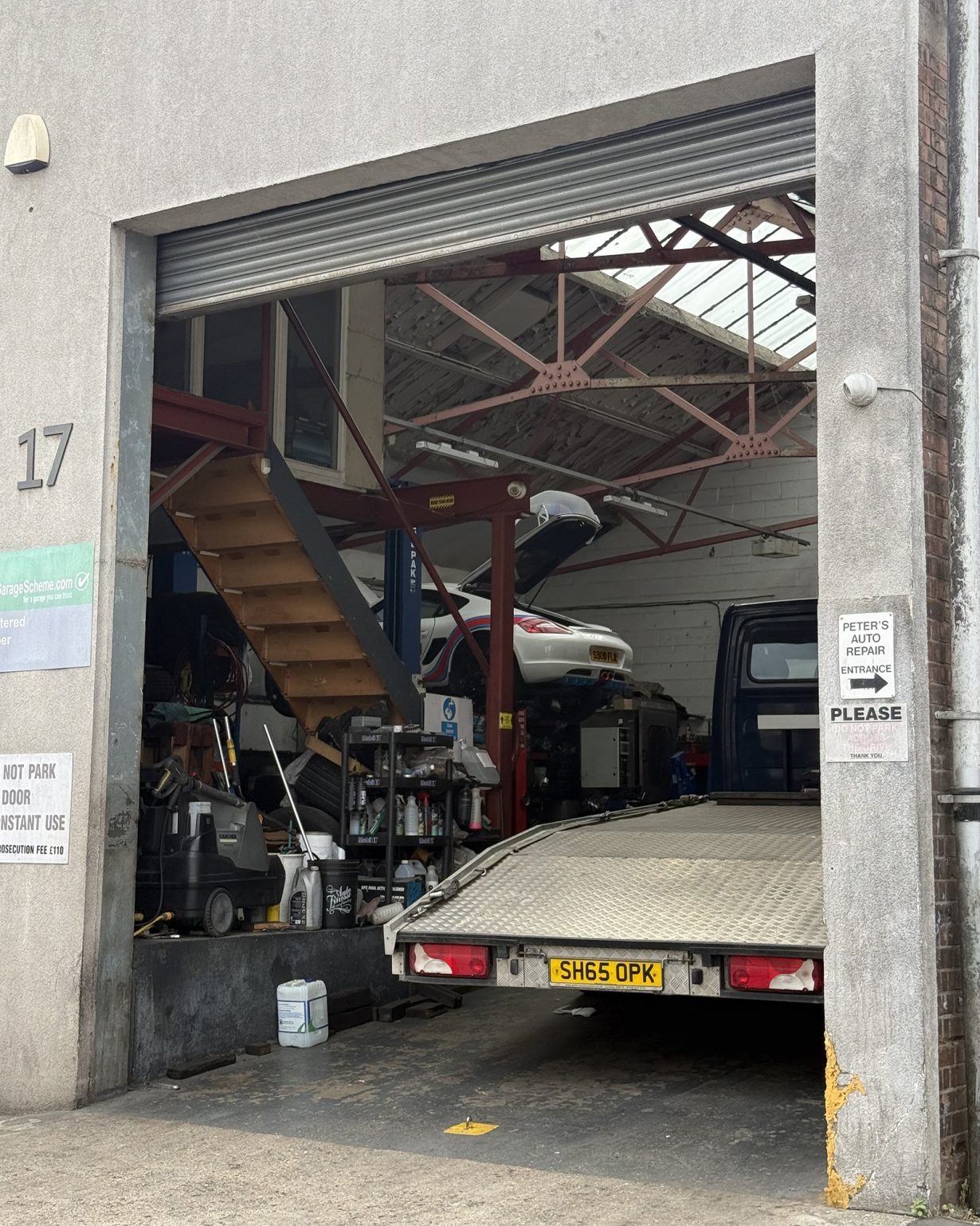
The canal, built more than a century before the motorway, cuts straight into Deep Park Royal. For much of the towpath, tall hedges and fencing obscure what lies beyond, until they abruptly stop and open onto a view of seemingly infinite rows of industrial buildings. Here the path splits: one route continues along the canal, while the other bends into the estate, as though anticipating some public interest in the warehouse district. When I was younger, I heeded this perceived obligation to explore, wandering the industrial alleyways until the confused looks of the workers – usually in high-vis, hard hats, or long white coats – gave me the feeling that I had strayed into a back-of-house I wasn’t supposed to see.
Even now, knowing more about Park Royal, there is something strange about this junction, where the quaint and scenic meets the sights and sounds of industry. The contrast owes more to the canal’s changing function than to Park Royal itself, but the friction between the two speaks to a tension underpinning the entire district, and reveals something about the area as a whole. Park Royal is both a front- and back-of-house: a place of public leisure and private labour, familiar amenities and largely unseen systems of production.
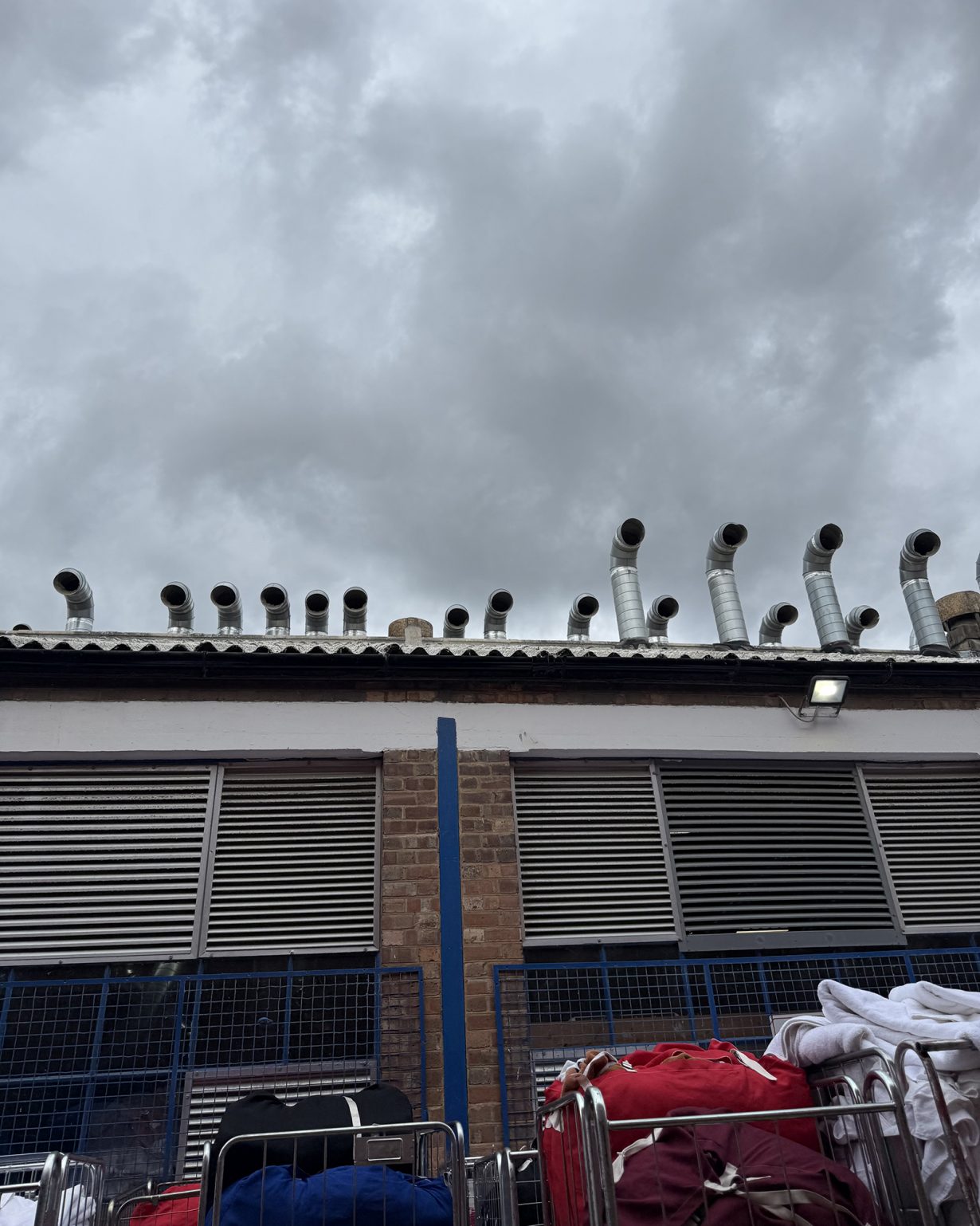
Entry 2: Park Royal Tube Station
You would be forgiven for assuming, as I did, that Park Royal Underground Station is the nearest to the industrial park. This was the stop I knew from childhood, for easy access to the glorious retail park. Exiting the station and checking the map for my destination, I stared longingly over the impenetrable six-lane motorway. On a nicer day, I might have walked through the subway and down Coronation Road to the industrial park, but that day the muggy, overcast grey was enough to justify chartering an e-bike.
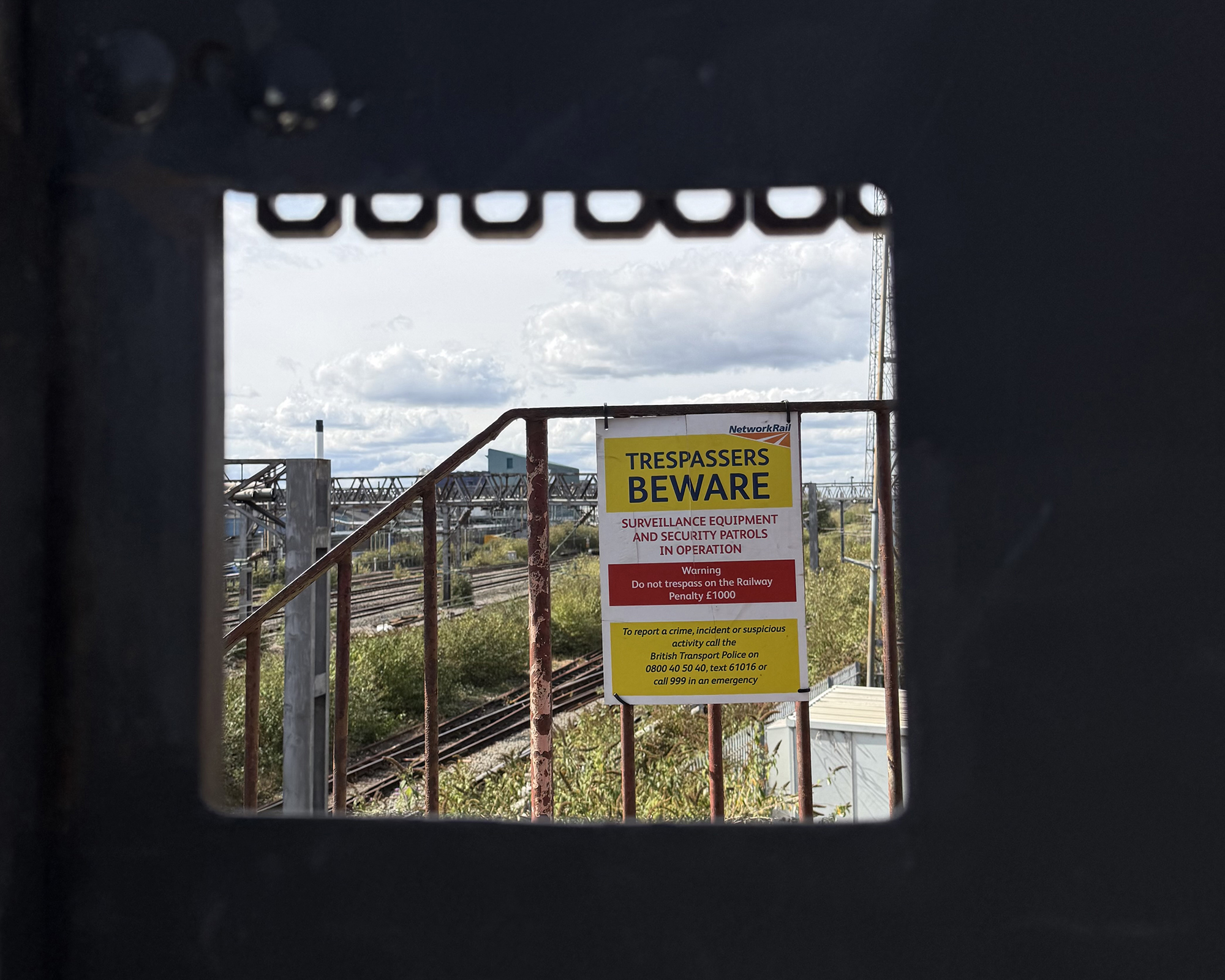
Park Royal Station, the subway beneath the A40, and the fact that the nearest station to the industrial park is called North Acton, are all the products of Park Royal’s piecemeal development. The first station was Park Royal & Twyford Abbey Station, built to serve the Royal Agricultural Show and surviving now only as a modest bridge over Twyford Abbey Road. Later, two stations on the Great Western Rail’s Acton-Northolt line – Park Royal Station and Park Royal West Halt – served the industrial side of the district; both have since closed. The route might now be little more than a historical footnote were it not for Old Oak Common, once connected to the line and soon to become an HS2 superhub. Perhaps, then, just as the subway once connected the new Park Royal tube station to the old railway station, Old Oak Common will generate another geography of footpaths, alleyways, and subways. I’m not convinced it will make Park Royal any less strange, or any more orderly.
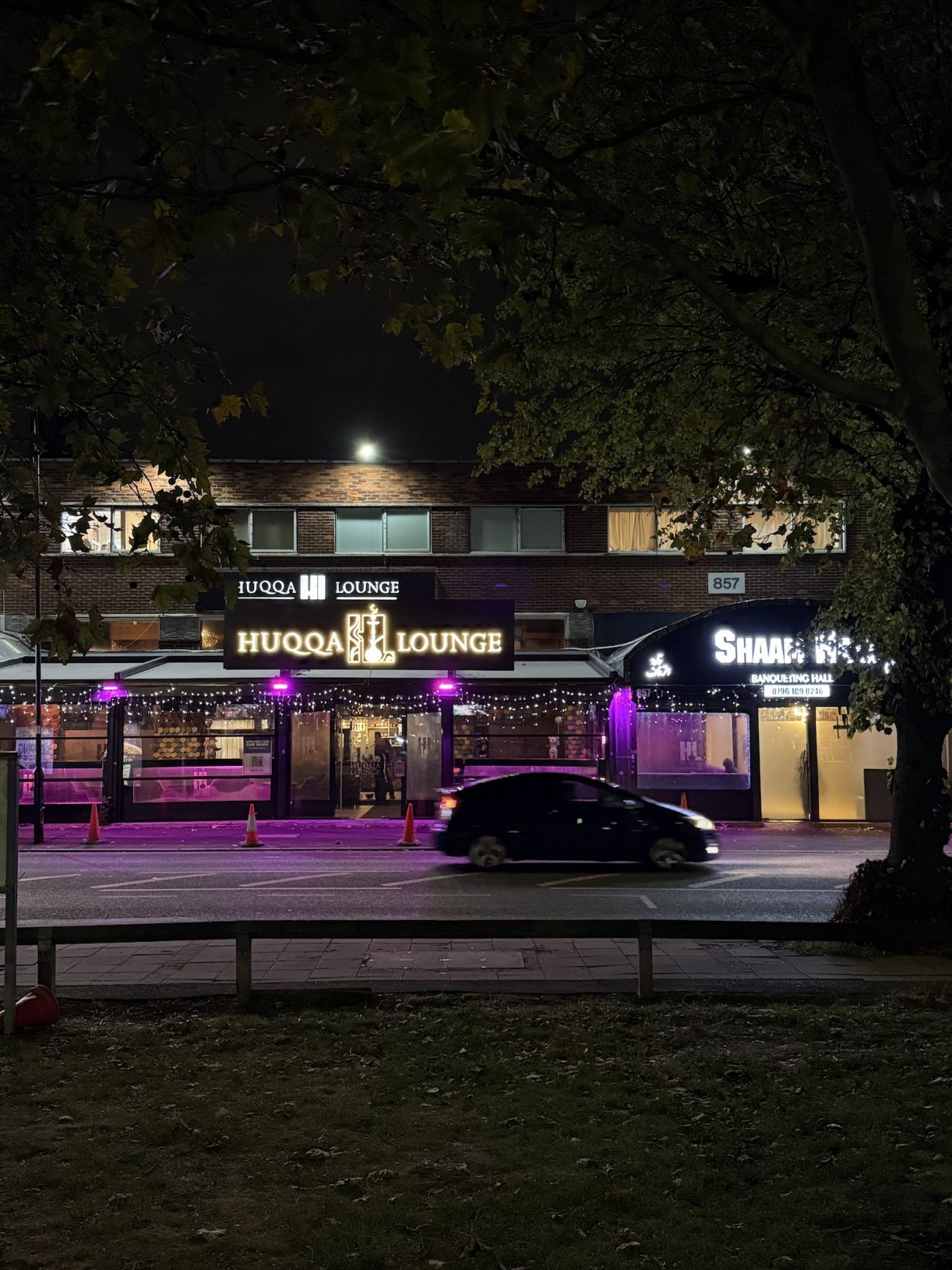
Entry 3: Drive directly in at night
The ease with which I turn off the A40 onto the now relatively quiet streets reminds me that this is the method of transport the industrial estate was built to handle. This section of the A40 is called the Western Avenue and, much like the trains, it is something of a stub. It was intended to connect to a wider network of inner-city elevated motorways called the Ringways, but almost none of them were built. Except for a series of concrete motorways that bisect entire neighbourhoods in West London. If Park Royal doesn’t quite feel like ‘London’, perhaps that’s because it belongs to a vision of a distinctly more American London, one that hedged all its bets on the mighty car.
The evening air is filled with anticipation as rows of cars, rather than lorries and HGVs, line the streets. Double parking is common outside the countless food trucks and Shisha lounges. Writing for London’s Kitchen, a 2021 project and publication exploring Park Royal’s industry, culture and changing character, Zarina Muhammad describes these lounges as emblematic of a new kind of ‘Dinner and Dances’, referring to a former staple of Asian-British Muslim life in the banqueting halls in Northwest London, where all manner of social events were held. Maybe it’s because I’m alone, maybe it’s because I’m in a version of London which I never fully got to know, or maybe I can’t bear the awkwardness as the men at the Shisha lounge puzzle at my broken Arabic, but either way I don’t stay at the lounge, I don’t even park.
The roads, the lounges, the parking: Park Royal is almost like being back in Jordan’s East Amman, in an area called Marka, also known for its haphazard parking, late-night shawarma, and all-round anarchic atmosphere. One is almost like the other, and Park Royal seems to relish this ‘almost’. Almost, because a shisha lounge might sit next to a smash burger truck, opposite an English pub bordering the Grand Union Canal, with the McVitie’s logo shining from the factory just across the way. It sounds planned; it almost sounds ‘English’, in a multicultural-pluralist kind of way. But it is only almost-planned, which is to say, not planned at all. It is an indefinitely temporary place for all those who have made a home in the almost.
Aram Masharqa is a London-based Palestinian writer.
Talk: 12 October 2026
Masharqa will be in conversation with fellow writer-in-residence Hannah Pezzack, programme director of Park Royal Design District Mazzy-Mae Green and ArtReview’s Fi Churchman.
Queensrollahouse
NW10 7LU
Doors & bar: 5pm
Conversation: 6.30pm