Our editors on the exhibitions they’re looking forward to around the world this month – from London and Paris to Tokyo and Tunis
London
Brook Hsu: TROUT FISHING IN AMERICA
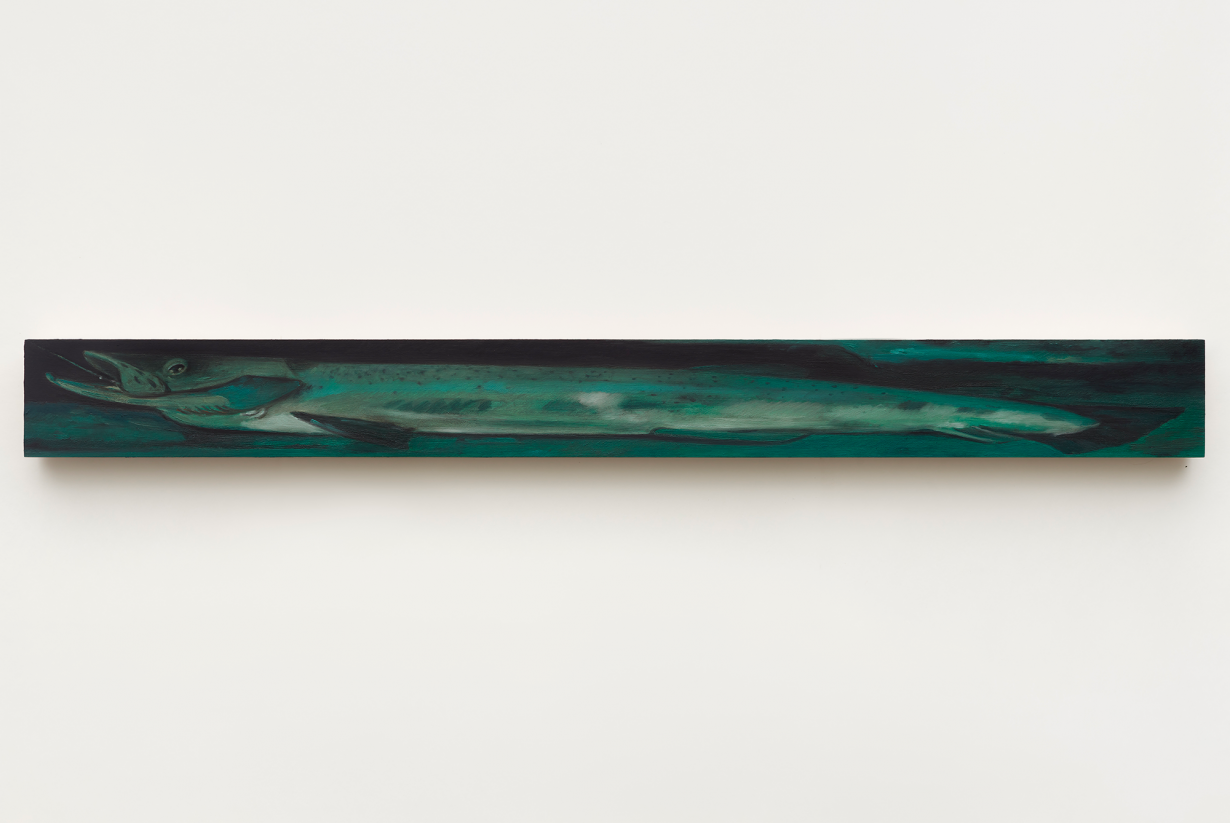
A trout is a slippery thing. Brook Hsu’s first UK solo exhibition borrows its title from Richard Brautigan’s Trout Fishing in America (1967), a novella made up of vignettes in which characters and objects recur, and where the phrase itself mutates from title to character, place and state of mind. Indeed, repetition is characteristic of Hsu’s practice: animals, skeletons and other figures seem to wander between her works, giving the impression that they all belong to the same landscape. Gustave Courbet’s The Trout (1873) is represented on a postcard Hsu sent to her now-fiancé in 2023. It returns repeatedly, in new small-scale (ahem) paintings: first, as a kind of reproduction, and then in her signature eerie-green monochrome palette, stretched and distorted, à la Hans Holbein’s anamorphic skull from The Ambassadors (1533), across the canvas until what was once an intimate token begins to assume a life of its own. So what begins as an image of one fish – and a record of correspondence – transforms into a representation of something more elusive, like the way memories become filtered along the passage of a lifetime. Hsu’s recurring character is caught somewhere between art history, romantic attachment and a private mythology. Fi Churchman
Heidi, through 7 November
view at MAK Museum Vienna, 2026. Photo: © kunst-dokumentation.com/MAK. Courtesy and © Nachlass Christoph Schlingensief
Berlin
Christoph Schlingensief: Es ist nicht mehr mein Problem, macht eure Scheiße alleine
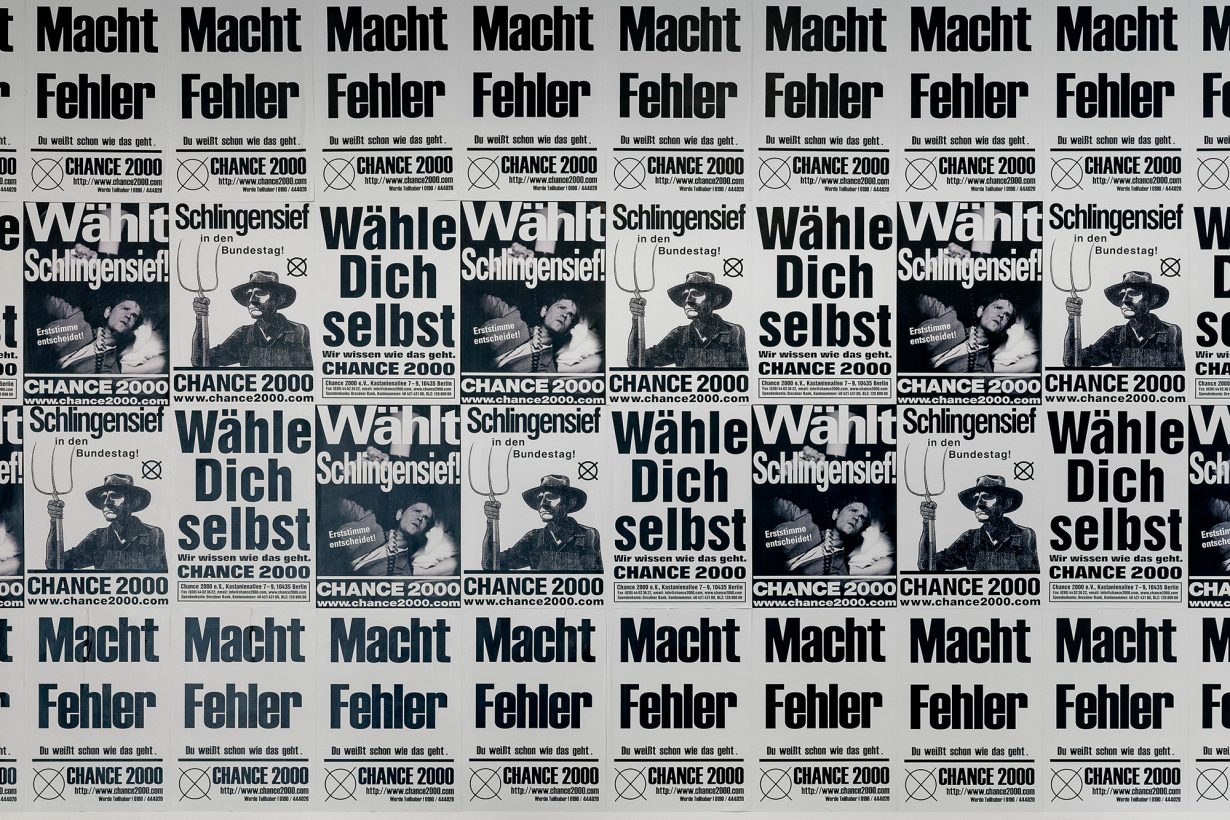
You hear a lot these days about how art is an expanded field that can accommodate any kind of object or nonobject, action or inaction. That what makes it special is the fact that it isn’t specialist. Although the late Christoph Schlingensief remains someone for whom the description ‘artist’ is narrow-minded and limited. Despite the fact that he was awarded one of art’s highest accolades – a Golden Lion for best national pavilion (Germany) at the 2011 Venice Biennale – a year after his premature death. His work, primarily as a dramaturg, filmmaker, political activist and all-round provocateur took art into the space of real life (and theory into practice) in a manner that assumed extreme risk and that few have ever matched, often seems even more relevant now than it did at the time. He was arrested at Documenta 10 for carrying around a placard urging people to Kill Helmut Kohl! (1997) and invited four million people (the number of Germany’s unemployed at the time) to jump into Lake Wolfgang in Austria, at the opposite end of which the German chancellor had a holiday home, so that the displaced water would flood it. He established political parties so that people could vote for themselves, and in 2000 offered the then-neofascist government of AustriaBitte Liebt Österreich (Please Love Austria) (2000), a parody of the Big Brother reality show in which the public were invited to vote ‘real’ asylum seekers out of a shared living space (and into deportation) with the sole survivor winning residency (through marriage). Schlingensief’s work often inspired as much hate as it did love. For much of it, you really had to be there – experiencing the tension between audience and actors – to fully understand it, which makes any exhibition of his output a difficult project featuring hours of video and miles of documentation. For his largest retrospective in his home country, expect plenty of restaged environments and props, alongside those videos and documents, all of which attempt to bring his work back to life. Although, as the title of the exhibition suggests, the idea is that audiences are supposed to be inspired to do that last bit themselves. Nirmala Devi
Gropius Bau, 9 October – 17 January
Paris
As the French love to say, bigger is better. That’s why the Emerige foundation, whose self-professed ambition is to build ‘better cities and better lives’, has developed Large: a new 5,000-square-metre contemporary art space in the greater Paris area. For its inauguration, Large, which is on the site of a former Renault factory, has partnered with none other than the automaker’s foundation for arts and culture to present Imaginary Motors. The exhibition will consider the relationship between humans and machines through works from the Renault collection, including new commissions by 17 artists. Among them, Neïl Beloufa turns to the topic of self-driving cars to consider how algorithms (and the way data is sorted to train them) shape our environments; and Sara Sadik joins forces with local students specialising in automobile bodywork and paintwork to explore how systems of evaluation shape individuals. The show seemingly sets up Large’s twofold agenda: supporting the French art scene through the production and exhibition of new works, and simultaneously promoting a legacy of corporate paternalism by highlighting private sector involvements in shaping the cultural and urban landscape. This Paris art week, as the Americans love to say: go big or go home. Mia Stern
Le Large, Île Seguin, 17 October – 7 March
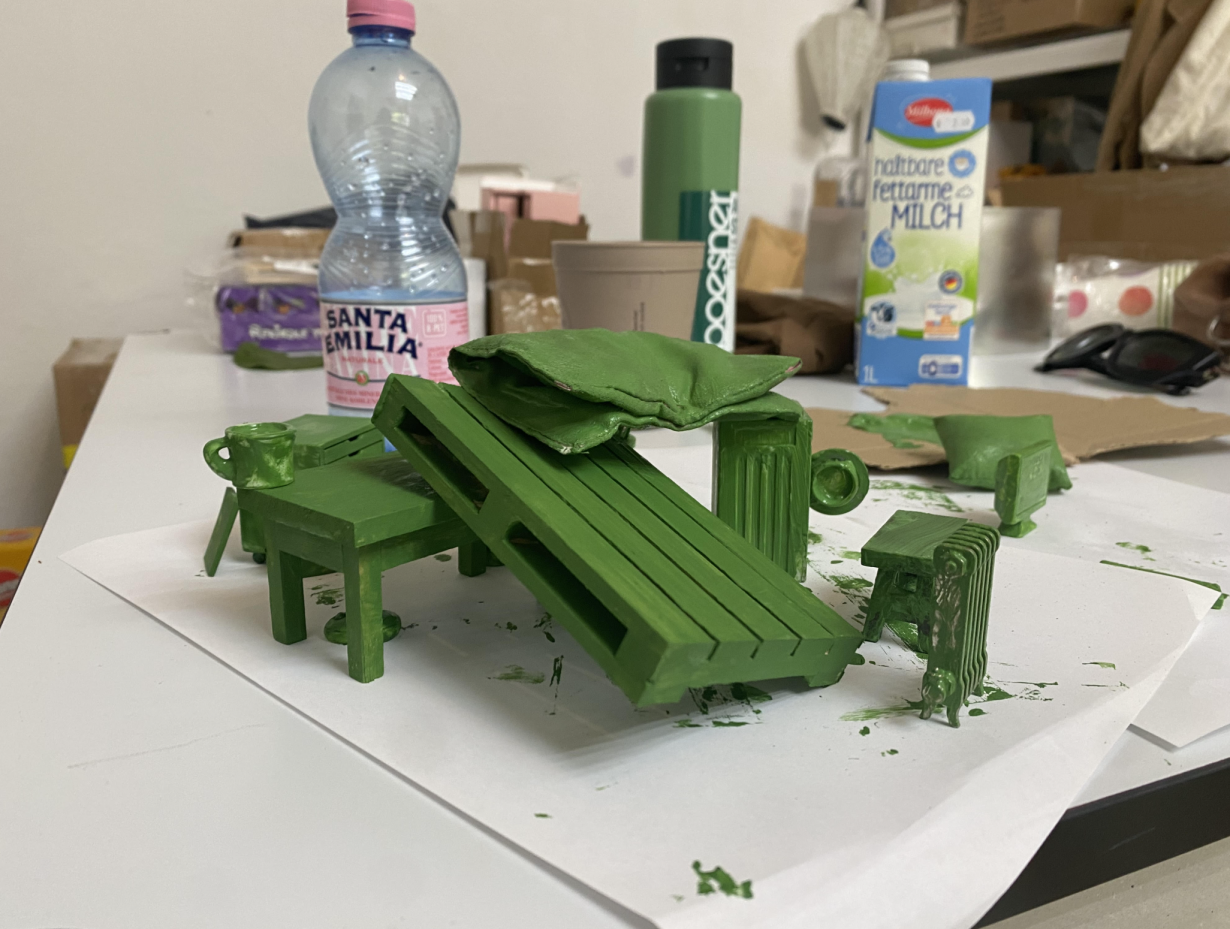
Phung-Tien Phan’s work explores how desire is manufactured to serve commercial interests, and how the roles that we take on – made manifest by the things we own and do – tend to fossilise into increasingly specific archetypes. In the artist’s work, that means assemblages incorporating furniture, domestic appliances, stuffed toys, organic matter, beauty products and more, all signifiers for the various parts of her constructed, inherited, perceived and projected identity: as a German-Vietnamese woman, a woman artist, a mother. Though the artist is less interested in capturing the essence of who she is than in unsettling the notion of identity as a solid concept in the first place. That said, Phan seems to know some things for certain about some people. She hasn’t shared anything about her upcoming exhibition at Edouard Montassut yet except its title, Stuck, and that there will be a sculpture resembling a bar at the front. Artworld flypaper. Mia Stern
Edouard Montassut, 14 October – 14 November
Yokohama
Azamino Contemporary vol.17: Suburban Interference: Relations with Urban Space
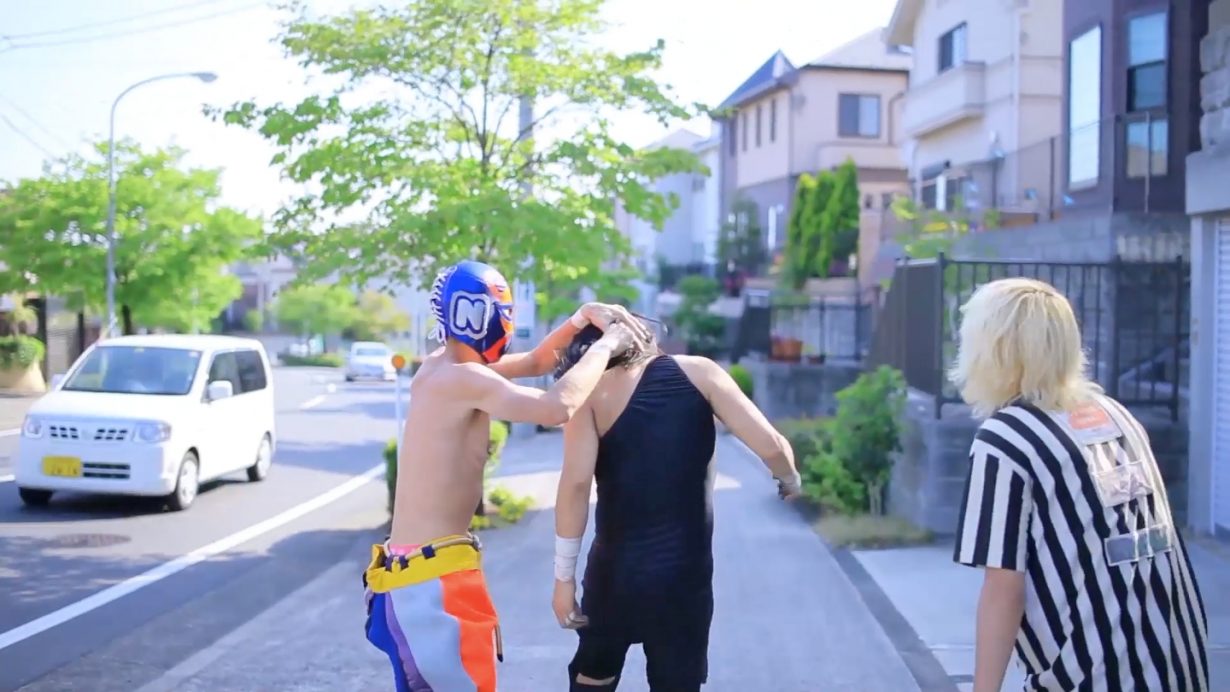
Interference is the provocative theme of this exhibition, set in the commuter neighbourhood of Amazino, established in 1976. Linked to French sociologist Henri Lefebvre’s idea that urban space is relational and socially defined, and Japanese philosopher Shunsuke Tsurumi’s concept of sakariba, where relatively autonomous spaces were used for informal gatherings, this exhibition includes approximately 100 works by seven artists/groups. Osamu Matsuda’s poignant and tragicomic works address the experience of marginalised city inhabitants, including that of his own impoverished family. Kyoko Taniyama is a sculptor and sound artist who has also recorded in writing the oral histories of urban neighbourhoods. Transfield Studio stage research-based participatory events in response to city spaces. Given the theme of urban intervention, multiple artists here are informed by street culture. Kawa is a project started by two photographers, Shinsaku Arakawa and Tokuyuki Sekikawa, who also publish a skateboard magazine of the same name. Asako Ishizaki’s graffiti and skateboarding-informed works have looked at traces, and the act of tracing, in the city; Koji Yamaguchi makes paintings of the everyday influenced by the skateboarder’s view of the city; and Haruya Nakajima aka Dope Men’s Vale Tudo in New Town documents impromptu street wrestling. Taro Nettleton
Yokohama Civic Art Gallery Azamino, 10 October – 3 November
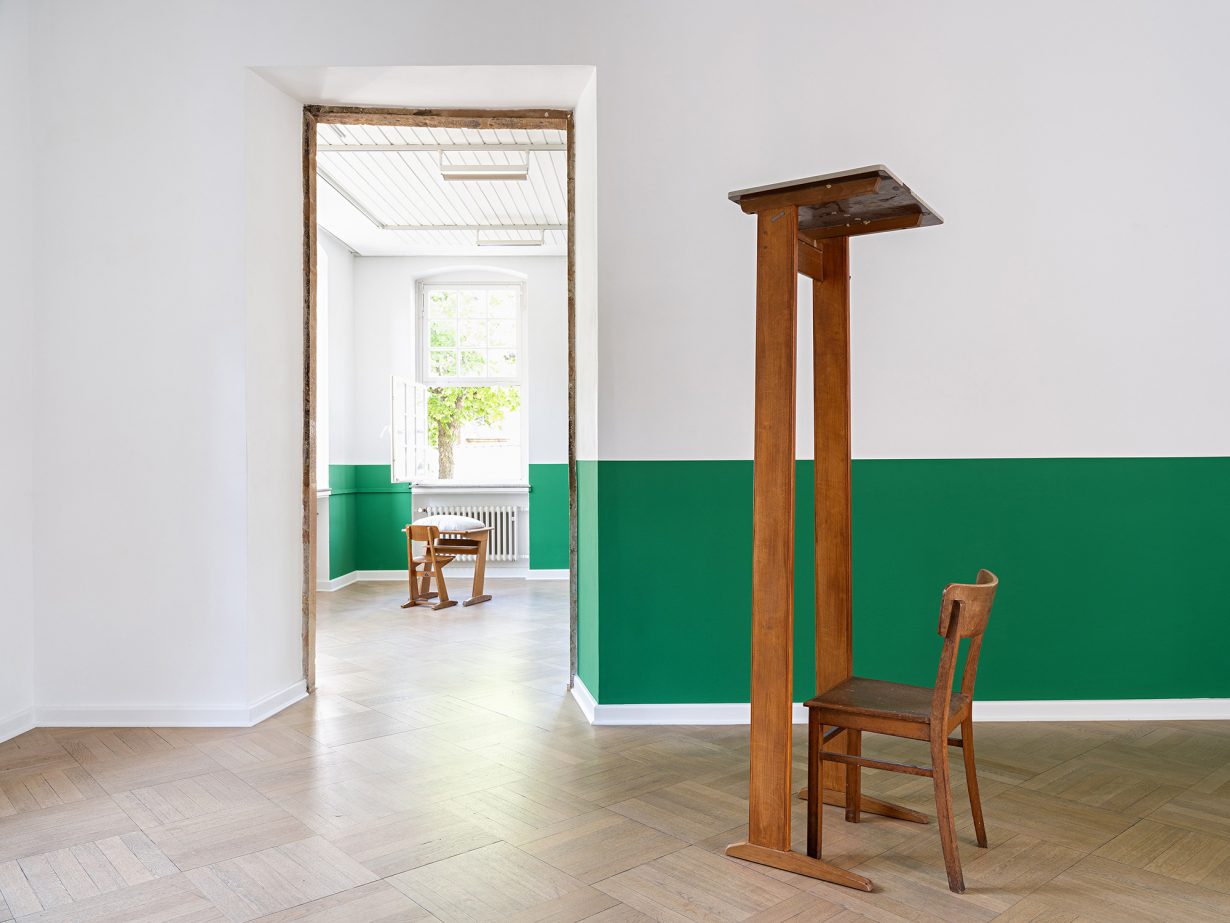
Photo: Fred Dott. Courtesy the artist and Kunstverein Bielefeld
Rio de Janeiro
Andréa Hygino: Projeto parquinho
There might be a few disappointed kids at MAM Rio this summer. In the foyer of the museum will be a fun zone featuring a climbing frame, slide, swing, seesaw and roundabout – yippee! Except all play will be curtailed by the school chairs that have been inserted by artist Andréa Hygino into her steel and wood structures, jamming their movement and preventing their use. Hygino, the daughter of a teacher and who has taught in public education herself, has long been interested in the social, political and cultural constraints within education, especially how they play out against Black or marginalised students. Her work taps critically into the lineage of South American radical pedagogy – the much quoted 1967 essay ‘Pedagogy of the Oppressed’ by Paulo Freire, for example – and how we are manipulated by the physical apparatus of education, dividing exploration from the training of economically productive bodies. It’s a typically deft gesture from one of Brazil’s most interesting young artists. Oliver Basciano
Museu de Arte Moderna do Rio de Janeiro, 17 October – 14 March
Tokyo
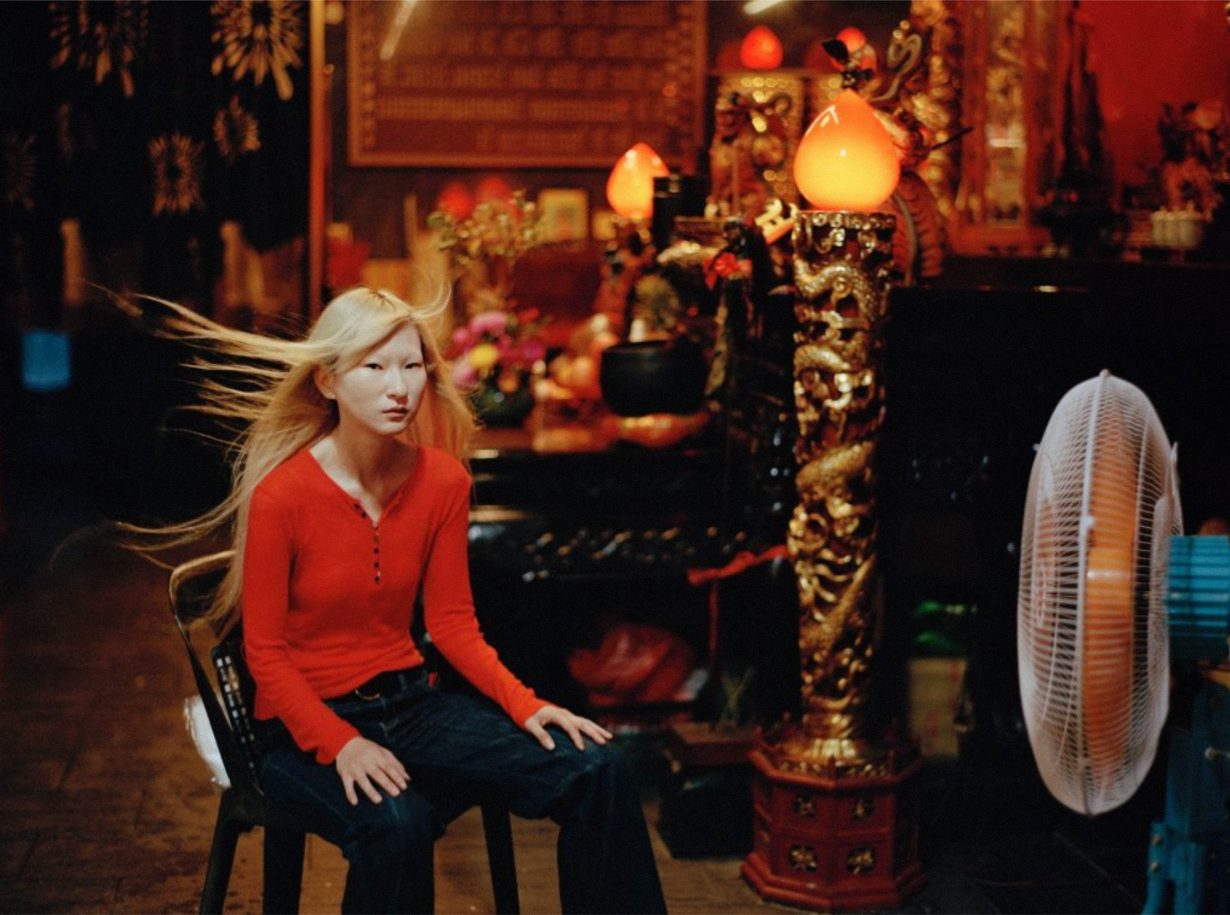
Understandably, given its title, this exhibition’s key advertising image is fumiko imano’s catchy colour photomontage of the artist and her fictional twin, dining while under quarantine in their room at Le Bristol hotel in Paris. A duet is usually a composition for or performance by two, but here, the works of four Chinese and two Japanese photographers – Murakoshi Toshiya, Wang Tuo, Sui Taca, Luo Yang, Jiang Pengyi and imano – all compete for attention. The curators’ stated aim to create new relations and resonances by placing these works in the same space is a bit blah; I’m pained to find connections beyond nationality and expect dissonance instead. But I like noise, and seen individually, the works offer something for most. Luo’s colour portraits of alt and oft tattooed young people will please fans of i-D and FRUiTS. Wang’s research-based videoworks set in northeast China and Toshiya’s immaculate gelatin silver prints of images shot in Fukushima since 2011 will appeal to lovers of history and memory. For those who like the classics, Sui’s series Odes traces a region described in the Book of Odes, an anthology of poems from the eleventh to seventh centuries BCE, foregrounding the years of fieldwork the project necessitated, andJiang’s prints made sans camera by recording firefly bioluminescence directly onto film look surprisingly like ab-ex paintings. Taro Nettleton
Tokyo Photographic Art Museum, 30 September – 17 January
Tunis
Biennale de l’Image en Mouvement: Becoming the Ocean
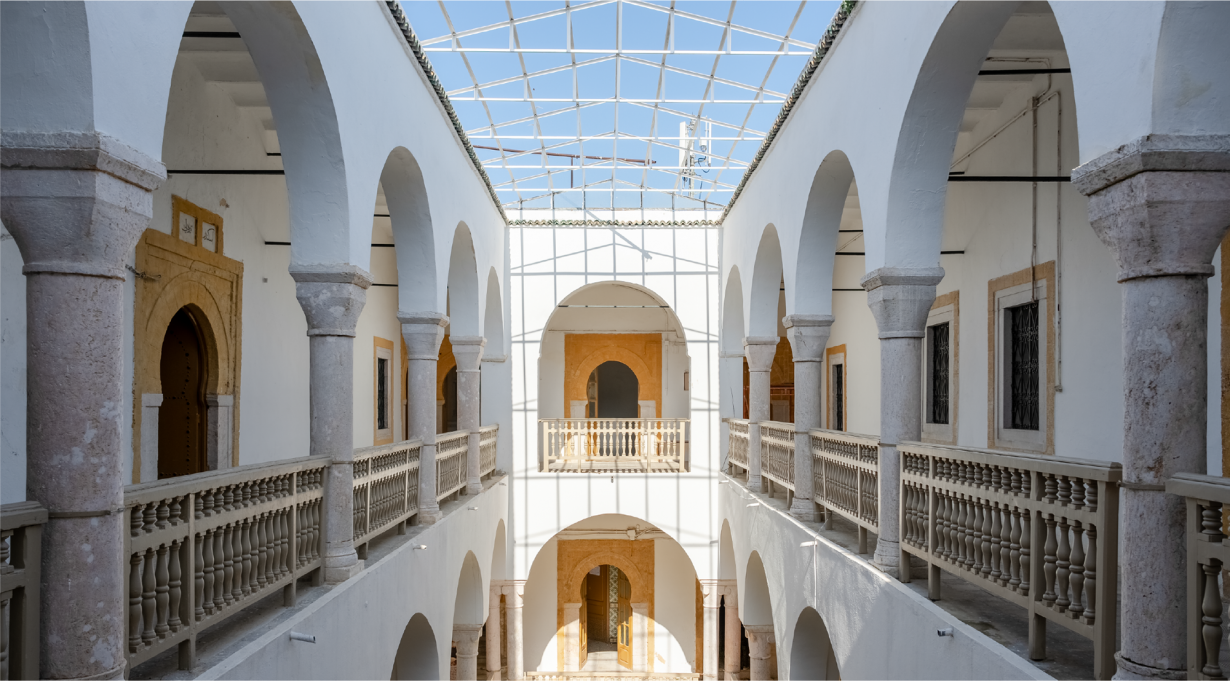
Curated by Centre d’Art Contemporain Genève’s Andrea Bellini and Ibraaz cofounder Lina Lazaar (also vice-president of the Kamel Lazaar Foundation, which organises this event), this exhibition takes its title from a text attributed to Lebanese writer and artist Gibran Khalil Gibran and features newly commissioned works by 16 artists (including Paulo Nazareth and Diane Severin Nguyen, Natasha Tontey and Younès Ben Slimane) from (broadly speaking) the Global Majority (or, in old money, Africa, the Arab world, Latin America, Asia and their diasporas) that consider themes of interdependence and the idea of losing (and finding) yourself in something bigger. The exhibition itself opens in the context of the eighth edition of Jaou Tunis, which features performances, live events and a public symposium dedicated to the urgencies (from climate justice to armed conflict) facing the Mediterranean and Arab worlds. Nirmala Devi
Tunis, 23 October – 22 November
Abu Dhabi
Spices and Wonders: Sailing the Indian Ocean
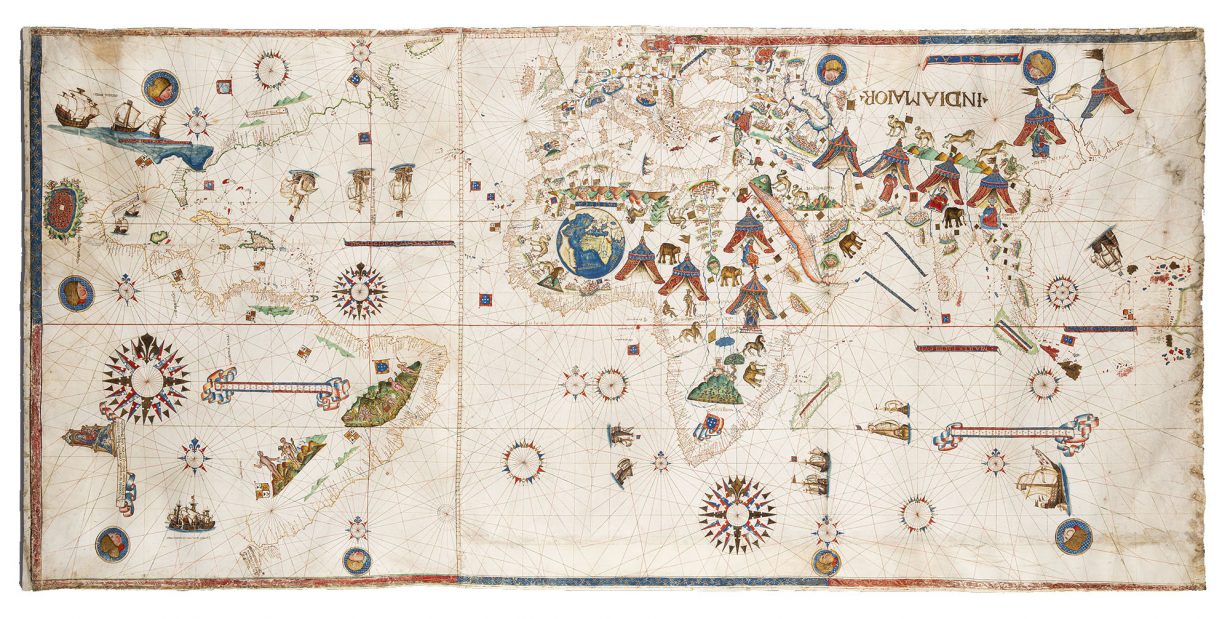
Can you imagine life without spice? Bread rolls without cinnamon, Sichuan cuisine without chili peppers and the UK without Spice Girls? You might think of cloves and nutmeg from the ‘spice islands’ in modern-day Indonesia, chili peppers from the Americas and all the bloody wars Europeans fought to add some aroma to their… err… turnips. But the circulation of flavours had begun centuries earlier in more peaceful ways, before Portuguese fleets stepped into the trading network and sought to monopolise it. Across the Indian Ocean, merchants and travellers carried with them not only spices but habits, technologies, cultures and ideas: black pepper from India was reaching Egypt, the Chinese were chewing on cloves to freshen up their breath. Spices and Wonders, opening in one of the hubs of this extensive network, traces a millennium of maritime exchange across these routes. On view will be more than 200 objects, ranging from Chinese kuancai screens, depicting busy trading ports, to Italian maps depicting an appetising Afro-Asian world, populated by fortified cities, affluent kings, dragons and unicorns. Yummers. Yuwen Jiang
Louvre Abu Dhabi, 14 October – 14 February
New York
Locating Girlhood: Place and Identity in Early American ‘Schoolgirl’ Art
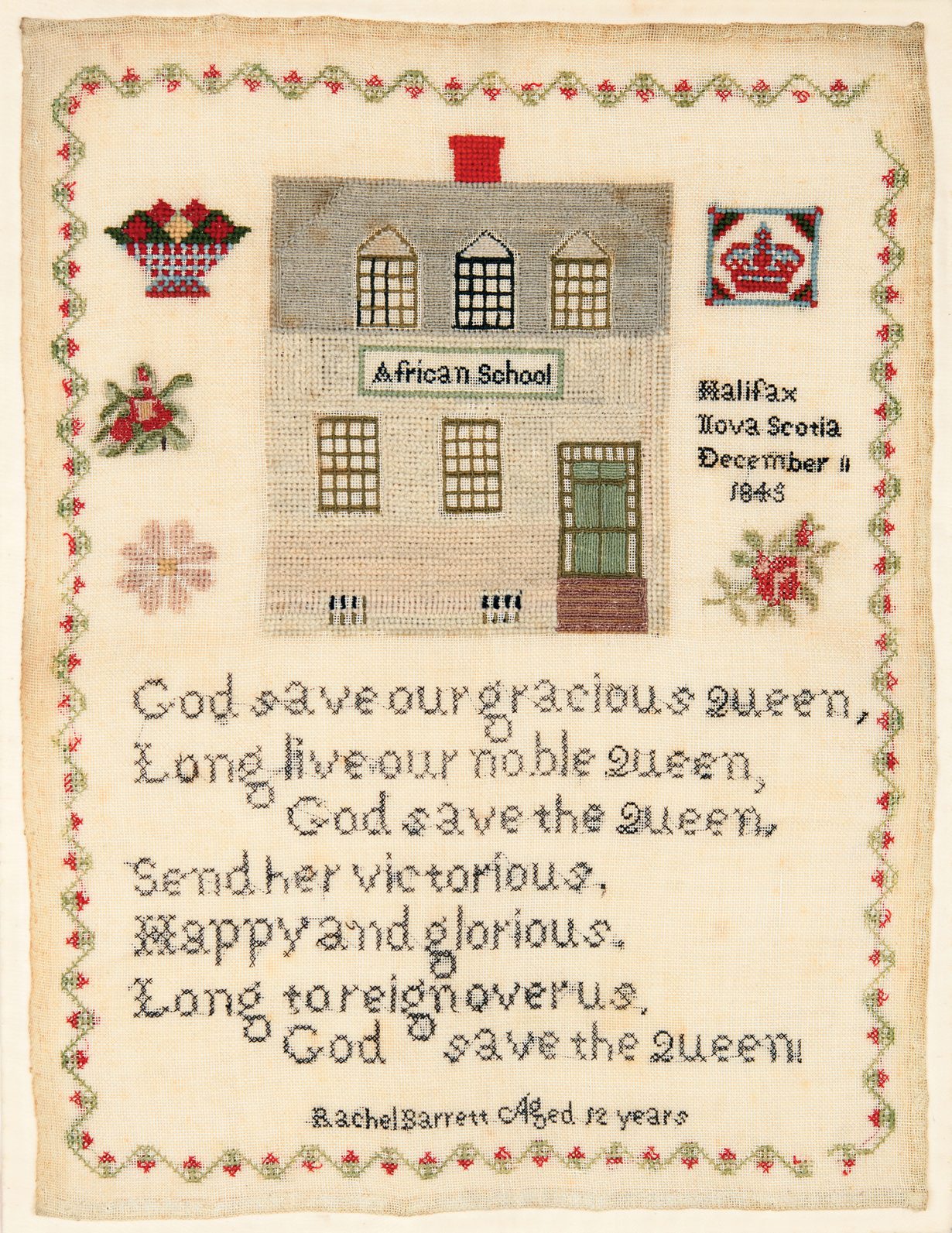
This exhibition showcases nearly 100 pieces of ‘schoolgirl’ art – needleworks and watercolours made by girls and young women as part of their education – from the British American colonies and early US history, a great many of which depict landscapes, cityscapes, gardens and world maps. It asks how the act of picturing ‘America’ contributed to the formation of national identity among a population that could often only participate in civic life by proxy. A silk embroidery by Lucina Hudson of South Hadley, Massachusetts, made in 1808 at the local Abby Wright School, shows a young woman in an American landscape – the artist’s self-portrait as the allegorical figure of Liberty – holding a cornucopia and a ‘vividly improvised’ flag in primary colours. A wool textile by Maria Bolen of Philadelphia features a bald eagle bearing patriotic emblems, perched on a brick building with a yard full of people, livestock, birds and pets; in the sky – level with the big eagle – the artist has stitched her name, followed by, ‘Her Work 1816’. Taken together, these artefacts show how eighteenth- and nineteenth-century American schooling reinforced the strictures of traditional gender roles while providing subtle means by which girls could express their idiosyncratic selves under the pretence of a humble craft. Jenny Wu
American Folk Art Museum, 9 October – 28 February
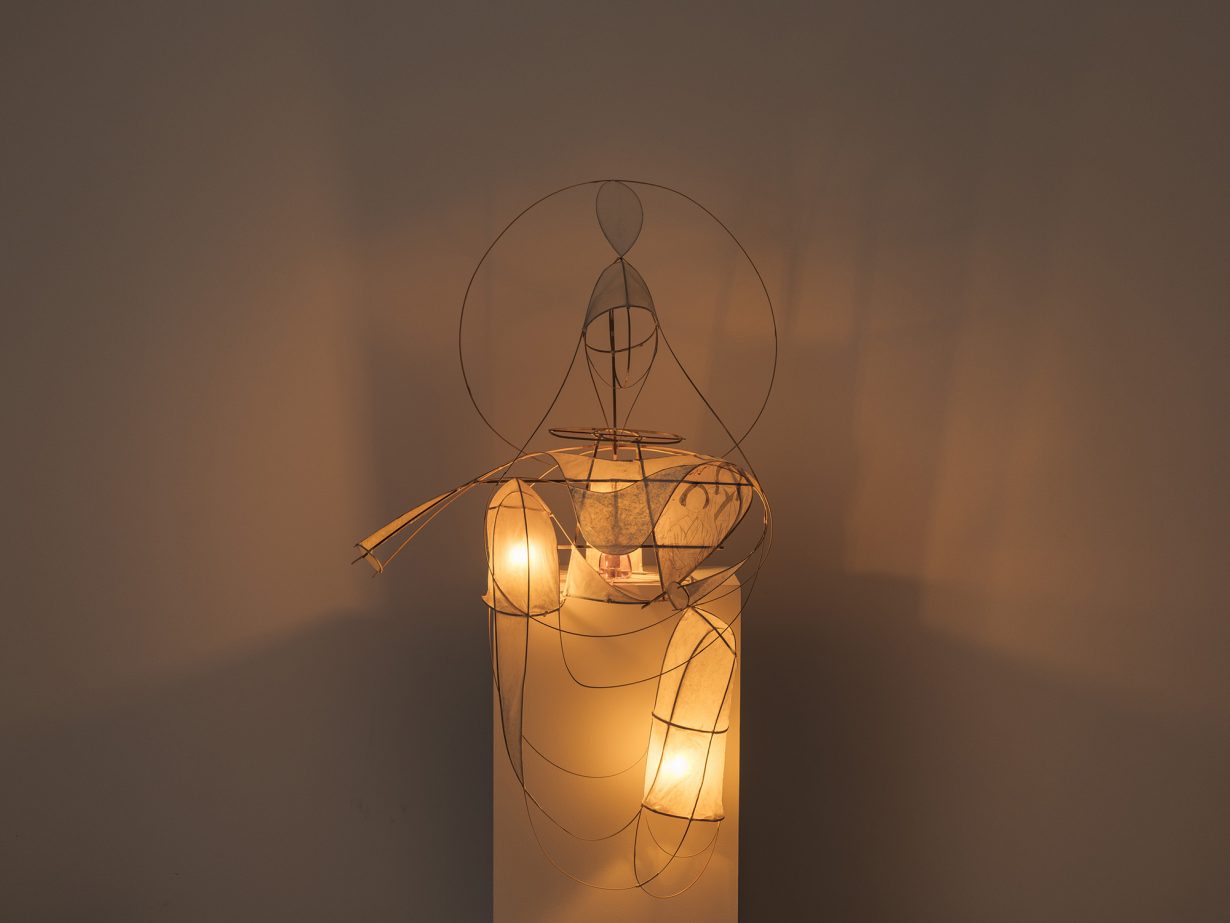
Photo: Sebastian Bach. Courtesy the artist and 47 Canal, New York
Cici Wu: Auld Lang Syne (prelude)
The Hong Kong-raised, New York-based artist Cici Wu makes ‘protocinematic objects’: lanterns shaped like doors, buildings, bodies and dirigibles, their surfaces translucent and ochre-toned like onion skins. In her solo exhibition inaugurating 47 Canal’s new Chelsea gallery, 11 mulberry paper, bamboo wire and willow branch forms, all made in 2026, flicker silently to the cadence of Auld Lang Syne. The New Year’s tune was first recorded in writing by the Scottish poet Robert Burns in 1788 and has since embedded itself, via missionaries, merchants and filmmakers, in the cultural fabric of many Asian countries (it plays nowadays, for example, in stores across Japan to politely signal closing time). Since the end of a calendar year also commemorates the completion of certain astronomical processes – 12 lunar cycles, one solar revolution and so on – these sculptures share a celestial theme. The retrofuturistic From Moon to Sun resembles a cross between a blimp and a rocket ship. Goddess Bari (New Moon), Wu’s rendition of the Korean deity of the Big Dipper and conductor of dead souls, sits nursing a glowing belly, as if poised to float up and take her place among the stars. Jenny Wu
47 Canal, through 7 November
Foshan
Sopheap Pich: Silent Restraint
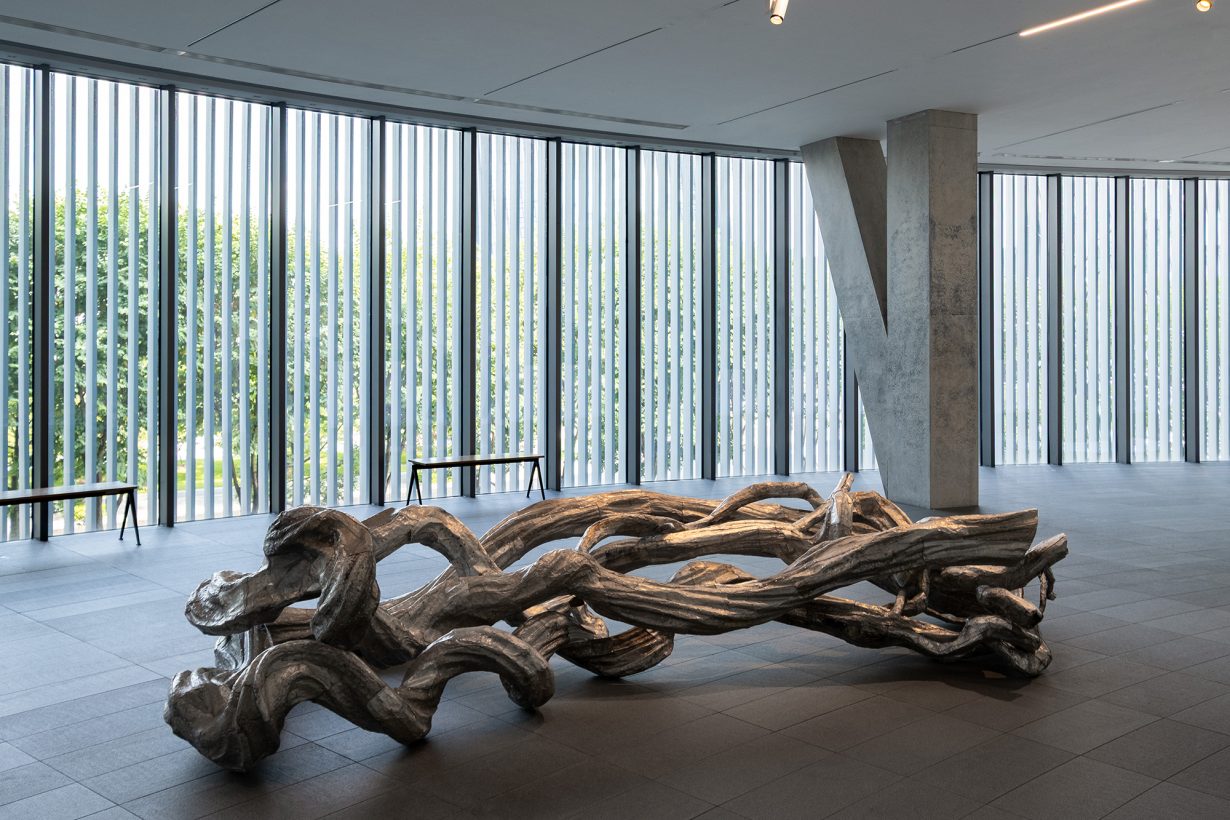
Since the early 2000s, Sopheap Pich has been using everyday materials sourced in Cambodia’s capital, Phnom Penh, to forge his own minimalist sculptural language. This solo show, his first in China, traces that development through 30 works, from bamboo and rattan sculptures of biomorphic or anatomical forms – the signature pieces that brought him global attention – through to gridlike wall reliefs layered with beeswax and burlap and recent experiments with metal and glass. For much of his career, Pich’s handmade creations have habitually been framed as responses or allusions to Cambodia’s history and trauma (including at Documenta 13, where his grid works were displayed alongside a painting, by the late Cambodian painter Vann Nath, depicting an interrogation at a Khmer Rouge prison). But Silent Restraint, the He Art Museum claims, is concerned with the emotive, rather than narrative, ‘undercurrent’ that flows beneath the surface of each sculpture. New and old works alike – including a reinterpretation of his first rattan work, a pair of hollow lungs titled Silence (2004) – tease out this thread, which rests upon Pich’s strong lines and playful process as much as it does the crude resourcefulness of his homeland’s streetlife. Max Crosbie-Jones
He Art Museum, Shunde, through 20 February
Bogotá
In 1966 the Colombian electronic-music pioneer Jacqueline Nova wrote ‘The Wonderful World of Machinery’, an article describing her work’s ‘aesthetic concept’ as ‘music for music’s sake. I do not describe anything, much less convey a message.’ This testament to materiality made it almost inevitable that Nova would end up collaborating with her contemporary Feliza Bursztyn, an artist who had also been experimenting, making her steel sculptures both sonic and kinetic. Bursztyn has a similarly nihilist outlook to art’s purpose: ‘My greatest passion is welding,’ she once said. ‘I love the fire and the medium. The art of destruction, so to speak.’ The two women’s collaborations throughout the 1960s form the springboard to this group exhibition, which includes contemporary artists working in their lineage: expect a lot of grvvvvvzzzzz, bangs, chi-chi-chi-chis, beeeeeeeeeeps and urhhhhhhhhhs reverberating through the galleries. Oliver Basciano
Museo de Arte Miguel Urrutia, 29 October – 18 January