***Subscribe now or get your copy from our online shop***
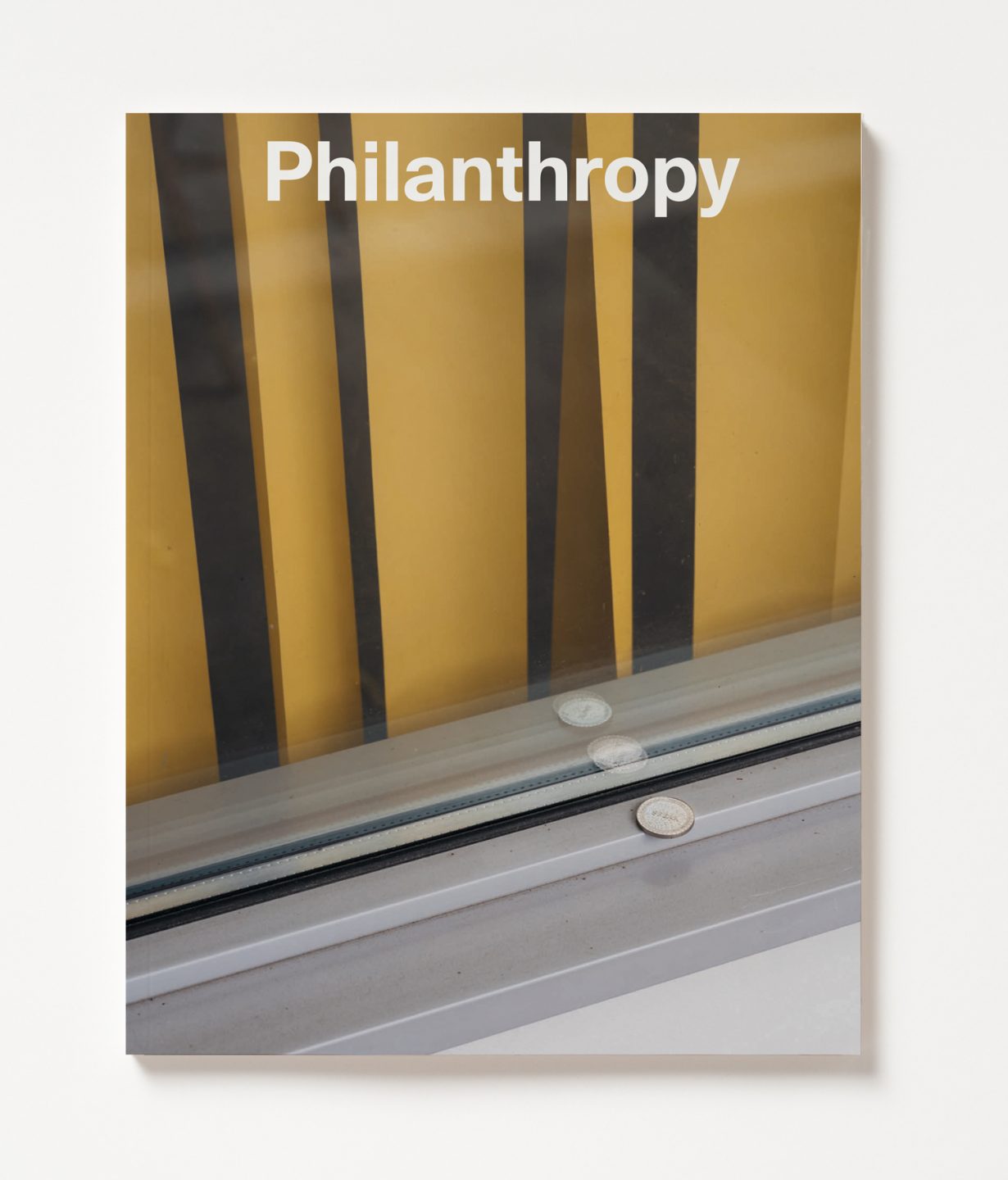
As most governments increasingly regard the arts in general and ‘fine’ art in particular as a luxury, the sector has become more dependent on private funding. Which of course is not without its own issues. For those reasons ArtReview is taking an annual look at the evolving nature of philanthropy today in the form of a 66-page publication delivered free with its October issue. In this year’s edition, Jeni Fulton takes a look at the extent to which private foundations are starting to eschew brick-and-mortar structures to become more nomadic entities: the type ‘that commissions works, rents exhibition spaces and moves on’. Without the financial commitment of running a permanent space and often relying on very little in terms of official structures, these foundations can afford to take risks and can commission artworks that would otherwise take years to produce, argues Fulton. The flip side to this is that ‘without endowments, published budgets or other visible indications of long-term funding, itinerant foundations can come across as structurally opaque and overly dependent on the goodwill of founders’.
In New York, Jenny Wu looks at what it takes for small (and smallish) art institutions to stay alive in the city. Wu speaks to various nonprofits about fundraising and the types of compromises that may come with it. ‘It’s not that weird and worthwhile programming does not take place at larger nonprofits… But there is often a palpable disconnect between the progressive, experimental ethos these entities profess and their pseudo-corporate governance structures, which affect increasing numbers of people as the organisations grow in age and ambition.’
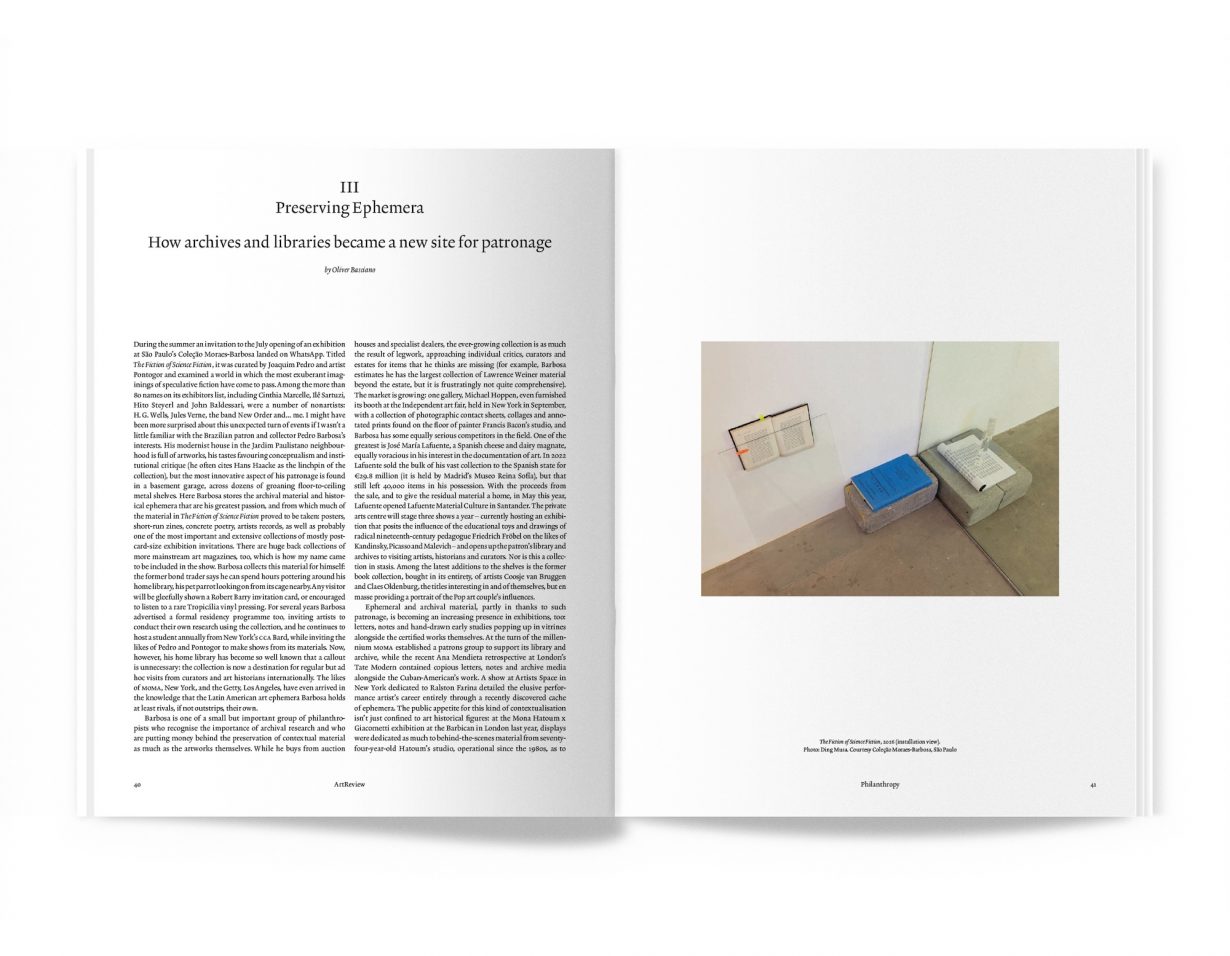
Oliver Basciano, meanwhile, considers the growing practice of preserving archives and artists’ ephemera such as letters and other behind-the-scenes materials. An interest ‘perhaps spurred by the fact that the supply of such material has dwindled since the 2000s’, writes Basciano, ‘the advent of email, jpg invitations and online databases of works, alongside cost and environmental concerns, ending the physical paper trail of studios and galleries’.
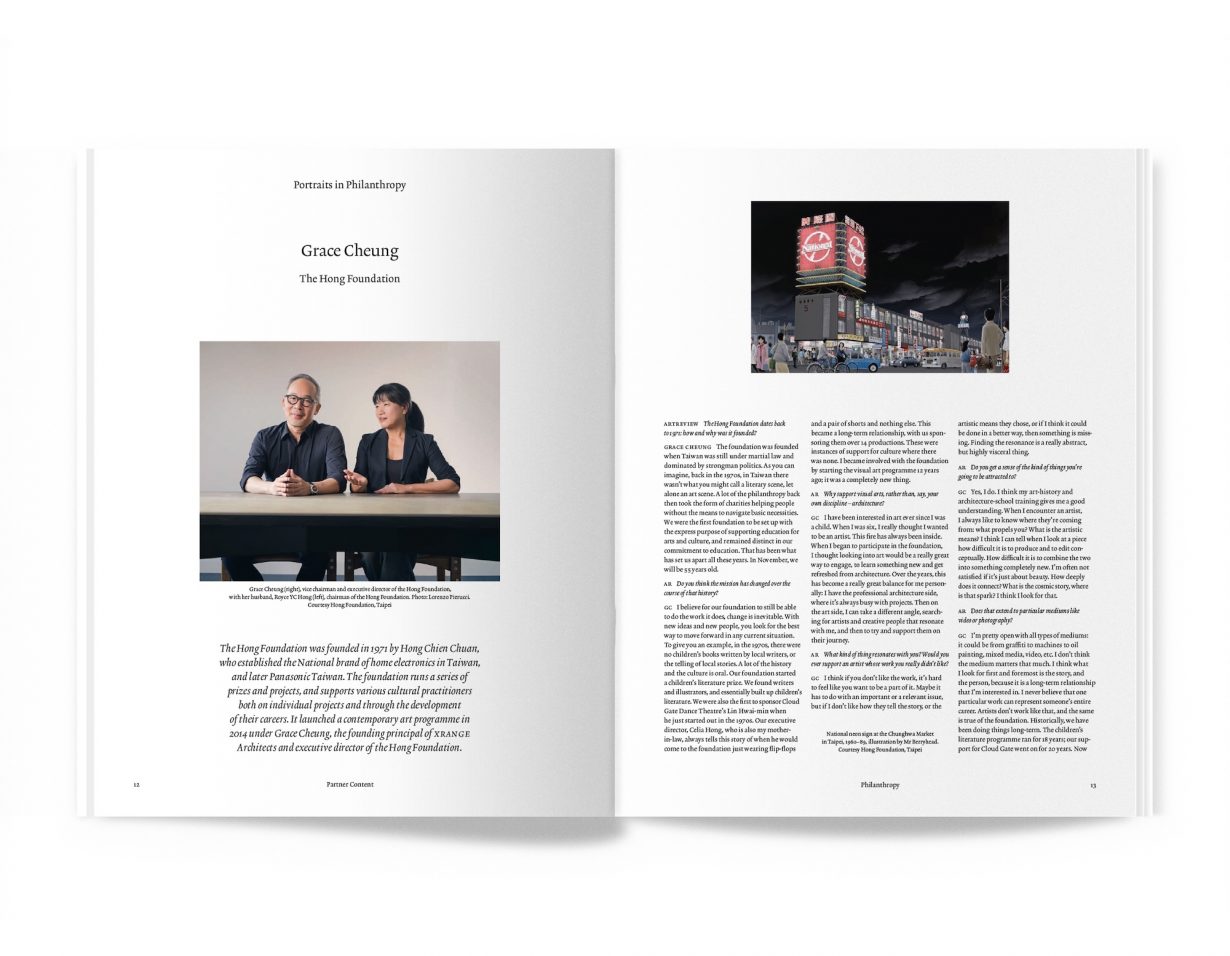
Also in Philanthropy are select case studies on how philanthropy is involved in shaping the public sphere, diplomacy and the development of rural museums, as well as interviews with prominent actors in the world of philanthropy Grace Cheung, Amalia Amoedo, Vignesh Sundaresan and Stefan Björkman & Kieran Long, about why and how they entered the world of art philanthropy.
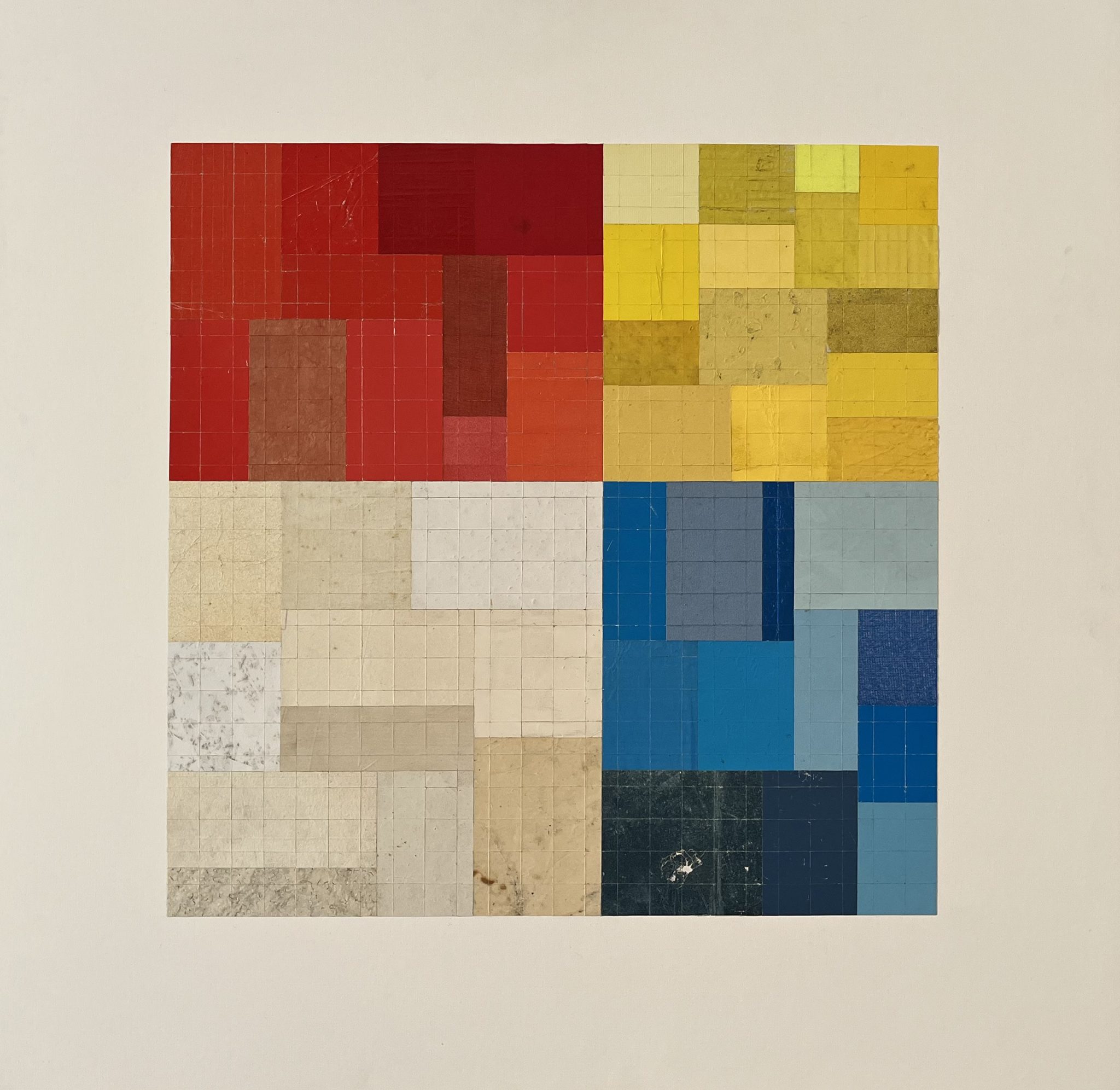
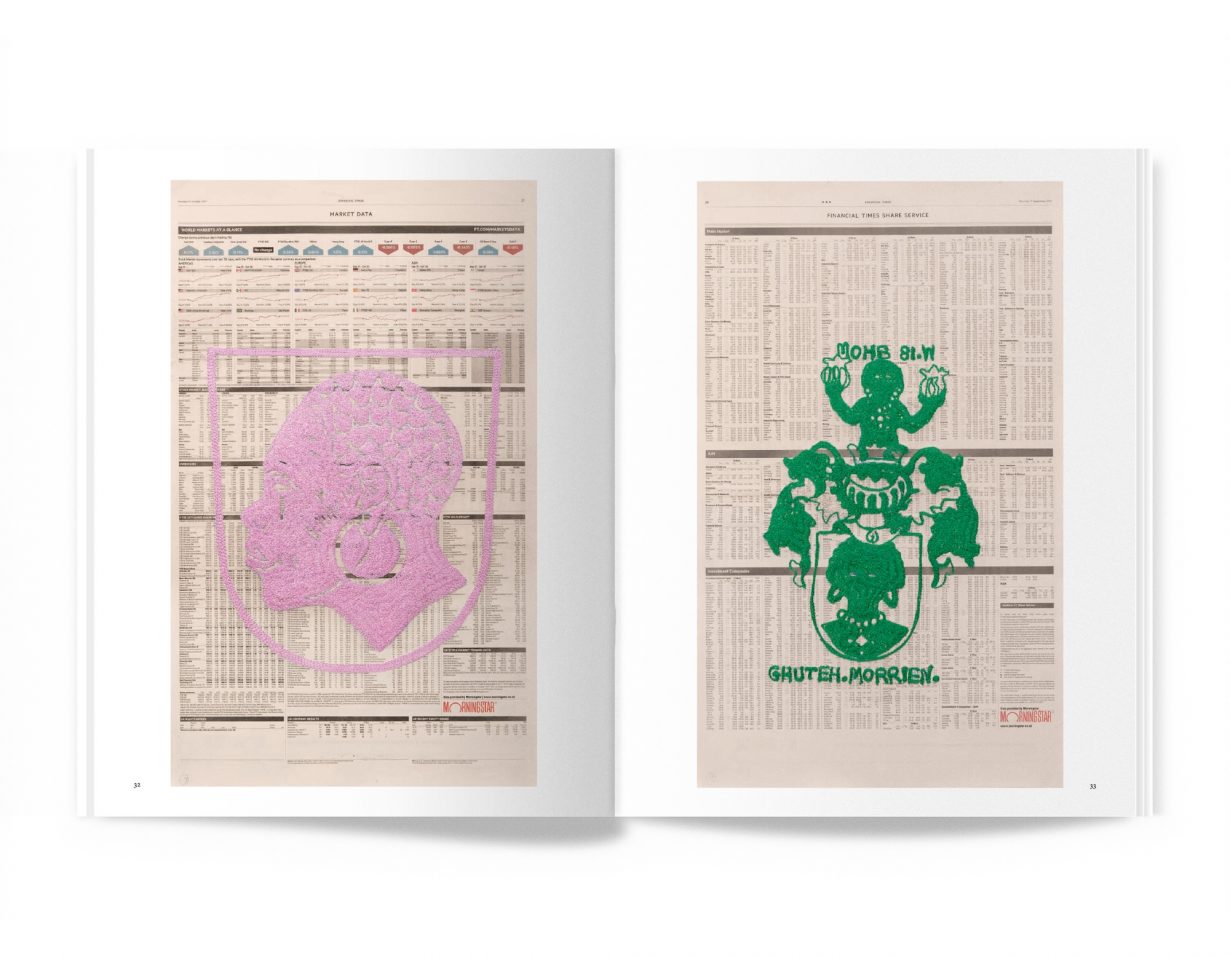
Alongside all that – to put it all in context, as it were – is a commissioned artwork by Ryan Gander and a portfolio of works by Godfried Donkor.
Philanthropy is supported by Hong Foundation, Fundación Ama Amoedo, Padimai Art & Tech Studio, Amos Anderson Fund & Amos Rex and PARKSEOBO FOUNDATION.
***Subscribe now or get your copy from our online shop***