Watching Disclosure Day, Beatrice Loayza wonders if Hollywood’s great empath is losing his way
In the two weeks after the release of Steven Spielberg’s Disclosure Day, it’s been declared a quintessential ‘late’ film, ie a shamelessly personal object that both reiterates the director’s past films and refines them in a new – typically blunter, bolder, and more divisive – direction. I agree, Spielberg’s alien invasion film hearkens back to the big-budget spectacles of Close Encounters of the Third Kind (1977), E.T. (1982) and War of the Worlds (2005), but with a notable inversion: unlike those films, Spielberg doesn’t smuggle his ideas – about belief in a higher power, about empathy as a transcendent force – into the mold of a classically entertaining action film. Instead, his humanist principles come first, structuring the events of the film itself – to goofy and at times hubristic results.
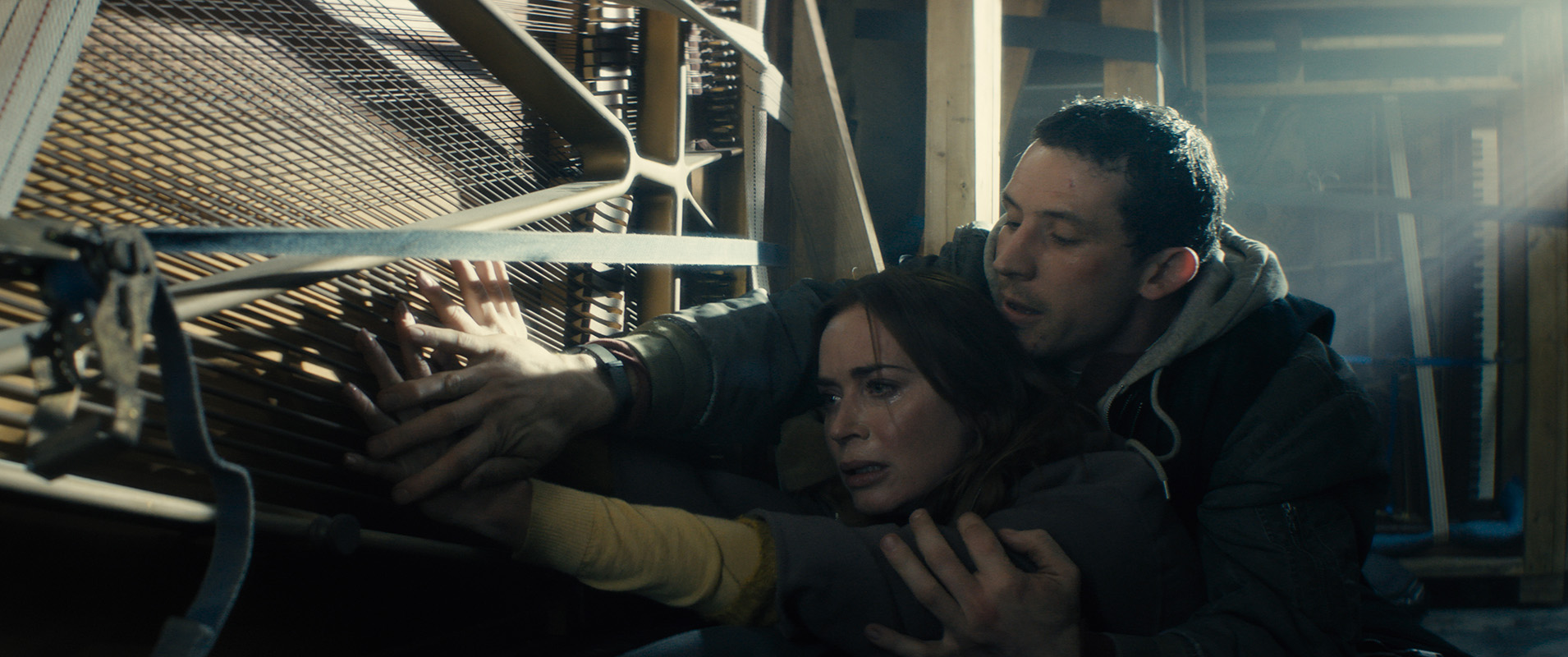
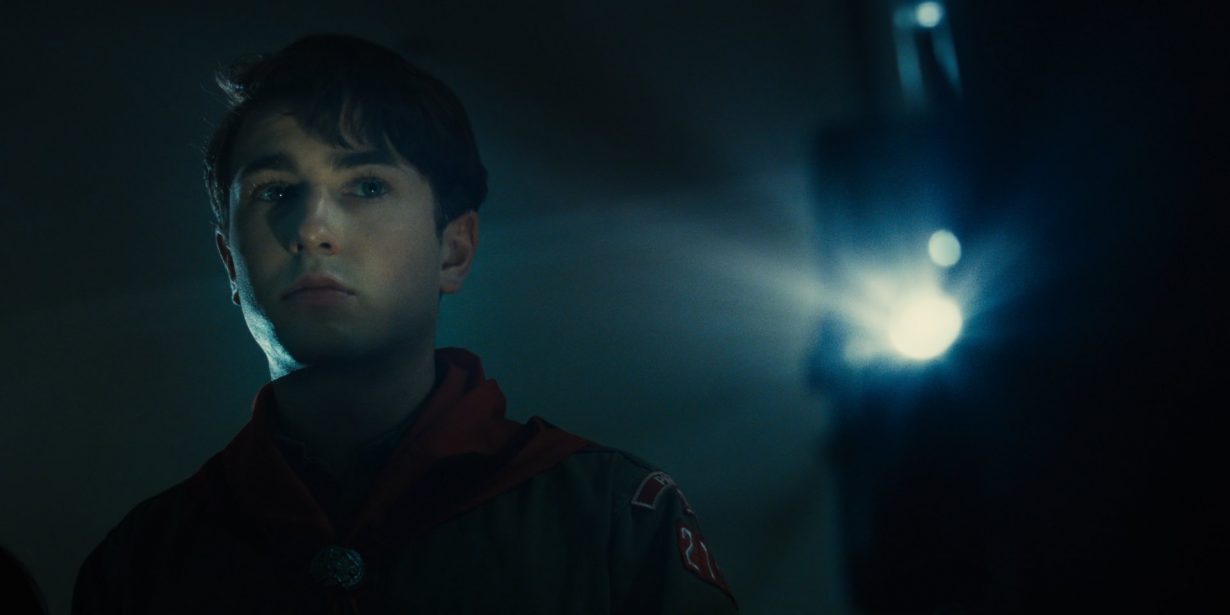
As in his Minority Report (2002) and The Post (2017) before it, Disclosure Day pits principled individuals against a sprawling government conspiracy. In the opening, we meet Daniel Kellner (Josh O’Connor) in the bleachers of a wrestling match, attempting to hand over a backpack full of classified materials to the members of a defector group led by Hugo (Colman Domingo), former “director of biological assets” for a secretive wing of the ‘Defense Department’ manned by a private organisation called Wardex. Wardex boss Noah Scanlon (Colin Firth) and his minions sabotage Daniel’s mission, using his girlfriend Eve (Jane Blankenship), whom they’ve taken hostage, as leverage. During the hand-off, Eve slips Daniel a miniature metal obelisk that wields incredible powers. The tool deters their Wardex enemies from attacking, allowing them to drive off in a stolen SUV – the beginning of an extended chase scene by foot, train and crashing cars that spans the entire film.
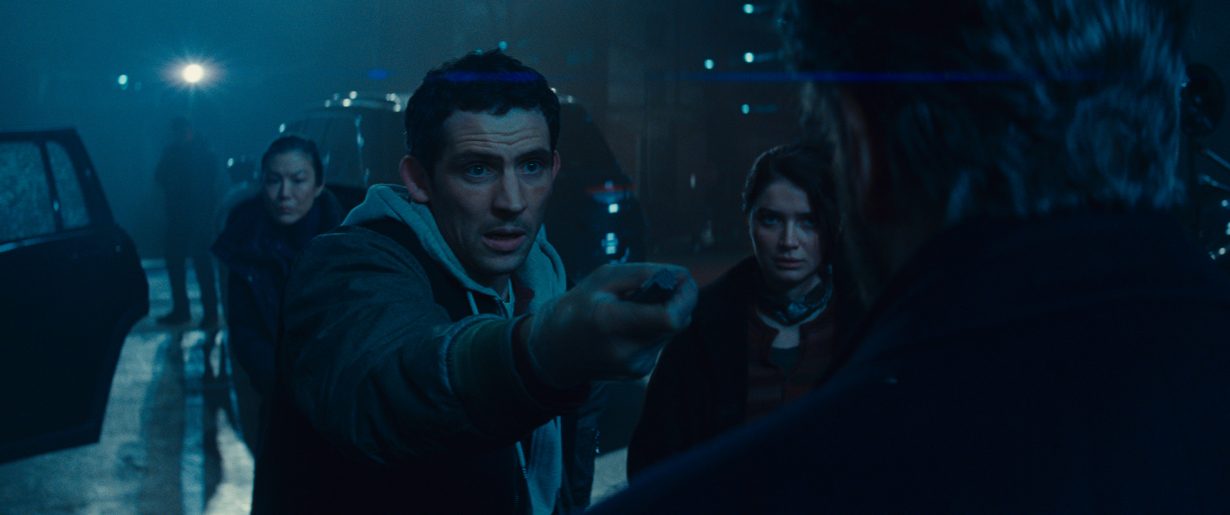
Written by David Koepp (from an original story and treatment by Spielberg), who penned several of the director’s previous blockbusters (Jurassic Park, 1993; Indiana Jones and the Kingdom of the Crystal Skull, 2008), Disclosure Day is particularly transparent about the extent to which its characters exist to serve the plot – not necessarily a dig at such an intricate actioneer, but a reminder of the film’s ideological bent, in which characters represent concepts more than they do real people. In a moment of pause at a remote safehouse, Daniel, a cybersecurity wiz and former Wardex employee himself, must explain to Eve his reasons for defecting: for over half a decade, the government has not only been concealing the truth about the existence of extraterrestrial life, it’s been torturing and exploiting these beings in the name of technological progress. Daniel doesn’t say much, he merely shows Eve the footage he possesses and plans to broadcast to the masses. Eve, a former novitiate, contests the goodness of this mission: humanity could lose its faith in God, and descend into chaos, if shown there is life beyond Earth.
The film’s second – arguably more important – strand shows that Spielberg isn’t really talking about celestial matters. Margaret Fairchild (Emily Blunt), a weatherwoman in Kansas, is transformed after a suspiciously bold cardinal flies into her condo: she speaks Russian and Korean without realising she’s switching languages, and on-air she delivers what she thinks is the local forecast as a series of clicks and pops. Sent straight to the emergency room after this fiasco, she somehow intuits that the FBI agents asking for her in the lobby are not who they claim to be. Along with her skeptical boyfriend, she flees the hospital, receives a call from Hugo, and, with only the guiding force of her instinct, traverses state lines to unite with Daniel. It’s later revealed that the two are linked by a childhood encounter with the aliens, which has given them a kind of magnetic bond with one another that transcends reason. Daniel, for instance, is able to understand Margaret’s staccato weather report as binary code. His genius in numbers is one side of a coin that Margaret completes with her preternatural ability to connect linguistically – and emotionally – with other humans. Her ‘superpower’, it turns out, is her ability to know immediately what others are going through, their greatest vulnerability and sorrow. She verbalises what she learns after locking eyes with whoever stands in her way – from a speeding officer to the dastardly Scanlon – which is enough to disarm (almost) everyone and cause them to back off. In Spielberg’s universe, empathy is a weapon as capable of forging paths as it is of violence.
Ultimately, as film critic Richard Brody argues in the New Yorker, this transcendent empathy assumes its most perfect form through the dissemination of images, a kind of shorthand for the power of cinema; Daniel, being a bit like the director, the craftsperson who arranges the many moving parts, and Margaret, the actress, the one who, as if by magic, brings these parts to shimmering human life. In The Fabelmans (2022), Spielberg’s autobiographical bildungsroman, cinema is a tool of discovery and initiation. Sammy Fabelman, an avatar for young Spielberg, intuits his mother’s affair – his naive illusions about domestic bliss shattered – when he observes her with her lover in the raw footage he’s editing for a home movie. A similar kind of paradigm-shifting revelation is the crux of Disclosure Day, which hinges on changing the world precisely by showing its inhabitants a sort of movie: in the climax, Margaret returns to her Kansas news station and transmits hundreds of hours of classified footage to global audiences, whom we see, in montage, watching from their living rooms, on their phones as they drive, ride the subway, and travel by plane.
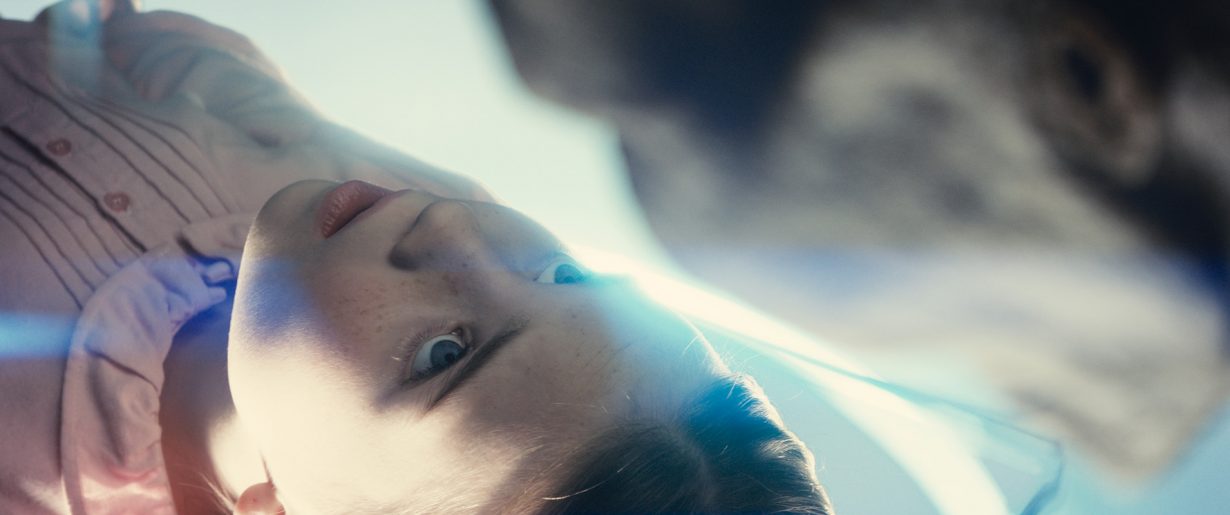
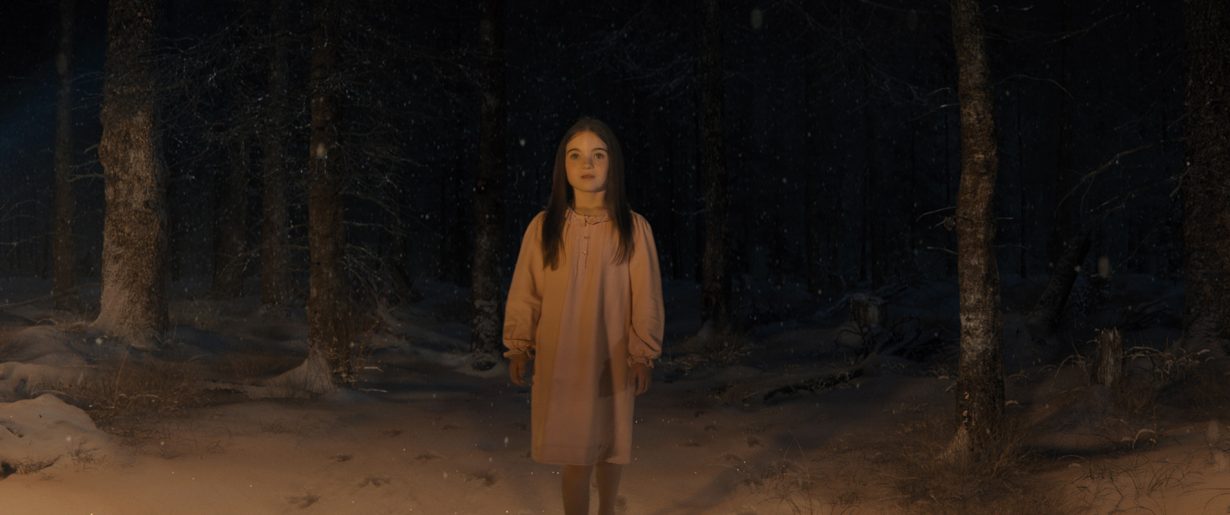
If The Fabelmans has been viewed as narcissistic by some critics – why should young Spielberg’s path into cinema, a condition of his formative trauma, be worthy of a feature-length family epic? – its unabashed navelgazing is, in my mind, at least justified by the talent of its performers, who play characters that grow shades of meaning; who bloom with eccentricities, tics and hang-ups across the film that eventually moves us to care. Absent of these richly-drawn characters, Disclosure Day is fueled by twisty action, its set-pieces strung together by major miracles that secure unlikely getaways. Credit where credit is due: Emily Blunt’s Margaret brings a vibrant sense of humour and awe to her part; she is as amused, delighted and shocked as we’re supposed to be by her wild manipulation of the plot. But this wondrous energy runs much less convincingly throughout the other parts of the film. Presumably, Koepp’s script extends the film’s providential logic to the mechanics of the chase, but in practice these scenes simply feel sloppier and more incredulous than usual. As such, its thrills feel muted; the simple magic of, say, an invisibility shield that Margaret – when she gets her hands on an obelisk – conjures to usher the crew of defectors out of harm’s way, is more gimmicky (and lazy) than classical. In order to unleash the full extent of Margaret’s powers, she must first commune with her childhood self, courtesy of an exact replica of her family home constructed by Hugo and his team. This sequence, which involves Margaret reliving the alien abduction she experienced as a little girl, is visualised as a journey through a snowy forest led by aliens that have taken the form of woodland creatures rendered in crude CGI. It’s as touching as a Thomas Kinkade pastoral.
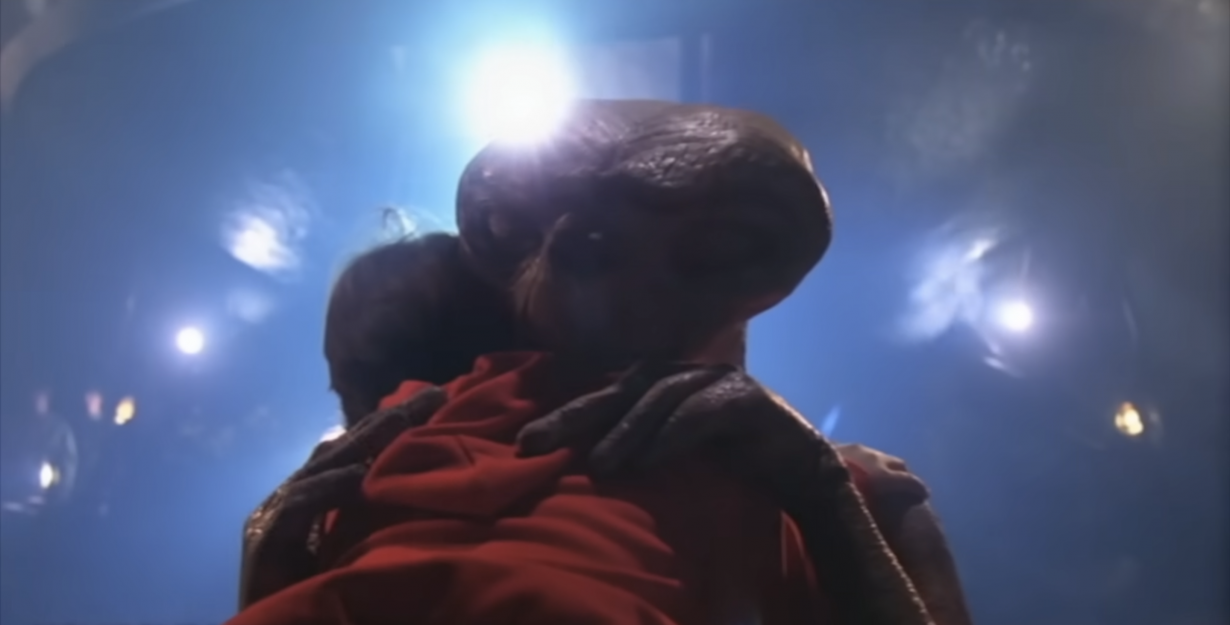
It’s significant that so many scenes designed to inspire awe simply don’t. Historically, Spielberg’s genius has been in constructing images and scenarios that, despite their outward silliness (see E.T.) somehow manage in context to turn viewers into putty; to manipulate us through performances and visual strategies that, yes, create empathy for dinosaurs, androids and wrinkly brown monsters. Against the odds, Spielberg has made us feel. Yet in Disclosure Day, this strategy manifests as a shell of itself; it has survived beyond the reality it once reflected and entered a state of disintegration, to paraphrase part of the discourse on late style elaborated by Theodor Adorno and Edward Said. Ironically, Disclosure Day foregrounds the role of empathy more than ever before. If movies are empathy machines, per film critic Roger Ebert, then Spielberg has maxed out this function. Beyond Blunt’s Margaret, the machine sputters and creaks.
Spielberg wants us to believe in the power of images, but the flimsiness and forced profundity of the climax proves instead that they are not enough. What’s more, this fantasy of capturing the entire world’s attention betrays a fundamental naivete in our relationship to moving images today, one that also feels washed and archaic. Arguably, there has been no shortage of horrifying images capturing the mass atrocities in Gaza, Sudan, Lebanon and other countries, streaming into our TVs and phones; and the ease with which they have been and are ignored should throw dreams such as Spielberg’s into question. The comparison would seem like a bit of a stretch were it not for the nature of the ultimately footage disclosed, which proves disturbing not merely because we see aliens, but because we see them amid the wreckage of exploded spacecrafts; their bodies battered and brutalized like innocent casualties of war. The pangs of familiarity I immediately felt in watching the disclosed footage rendered the film’s final moments – in which a news anchor’s worldview is shattered on live TV, her legible disgust and bafflement meant as a proxy for humanity’s upheaval – phony and weirdly flat, its attempt at creating moral urgency evocative only of the fact that Hollywood movies have a longstanding tradition of simultaneously criticising and spectacularising military catastrophes. Spielberg’s best films have moved us intuitively, their messaging vivid and felt only after we’re swept off our feet by technical virtuosity; now, the other way around, the limits of this humanism are startlingly apparent, existing only in the content of cinema – that is, only in the context of himself.
Read next Against the ‘Aesthetic Turn’ in Cinema