Morocho’s objects appear as relics even while they depict our present
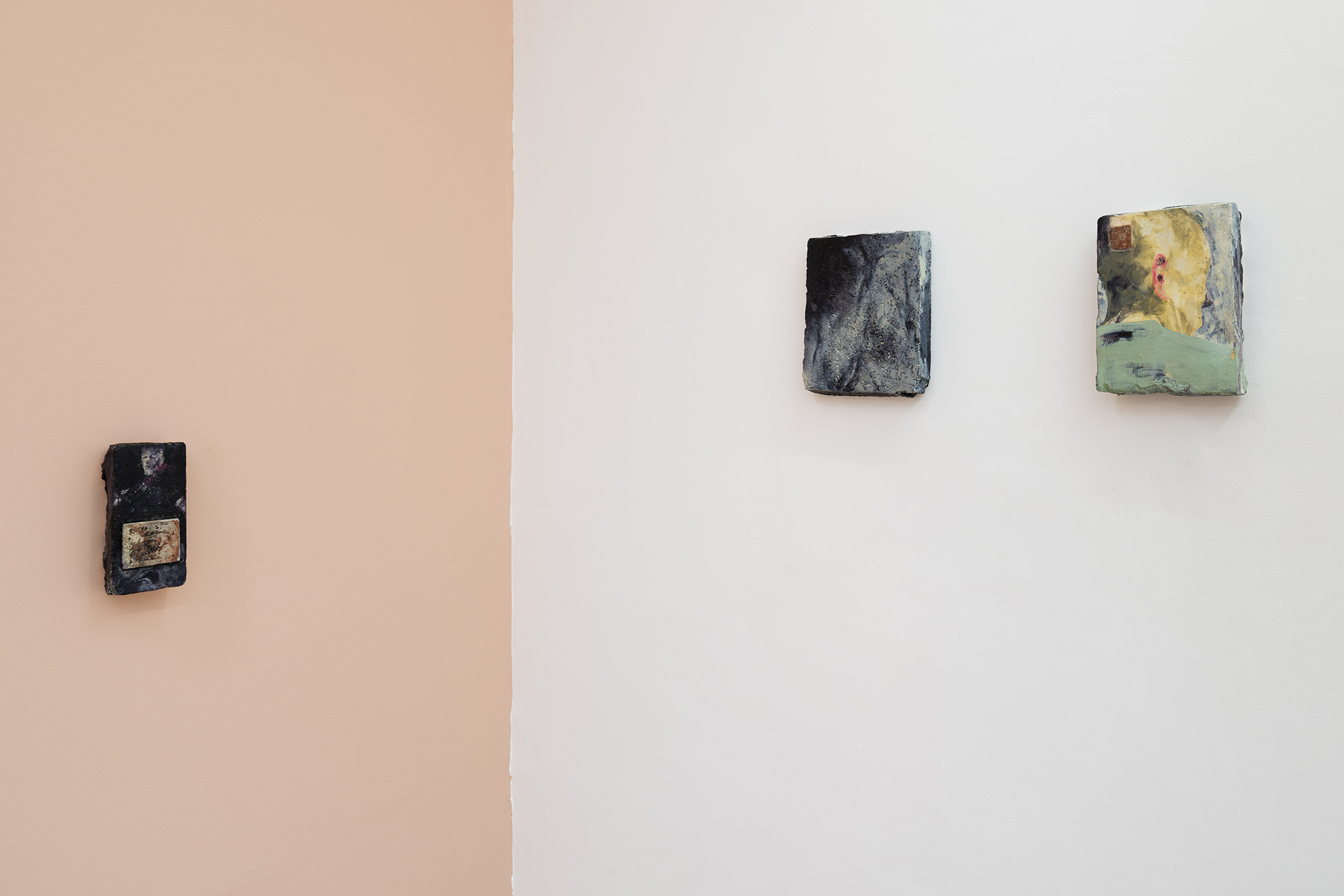
Inside the diminutive gallery designated Crisis’s ‘project space’ hangs a surprising, succinct show by Patricio Morocho, a young US-Ecuadorian artist living in the Bronx. Morocho, like previous generations of his family – who arrived in New York during the 1990s from the Ecuadorian south-central region of Azuay – has worked in the demolition business in Manhattan, and a few of his paintings in the show take the shape of chunks of discarded rubble. 1194 Randall Avenue (2025), a series of four small, near-identical, vaguely heartlike shapes, hang on the main wall: they were cast from a single concrete fragment, a leftover from a now nonexistent building bought and destroyed by the son of a notorious property owner, their title a call back to its address in the South Bronx. The soft-looking objects are replicas of that fragment remade in paper pulp and plaster, then covered in recycled canvas, their surface delicately painted with oil in warm, translucent colours.
The motif of figs reappears in three of them. The first as a simple composition, mostly white: a bundle of figs in the centre, inside a clear container, the faintest outline of a pair of hands centring them in the image suggested with pale grey brushstrokes on its right edge. The second and the fourth are closeup portraits of the artist’s mother – the gallery handout identifies her, though the affection is apparent – gently biting into figs. In one of them we see her profile, her features delineated in economic brushstrokes of a pinkish terracotta and dark brown for her hair and eyelashes, as well as for the fruit she brings to her mouth. She has the familiar, endearingly absorbed expression of someone watching TV or taken by a similar distraction. The second portrait is even more cosy: she rests her head on a pillow, another fig meeting her mouth, this time carried by an oversize hand. From our angle, her eyelids appear closed and her shoulders, painted in burnt sienna, fully relaxed. This comforting atmosphere extends to the third painting, the silhouette of a mother who just entered one’s room only barely delineated in loose browns and pinks. The scene feels as if observed through barely open, sleepy eyes. Something about the calmness of these scenes and their compact, soft-edged format combines to make them feel potently intimate. A peek into an interior life, a moment of true, if fleeting, domestic bliss.
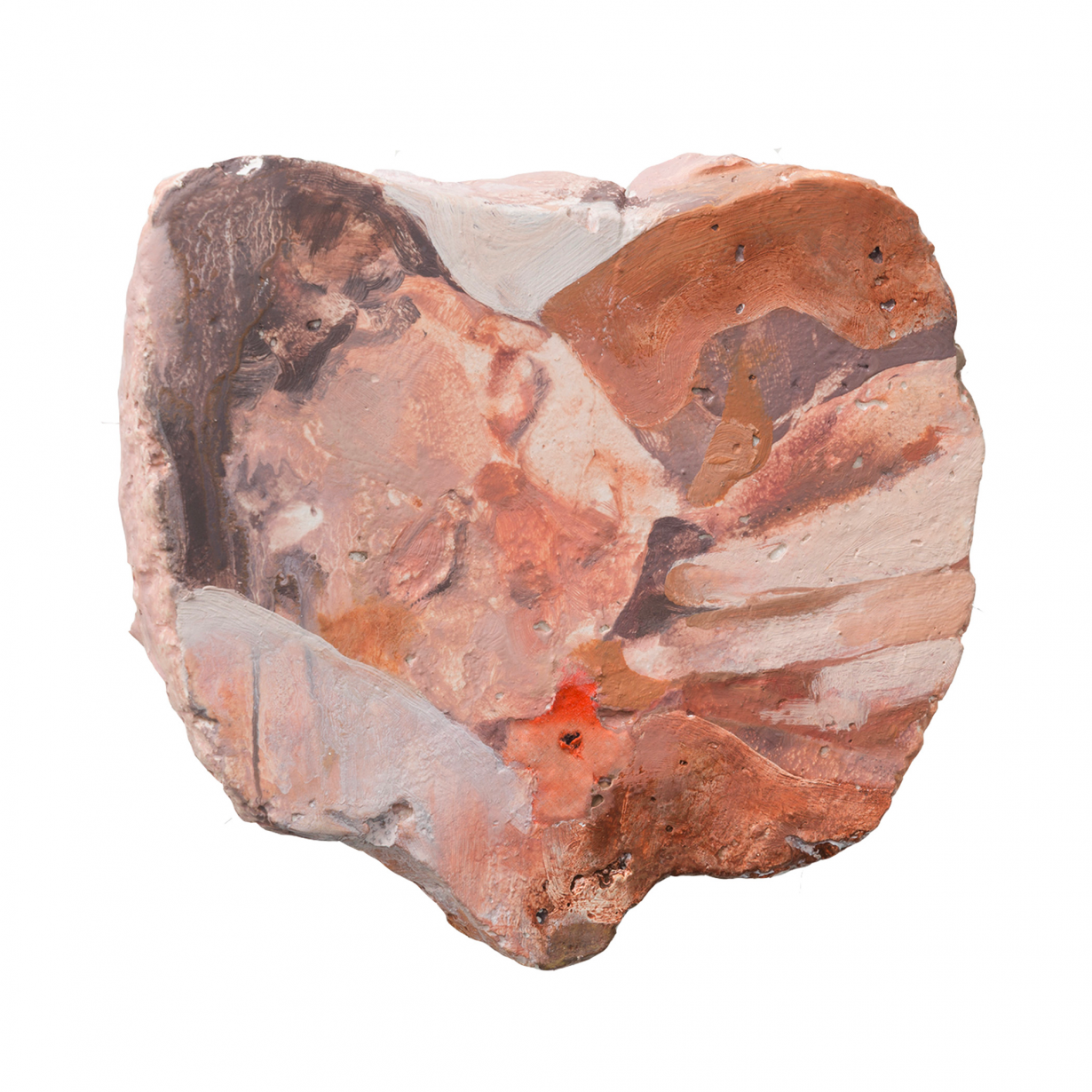
The colour treatment and the ruin-adjacent surfaces remind me of Pompeian frescoes and the quotidian life and beauty they represented, only knowable today through fragmented, miraculous images. Indeed, Morocho’s objects appear as relics even while they depict our present. Perhaps they are meant to work as prophecies: we too – and he specifically – inhabit a corrupt, greedy, dying empire, a system that cannot possibly hold for much longer. Both Pompeii’s and Morocho’s images, however, show us that even then, one can carve a place that feels like home, where the beauty and calm of the domestic can manage to flourish, to survive in the cracks, even if only for what feels like a moment.
Patricio Morocho: Ukupi at Crisis, Lima, 22 April – 27 June
From the Summer 2026 issue of ArtReview – get your copy.