What happens when forms of queer life, once historically sustained through obscurity and ephemerality, become part of a widely circulated visual record?
Rather than being understood as one of queer culture’s primary sites of collective formation, spaces of queer nightlife and its cosmologies are too often dismissed as hedonistic or excessive. Sex, Clubs, Dissent pushes against this framing, assembling a substantial body of photographs and more than a dozen texts to do so.
A die-cut peephole punctures the cover, revealing Meryl Meisler’s photograph of two women embracing on a nightclub floor beneath. The gesture feels familiar. Queer nightlife has consistently been constructed through visual codes of secrecy, voyeurism and transgression. Inside, however, the book’s editor, Amelia Abraham, rejects any sanitisation of subject matter, allowing different histories, desires and social worlds to glitch and collide as the book progresses. Archival photographs from a lesbian strip-club in late-1970s São Paulo sit beside contemporary drag-king documentation, unsettling the idea of queer experimentation as something purely contemporary. By foregrounding sexual subcultures like the strip club from the outset, the book also refuses a hierarchy between respectability and eroticism, positioning cruising grounds, darkrooms and other forms of queer encounter as no less capable of generating culture than the dancefloor itself.
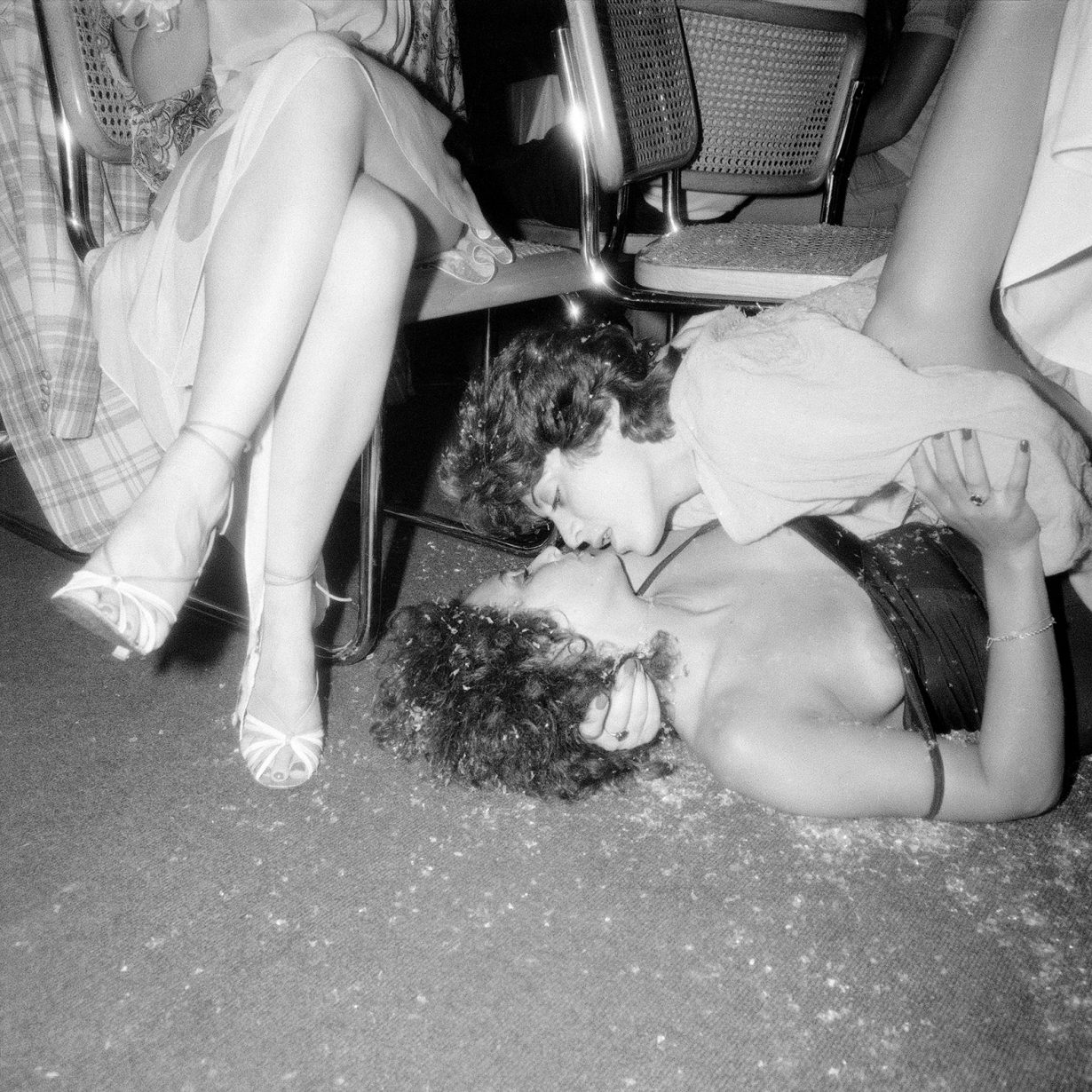
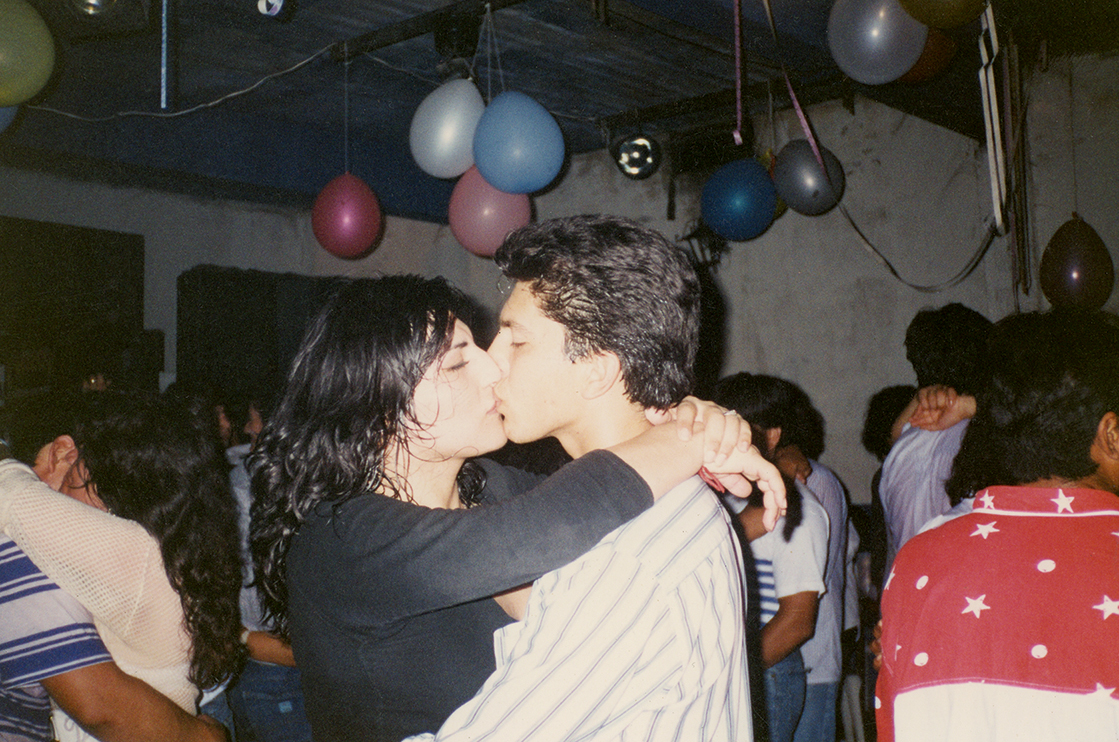
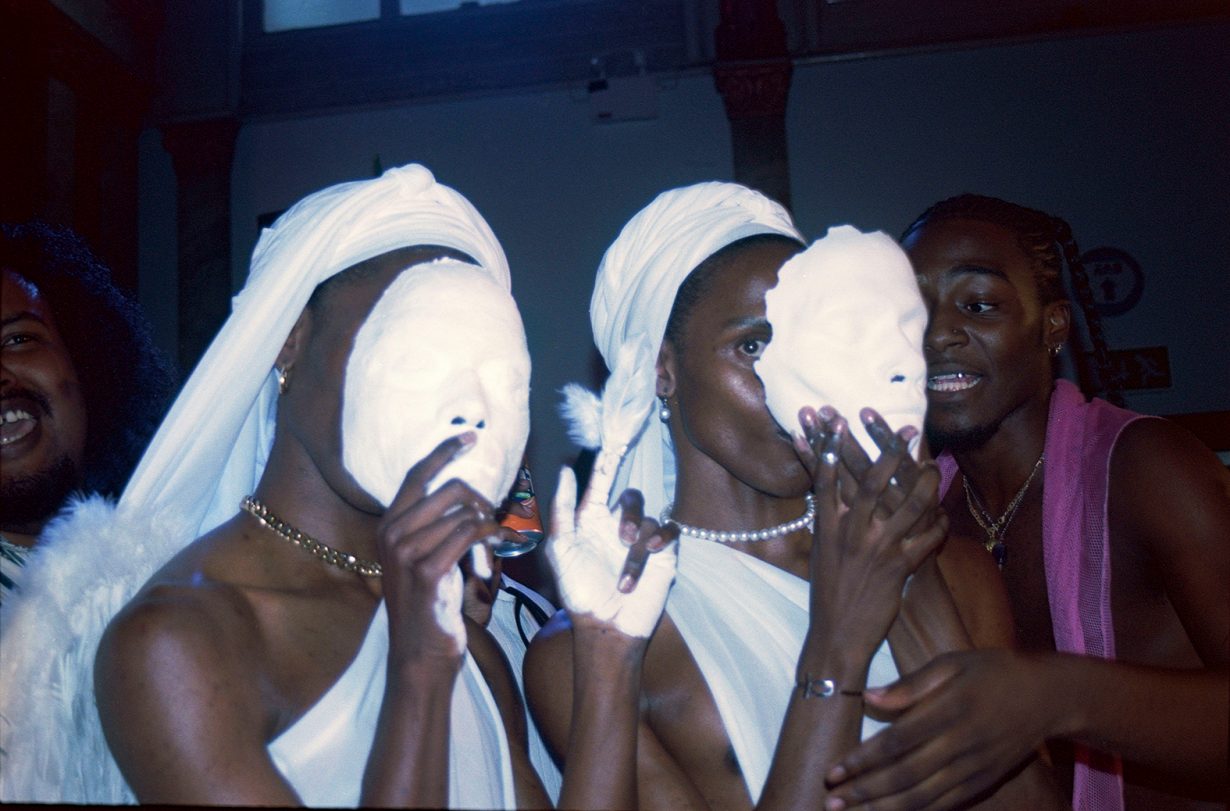
Throughout, the recurring image of the kiss acts as a knowing thread. While the dancefloor remains the most recognisable setting, this act of intimacy spills into the wider infrastructure as bodies sprawl across pool tables, commune intensely in bathrooms and enter into the tranquil exhaustion of an afterparty. Individually, these kisses can look fleeting or frivolous; when considered collectively, they tap into a queer recognition of the historically forbidden public kiss. Held between explicitly sexualised embraces such as Lola Flash’s Vesta (c. 1990) and the tender, understated intimacy of the anonymously shot Vanessa Sander and her boyfriend, Salta, Argentina (1988, from the Archivo de la Memoria Trans Argentina), the motif synthesises a fragmented selection of images, mapping a resilient lineage of queer sociality.
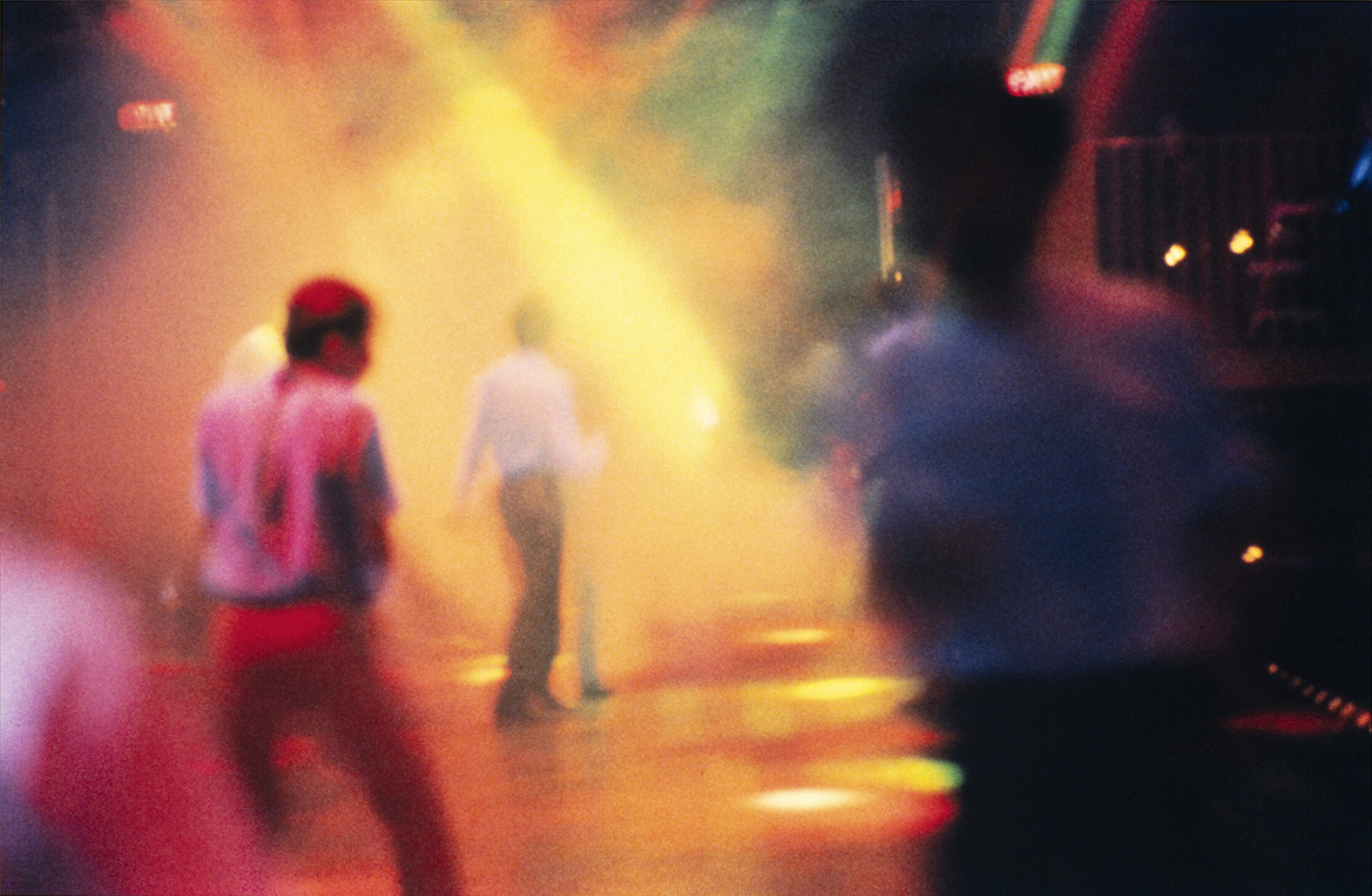
Images across disparate timelines bleed into conversation with one another, rather than settling into neat coherence. It’s within this friction that Dean Sameshima’s hazy iPhone image being alone (No.6) (2022), taken in an adult movie theatre, becomes so compelling. Its blurred, low-resolution grain preserves concealment rather than overcoming it. Desire, anonymity and uncertainty remain active within the frame, resisting the pressure towards legibility that much of the contemporary work elsewhere in the book struggles to escape. Read alongside the archival images, the contrast is stark. Where the older photographs are driven by pleasure, precarity and necessity, too many of the newer images arrive already styled for the gallery wall, having been produced by a generation that came of age within social media. Many of the most recent dancefloor images carry a hyperawareness of their own reception; I found myself wondering whether queer nightlife photography risks becoming detached from the purpose and impact that once gave this genre of photography such depth and function.
Ariel Goldberg’s essay ‘The Hungry Eye’ is a standout text, tracing one of the book’s most persistent tensions: the uneasy relationship between visibility and exposure within queer photographic histories. Rather than treating darkness, blur or opacity as merely aesthetic devices, Goldberg identifies them as forms of protection. They draw attention to photographers such as Diana Solís and Stephen Barker, whose images show their use of slow shutter speeds and blur to obscure recognisable features, shielding participants from scrutiny or repercussions. In dialogue with the surrounding images, the essay complicates any straightforward understanding of queer nightlife photography as inherently liberatory. Abraham presents a canon of artists intended to expand a visual understanding of queer nightlife. Yet this ambition sits uneasily alongside Goldberg’s question of what happens when forms of queer life, once historically sustained through obscurity and ephemerality, become part of a widely circulated visual record.
Sex, Clubs, Dissent: Visualising Queer Nightlife, edited by Amelia Abraham. Mack, £50 (softcover)
From the Summer 2026 issue of ArtReview – get your copy.


