Lucas’s billion-dollar Los Angeles ‘Museum of Narrative Art’ promises to showcase ‘the people’s art’, writes Desirae Embree, so long as ‘the people’ share the director’s own tastes
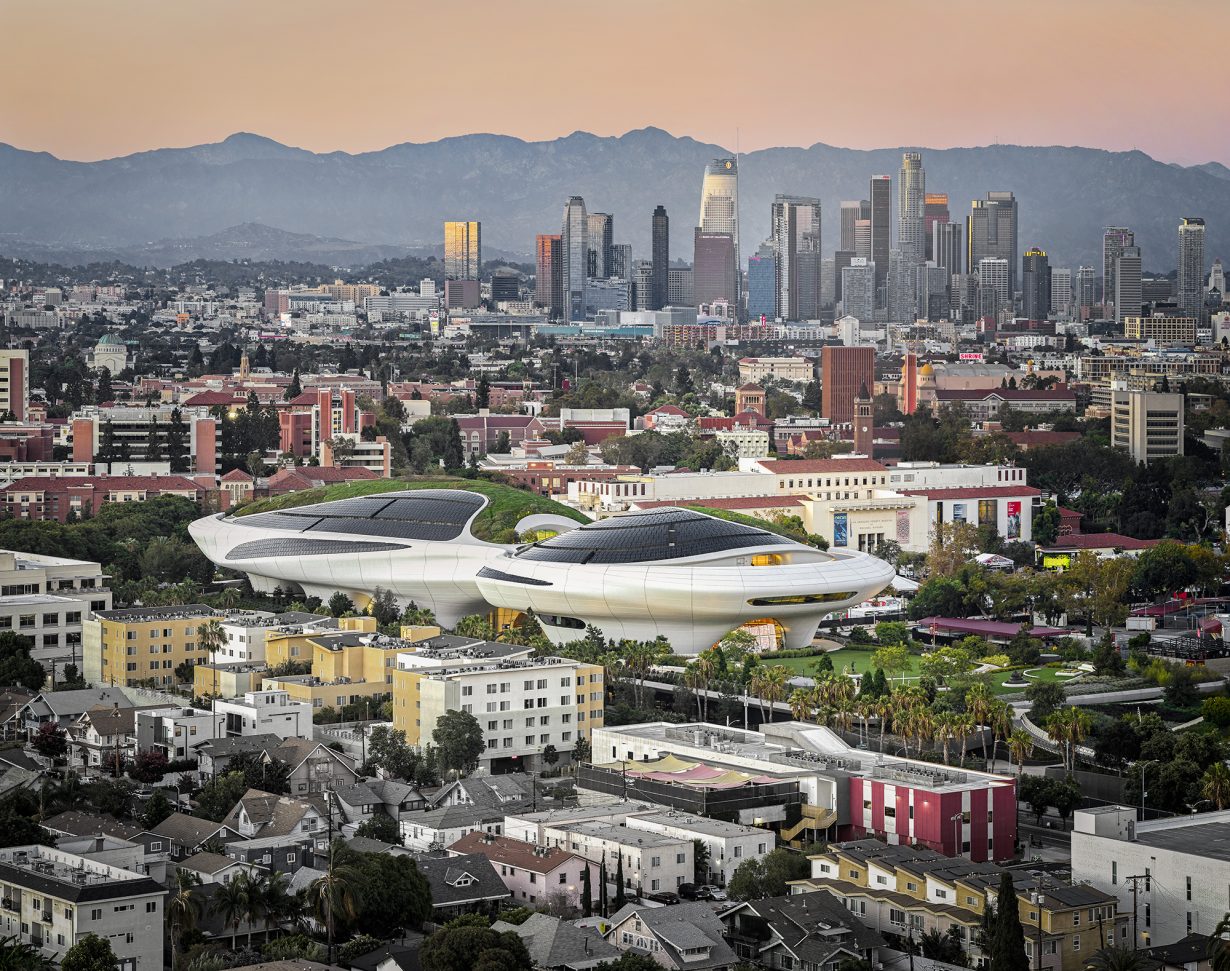
The Lucas Museum of Narrative Art is a striking apparition. Its sleek, flexuous architecture seems to hover, inviting us to regard it with the wonder that crowds in Hollywood movies bestow upon extraterrestrials, and its verdant 4.5-hectare campus is an oasis in a part of town otherwise choked with concrete infrastructure. After spending 16 years in development limbo, seeking and failing to find a home in two other cities, the museum finally arrived in South LA, an otherworldly benefactor claiming to offer – as its married cofounders, filmmaker George Lucas and businesswoman Mellody Hobson, put it during previews – a place dedicated to “the people’s art”.
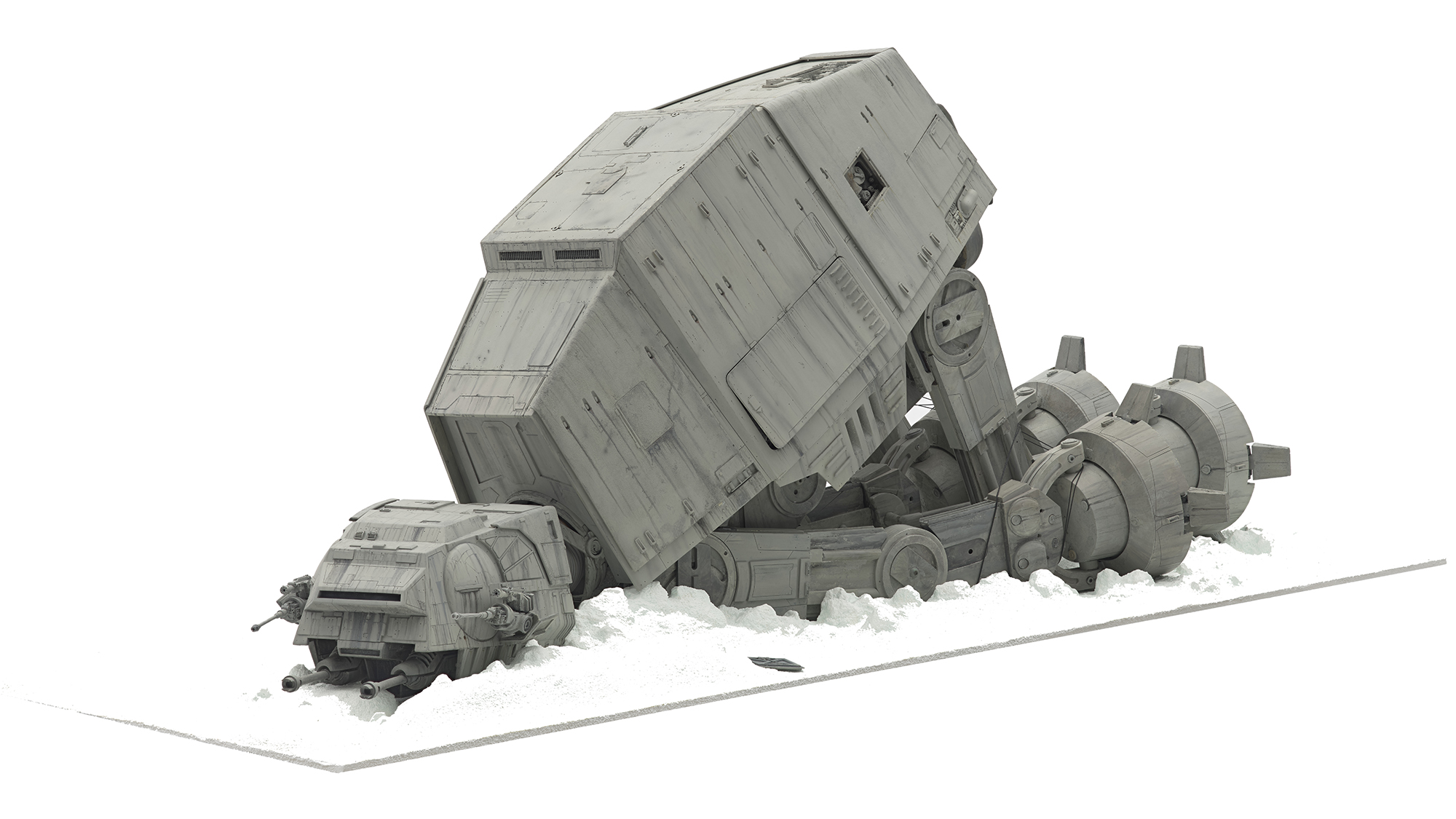
With holdings derived in large part from the couple’s private collection, the Lucas Museum seeks both to reimagine curating in a populist way and to celebrate the role that images have played in constructing society. Works in the opening hang range from a digital reproduction of the Cave of Altamira to contemporary manga, though there is a strong bias towards twentieth-century illustrators, whose work is particularly important to Lucas. The idiosyncratic mix is meant both to thwart the taste hierarchies that have historically determined which art is worthy of attention and to trace visual storytelling across cultures and over time. However, the project is so riddled with philosophical inconsistencies and basic curatorial oversights that it’s hard to believe its founders ever asked how their philanthropic aspirations would best meet the people’s needs.
For one, the museum has no consistent definition of the phrase ‘narrative art’ by which it operates; the visitor’s brochure merely describes narrative art as that which ‘illustrates stories’. The semantic ambiguity is exacerbated in the 30-plus galleries in which objects are accompanied by no context besides basic tombstone information. This curatorial choice is a disingenuous abdication of the museum’s responsibility to provide public education as it had promised when seeking community approval for its private use of public lands. Instead, a 14 percent reduction in staff in 2025 gutted the museum’s education and public programming team. Today, neither the brochure nor the press materials mention educational programming at all.
Education and knowledge production are what distinguish public museums from private galleries. But providing historical context and critical framing should be particularly important for the Lucas Museum because it is dedicated to the power of the image to, in Lucas’s words, “create a society”. Around half of the galleries explore cultural narratives that, Hobson told the press, “unite us as families, communities, countries, nations”, but that have been shown from only one side – that of a dominant American ideology reflected in the country’s most commercialised artforms.
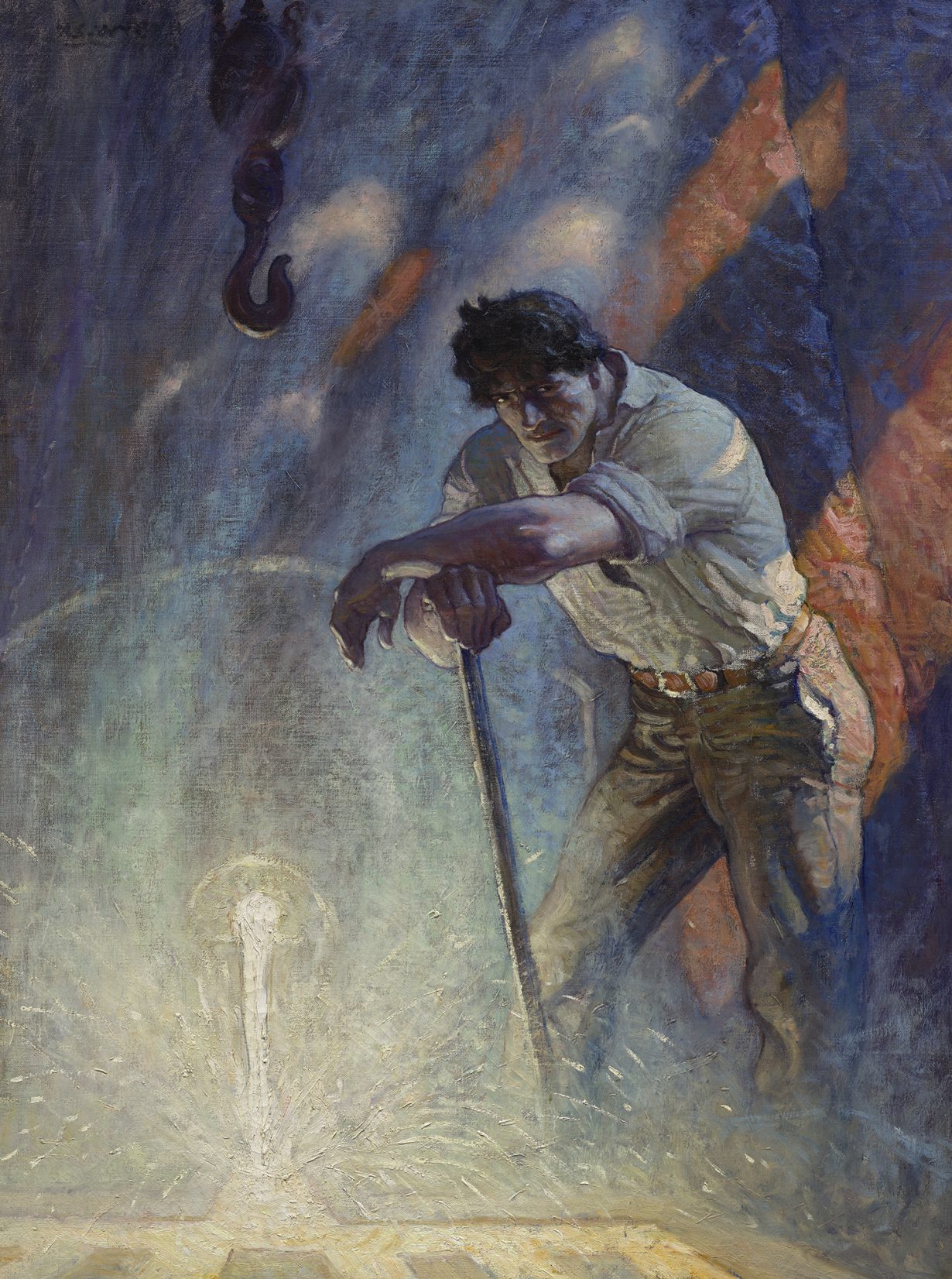
The ‘Western Stories’ gallery consists entirely of ‘Wild West’ imagery from a beloved genre that has enabled an insidious historical revision of the forced displacement of Indigenous people. The ‘Work’ gallery largely focuses on white men engaged in the dignified labour of industrialisation, as in N.C. Wyeth’s oil painting of a steelworker, Slag was a figure for sculptors (1918); slavery goes undepicted. Female artists such as American illustrator Jessie Willcox Smith are afforded only token representation; fewer than 7 percent of the films shown in the museum’s theatres are directed by women. Yet, gendered stereotypes and sexist visual conventions abound. In Norman Saunders’s pulp covers, femmes fatales menace and imperilled ladies swoon. Frank Frazetta’s heroines cling to a male saviour’s leg, their preternatural proportions barely contained by bikinis.
“Narrative art”, Lucas told the press, “creates a group of people with common belief systems, which allow them to work together [and] not kill each other.” If this is the conceptual framework behind these galleries, then to which group of people do these narrative artworks belong? And what, exactly, is the belief system that unites them?
It seems clear that the museum is unequipped to grapple with these issues as long as Lucas has total oversight of the ‘content direction’, as he has called it following the departure of the museum’s chief curator in late 2025. According to CEO Tracey Bates, the opening hang was “hand curated” by Lucas himself. Whatever his other creative accomplishments may be, Lucas is not a curator, and in dispensing with the guidance of one, he has essentially erected, on public land, a $1 billion monument to his own tastes.