On its own 25th birthday, Asia Art Archive in Hong Kong looks to the early worlds of artists for counsel
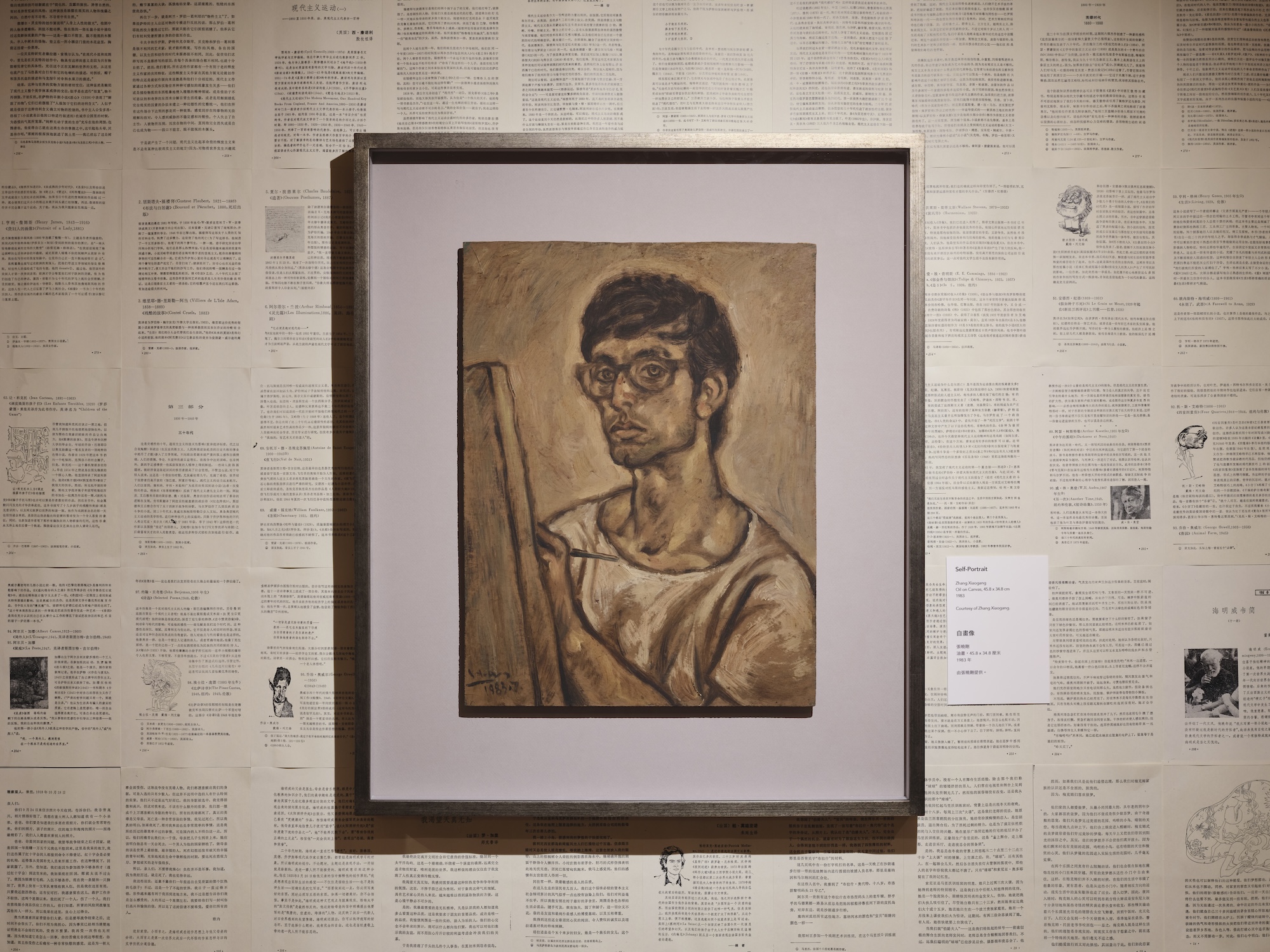
To commemorate its 25th anniversary, Asia Art Archive (AAA) has returned to source, with a two-part show looking back not on the institution’s history but rather to the times when eight contemporary artists from Asia were twenty-five years old. Conceived by Anthony Yung with curators Christina Bartosch, Hazel Kwok and Rebecca Tso, each part features four artists represented by a cluster of artworks and archival materials positioned across the AAA library that revolve around their 25th year. Painter Zhang Xiaogang’s capsule of frenetic earth-toned paintings, studies, sketches and diary entries hinged to 1983 – a decade before his celebrated Bloodline series, based on family studio-portraits from Cultural Revolution-era China, emerged – express a time in which his mind was, he says in a video interview with AAA, “most chaotic”. Freshly graduated and working as a costume designer, Zhang is represented here by a constellation of photographs, magazines and books that tap into the Opening Up and Reform era that had recently commenced: among them, a photo Zhang took of TV drama Miss Brightness filming in Kunming in 1983, a Journal of Pop Television article from that year titled ‘China Enter[ing] the Television Era’ and a 1984 photo courtesy of Xu Qingyuan, of people watching colour TV in a Kunming department store.
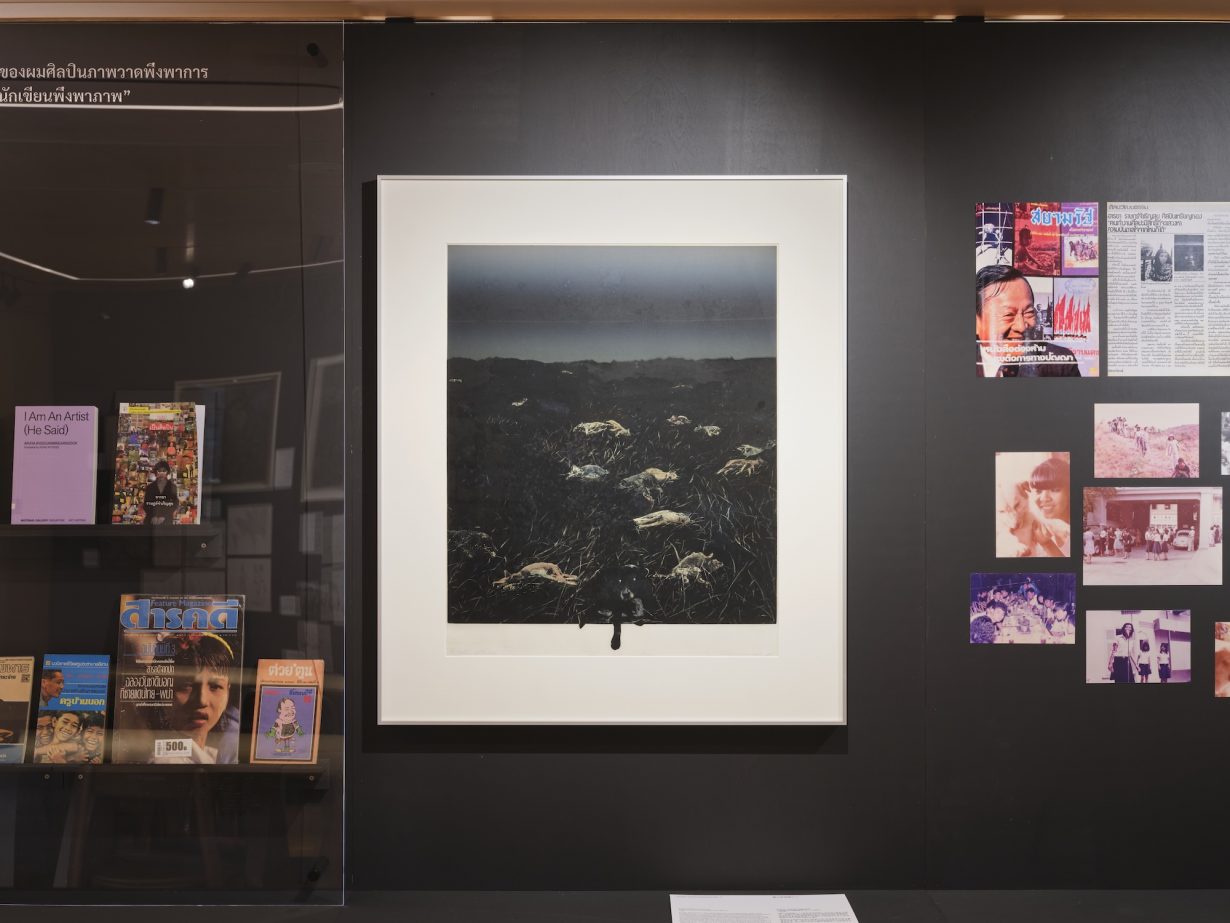
Context is everything in this exhibition, with ephemera mapping the grounds from which artists evolved. For Araya Rasdjarmrearnsook, a Bangkok capsule set in 1982 is anchored to the artist’s regular commute across the Thai capital between her home, the College of Fine Arts, where she taught printmaking, and Silpakorn University, where she undertook graduate studies: a route traced on a ‘Bangkok Routes Project 1978–1982’ map reproduced in 2026 courtesy of the National Archives of Thailand. By this time, the artist had gained a reputation for printmaking, and two 1982 works testify to that: the photo etching Power and Loneliness No. 2, of a field strewn in shrouded chairs, and Power and Loneliness No. 3, a relief etching and aquatint of canine carcasses strewn over a landscape save for a live black dog, express a subtle yet thorough interrogation of power as experiential feeling. That uncanny tension likewise charges I Am An Artist (He Said) (2022), among the publications by Rasdjarmrearnsook at AAA: a collection of columns playing with the male and female voice written by Rasdjarmrearnsook during the mid-2000s.
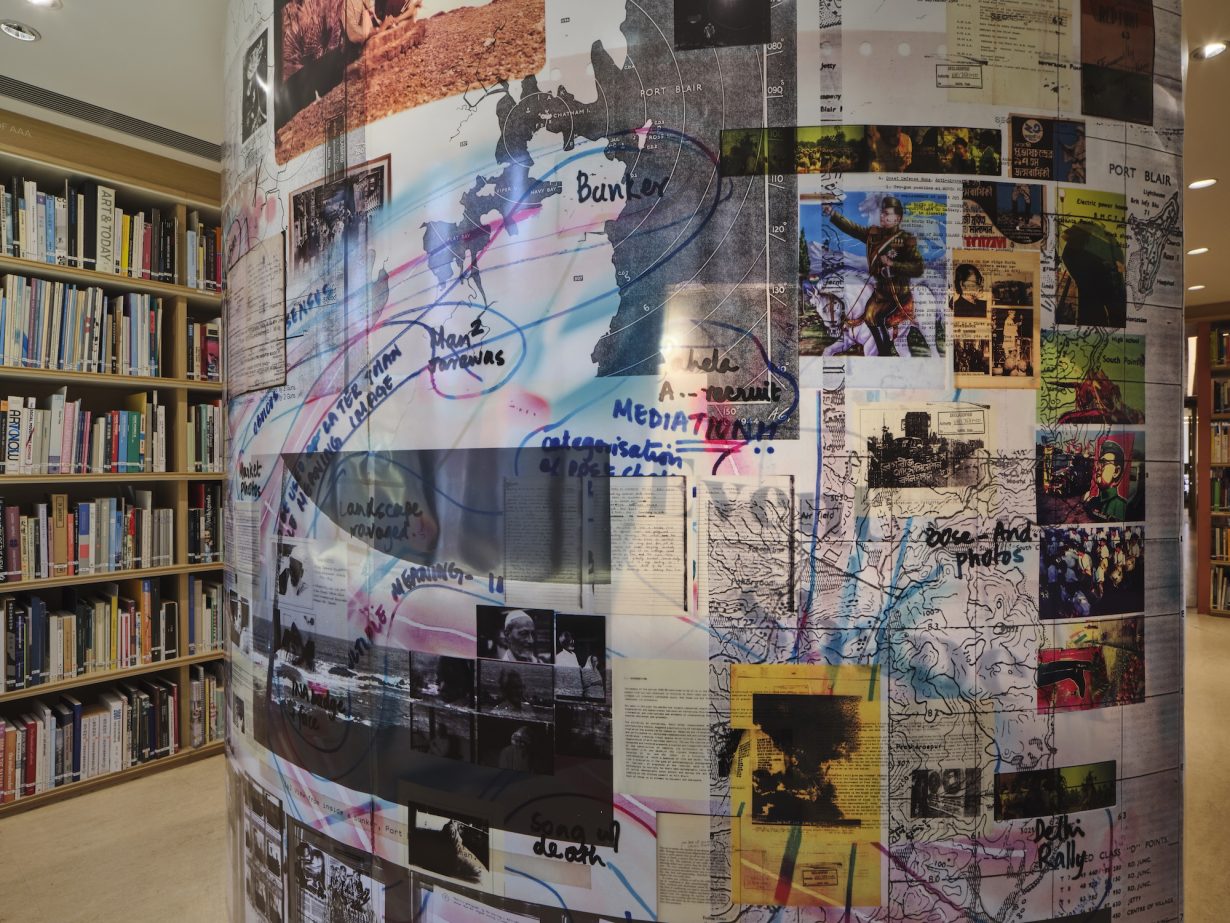
What is striking across clusters is how differently archives and works have been activated. Objects related to Salima Hashmi – from The Complete Works of William Shakespeare, representing the literature with which Hashmi connected to her mother’s English heritage, to a copy of ‘Sochne Do’ (‘Let Me Think’), a poem written in 1968 by Hashmi’s father, Pakistani poet Faiz Ahmed Faiz – are displayed alongside a QR code that links to audio and video recordings of the artist contextualising each. Coming out of left field, given the cinematic universe he has since built, is Ho Tzu Nyen’s Entropy (2001), a creamy monochromatic accumulation of newspapers, acrylic, emulsion, lacquer and hair on canvas – for which he received the UOB Painting of the Year Award – presented alongside other early abstractions and a playlist of songs defining his twenties. Raqs Media Collective’s stunning Black Waters: An Event Shaped Hole (1993/2026), recomposes the materials for an unmade 16mm film – the collective’s first project – into a sculptural installation that unfolds its original proposal: ‘to reveal the methods and means by which our vision is directed and organised to look at peoples and cultures as adversaries’, through the geohistorical lens of the Andaman Islands. Overlaid on either side of two curved display walls facing one another are printed layers of annotated photos, maps, films, book pages, diagrams, research notes, a partial film script and letters.
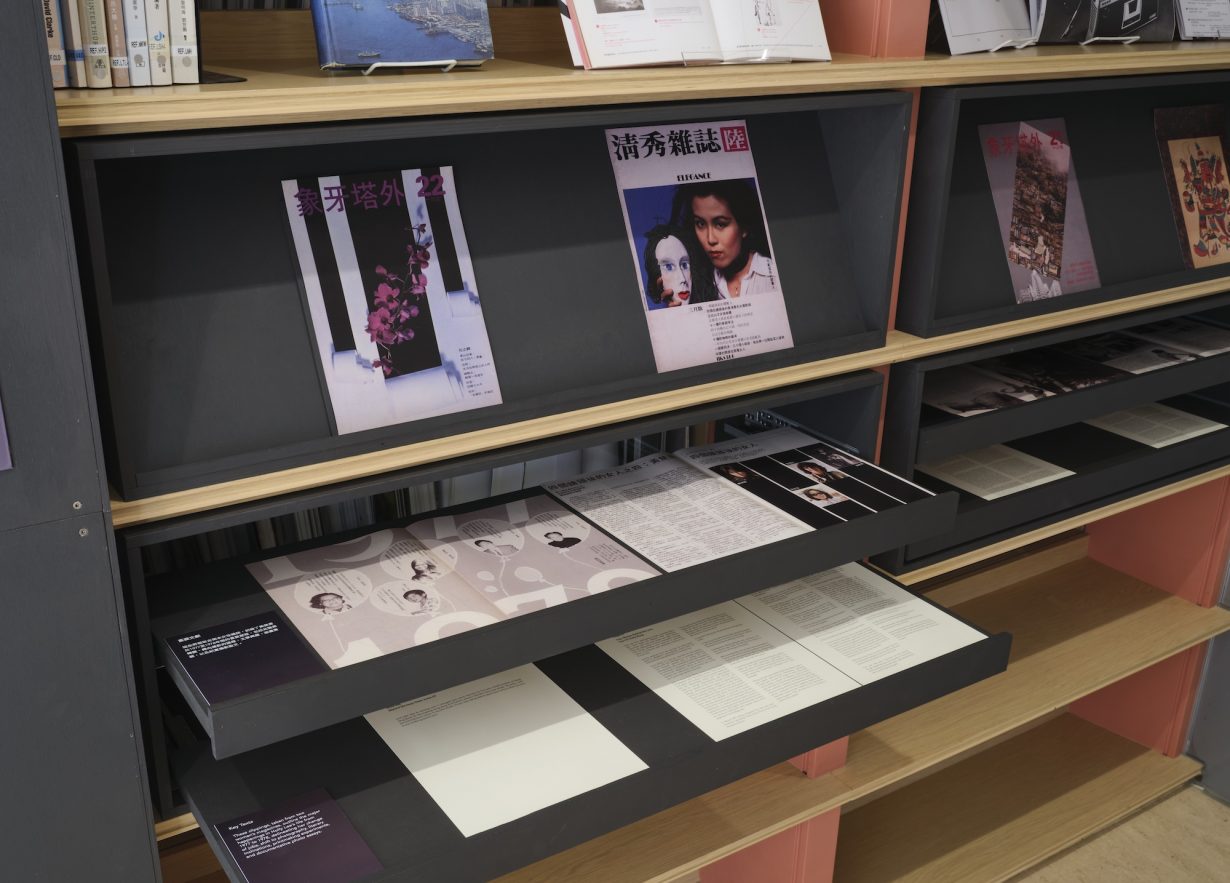
There’s something revelatory in each material accumulation. Take the moving tribute to late Hong Kong photographer Holly Lee, anchored to the year 1978, when she quit her banking job to focus on her practice. Lee co-ran a photography studio with her partner Lee Ka-sing, with whom, alongside Lau Ching-ping, she cofounded the photography journal NuNaHeDuo (Dislocation). As a testament to their lifelong partnership, Ka-sing is the source of much on view: early woodblock prints by Lee from the 1970s, her tools, contact sheets, articles written by both, press clippings on Lee’s work and promotional materials for their photography studio in Hong Kong. Songs by Joni Mitchell, whose music informed Lee’s semi-autobiographical novel Sushi Grass in Paradise (2019–20), can be heard in this section. Lee’s book is grouped with related publications held by AAA, including Transporting the Emporium, a 1996/1997 issue of West Coast Line journal featuring Ka-sing’s writing and Lee’s arresting Hong Kong Memories series from the 1990s, transposing historical and personal images into layered compositions, such that a hand looms over an aerial view of Hong Kong like a shadow. Then there’s the central arc of Korean artist Bahc Yiso’s archival assemblage: meticulously detailed letters he wrote to his family while a postgraduate student in New York during the early 1980s. These are shown alongside photographs from his time there, including one of Minor Injury, an alternative arts space Bahc founded in Greenpoint in 1985 and ran until 1989, the year the space hosted Homeland: A Palestine Quest, organised by Yong Soon Min and Shirin Neshat in solidarity with Palestine.
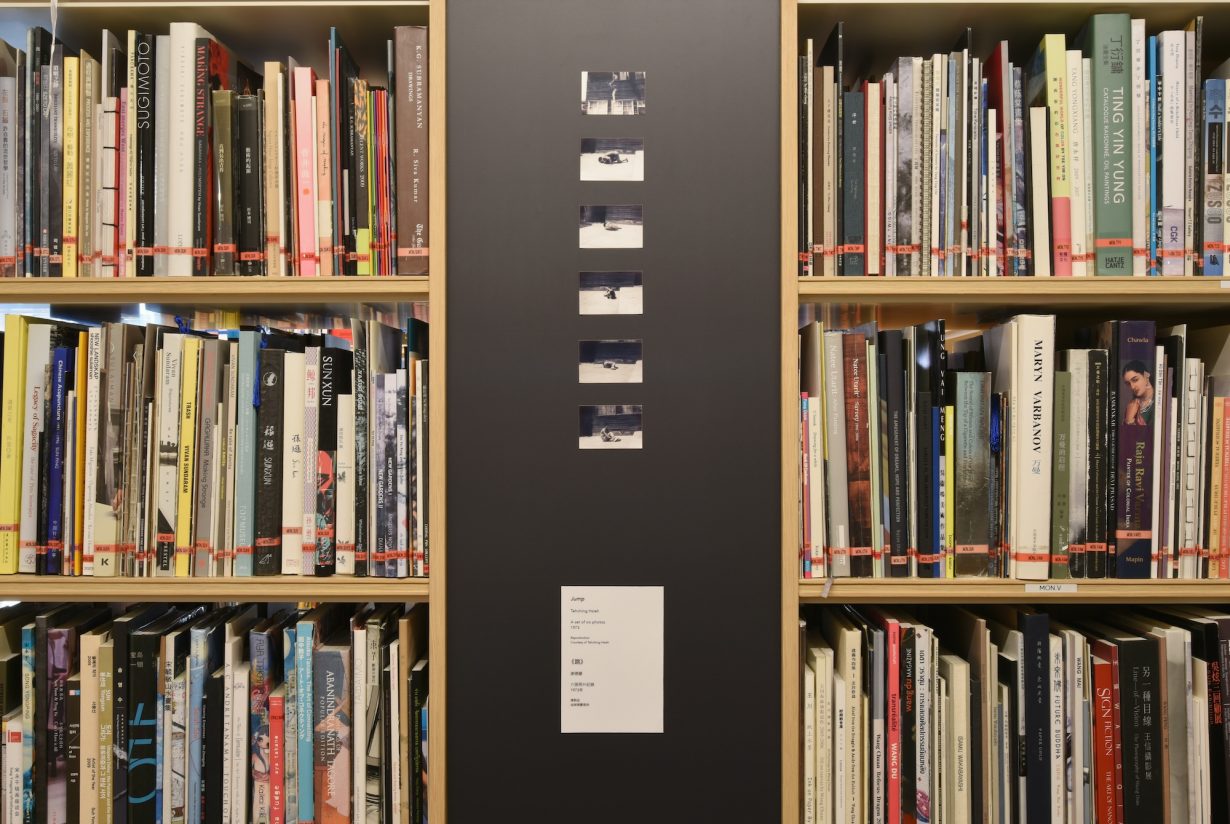
In the case of Tehching Hsieh, a focus starts with Jump Piece: six photos from 1973 showing a twenty-three-year-old Hsieh jumping from a three-storey building in Taiwan and breaking both his ankles. One year later, the artist jumped again. This time into the Delaware River from an oil tanker he boarded in Taiwan, entering the United States undocumented and ending up in New York City: a journey marked out on a world map. He would commence his storied One Year Performance series in 1978, but those documents are not included. Instead, a black-and-white 1978 video, shown for the first time, captures Hsieh cleaning the Chinatown restaurant at which he worked: a sketch of sorts that captures how the years passed between his arrival and when his first One Year Performance commenced. A colour video filmed in 2026 by AAA researcher Tzuman Tseng in Hsieh’s home studio plays below: the artist comes in and out of view, always an enigma. Emphasising that continuity is an Instagram reel introducing the artist by splicing recent footage of Hsieh on a snowy New York street with a black-and-white photo of him decades ago. “He has always been on the move,” says Hazel Kwok. “At twenty-five, he was no different.” The idea that movement is constant is an apt throughline between the artists in this show and the many lives they’ve lived: a motion threading one life, and one era, to the rest.
At 25: Artists’ Early Worlds at Asia Art Archive, Hong Kong, through 31 October
From the Autumn 2026 issue of ArtReview Asia – get your copy.