A shockingly revisionist script; questionably sourced funding; backing from the US MAGA faction – and all building up to Brazil’s October elections. Euan Marshall tries to take this thing seriously
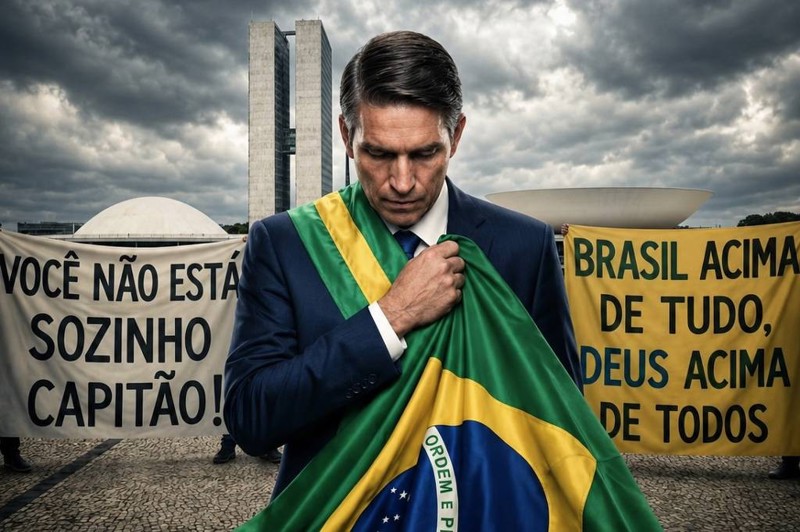
“It’s going to be bigger than Terminator 2,” gushed Eduardo Bolsonaro after attending the private Las Vegas premiere of Dark Horse, the English-language biopic dramatising the life of his father, Brazil’s jailed former president and far-right politician Jair Bolsonaro.
This exclusive screening took place on opening night of Fraud Fighter Summit, a nondescript mid-June MAGA gathering that also gave the world a first look at the truly life-altering documentary Remember the Alamo: Don’t Sharia My Texas and Meemaw, off-the-deep-end comic Roseanne Barr’s series seemingly about an Alabama farmer attempting to save the United States from China.
Shot in 2025, Dark Horse is directed by US filmmaker Cyrus Nowrasteh and cowritten by Nowrasteh, his son Mark and former Brazilian culture secretary Mário Frias. In the leading role of Jair Bolsonaro is Jim Caviezel, who continues to enjoy his alt-right fame after starring in the 2023 QAnon-heavy box-office success Sound of Freedom.
Any concerns that Dark Horse might spark a rightwing cultural revolution are quickly allayed by a glance at the buttock-clenching cold open of the film’s leaked screenplay. Jair is being interviewed by ‘tough, influential’ talkshow host Natalia:
NATALIA: I know men like you. You’re not a bad man… You love your wife, your children. I’m sure you revere the holy family and all the saints… get weepy at baptisms, weddings, and funerals… but underneath all that, what are you?
BOLSONARO: Something you’ve never encountered. A man.
Natalia, according to the script, is ‘thrown by the penetration’ of Jair’s response. So begins the film’s wildly inaccurate retelling of Bolsonaro’s life, sprinkled with crude oneliners (‘rumors are like farts, they come from assholes’), bizarre fictionalisations of real-life political figures and the complete narrative omission of the 2022–23 coup plot that earned Bolsonaro his 27-year prison sentence. The trailer treats us to Caviezel’s cod Brazilian accent as he rails against the “foreigners, environmentalists and Hollywood paedophiles” who are looking to take control of Brazil.
Perhaps the film’s most eyebrow-raising character inclusion is Dolores, clumsily based on Damares Alves, Bolsonaro’s diminutive former cabinet minister – infamous for denouncing Frozen (2013) protagonist Elsa as a lesbian plotting to “wake up Sleeping Beauty with a gay kiss”. Unlike Damares’s real-life gender-bashing, the Dolores character (described in the script as being ‘as beautiful as she is sad and old’) is something of a shamanic figure, who gives Bolsonaro some magic pills that presumably save his life later in the film.
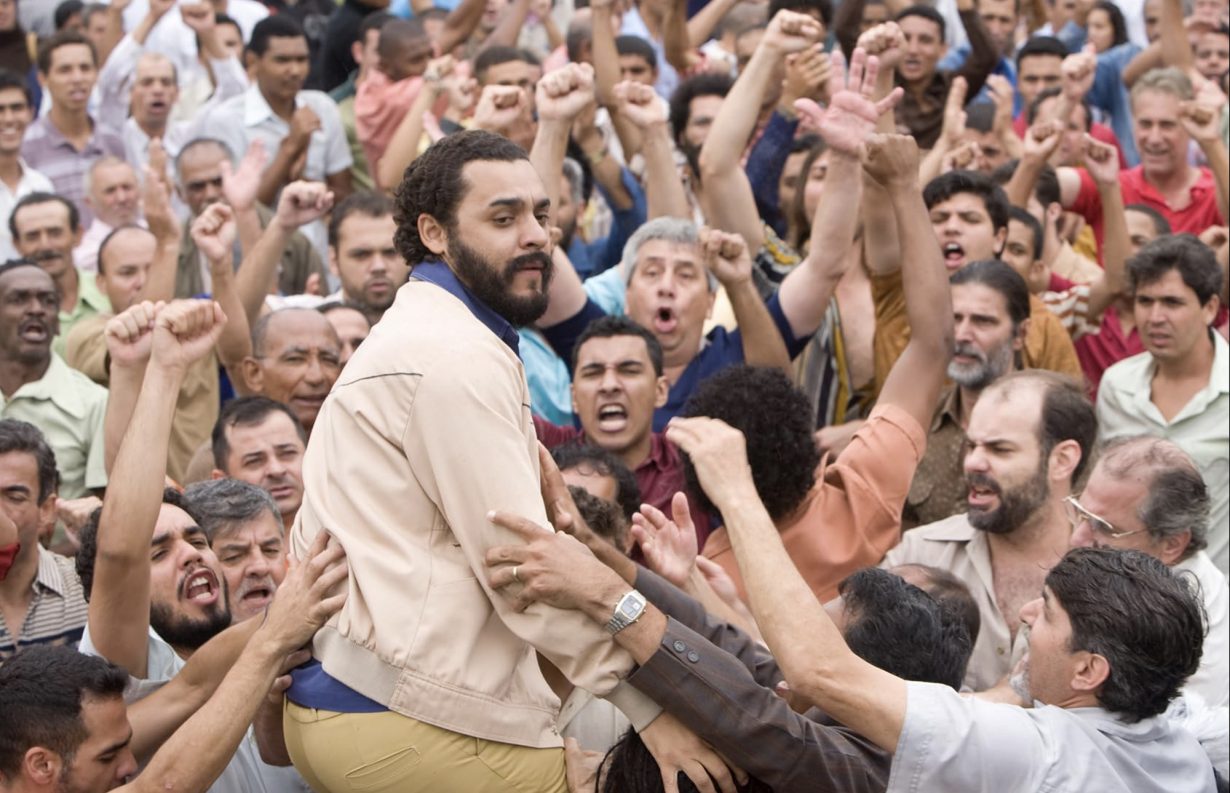
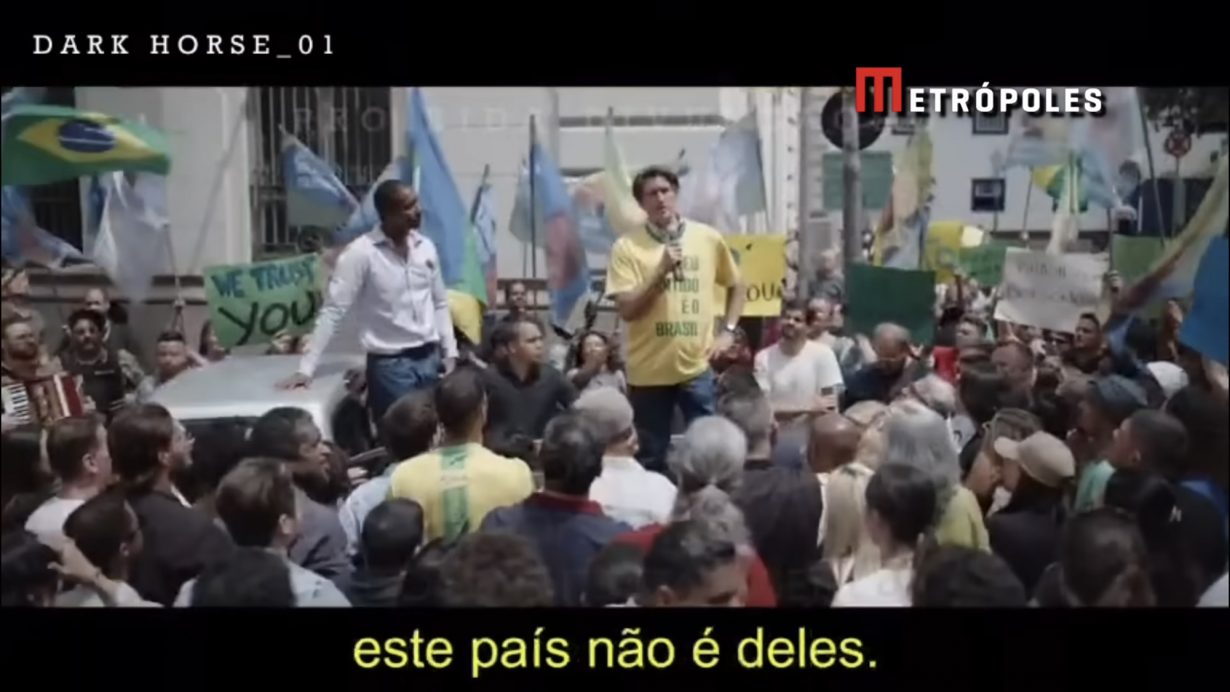
Cinematic vanity projects are not unheard of in Brazilian politics. Lula, o Filho do Brasil (2009), for instance, was an at-times cringeworthy puff piece, released at the end of Luiz Inácio Lula da Silva’s first term as Brazilian president. It just about made back the reported R$15 million (around $8.6m) spent on its production. But Dark Horse carries murky legal implications. Reporting in The Intercept Brasil showed that Jair’s eldest son and 2026 presidential candidate, Flávio Bolsonaro, solicited disgraced banker Daniel Vorcaro for $24m (£18m) to help pay for the film. Between February and May last year, Vorcaro effectively sent him $10.6m.
Vorcaro is at the centre of a wide-reaching scandal in Brazil, focused around his now-liquidated lender Banco Master, which is involved in an estimated R$12 billion ($2.2b) fraud case. Revelations of Flávio’s relationship with Vorcaro almost sunk his presidential candidacy and will remain a constant talking point in the upcoming campaign.
Even so, the reported R$75m ($13.3m) spent on the picture seems ludicrous given both the trailer’s modest production values and reports of insalubrious conditions on set. Instead, Brazil’s Federal Police suspects that Vorcaro’s money was used to pay the living costs of Bolsonaro’s second-eldest son, Eduardo, who has been self-exiled in Texas on an alt-right crusade since February 2025 – the same month Vorcaro’s payments began.
But what of the film’s political goals? In a country of fairly few undecided voters, the film is unlikely to sway opinions ahead of this year’s elections in October – not least because its would-be distributor, Europa Filmes (which also distributed Lula, o Filho do Brasil), has indicated the film’s premiere will only be held after the vote.
The focus instead appears to be on audiences outside of Brazil, above all in the US. MAGA don Steve Bannon is reportedly engaged in promoting the movie as a way of ‘pumping up’ the American right ahead of US midterms in November – in which the results from Florida and its large Latino population could be pivotal. Lead actor Caviezel claims the film will have its release on the not-at-all-evocative date of 11 September.

But the real goal of Dark Horse could be to lay the narrative groundwork for US interference in Brazil’s electoral process, something about which the Lula government has shown great concern. The film attempts to export a version of reality where Bolsonaro’s 2022 election defeat was rigged through ‘rampant manipulation and fraud’; if the US right is convinced that Lula’s administration is an illegitimate regime, meddling in October’s vote could be framed as a moral rescue mission. The White House has previous in this regard, having offered naval and logistical support to Brazil’s 1964 military coup plot and swiftly recognising the legitimacy of the resulting rightwing junta.
Chances of the US going to any extreme lengths this time around are close to none, given twenty-first-century Brazil’s size and economic importance, but Trump’s renewed tariffs and an ongoing trade investigation have left the incumbent Brazilian administration on alert. After rightwing election wins in Colombia, Chile, Peru, Ecuador and Honduras in the last 18 months, Brazil’s turn at the polls is seen as ‘the next major test’ by pro-Trump commentators. And a corny 90-minute drama could be enough ‘evidence’ for the White House to justify some meddling.
Read next How Agronejo Music Became an Arm of the Brazilian Far Right