The radio-inspired group show explores the hazy corridor between an idea and its audience
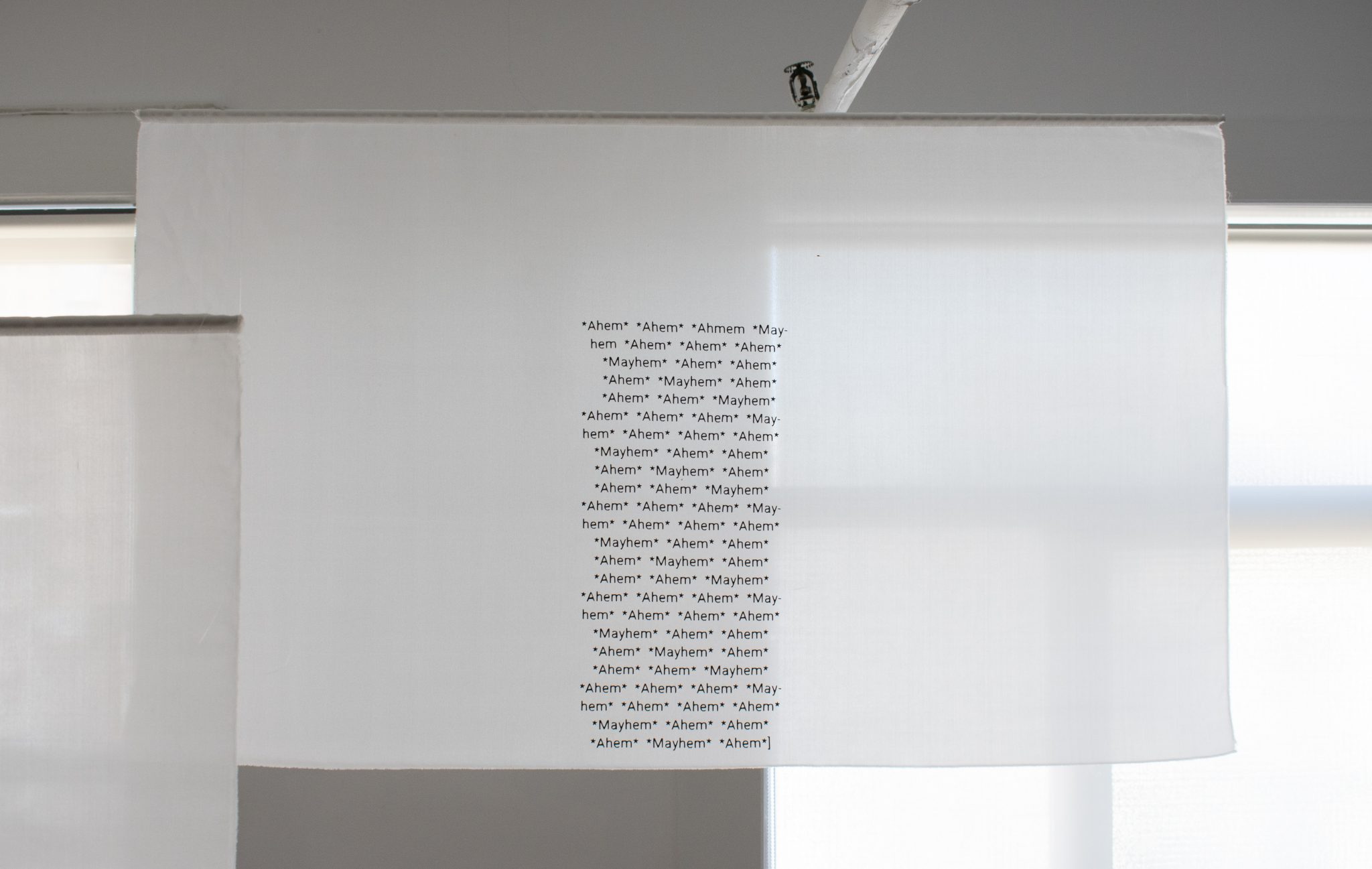
Upon entering the exhibition, one follows white silk banners that flow from the ceiling, onto which Hanne Lippard has printed closed captions without any visual antecedents. ‘[Thinks obscure oblong obscenities]’, ahem #6 (2017) archly suggests, while ahem #10 is a vertical block quote consisting of ahems that morph into mayhems. A guttural gesture that erupts in space, throat-clearing is an act that calls listeners to attention before a specific message ever takes form. Lippard’s white flags guide us through the hazy corridor between significance and speech, tracing the nascent thoughts that emerge as language arrives at meaning.
It’s all very well believing that novel ideas, fully fledged, will flourish among the public, but they need a medium through which to do so. This ambitious group show asks what it means to broadcast language that is original yet reproducible, transient yet memorable. Taking radio transmission as its point of departure, it presents a motley selection of media artefacts: photographs, audio loops, found objects and false advertisements that recombine text, image and phonic material. As I walk through the gallery, cryptic messages on each wall radiate unbidden in the corner of my eye. On a set of nine linocut reliefs, the Institute for the Study of the Urtext prints Day-Glo flyers with empty aphorisms like ‘The Power of Love!’ and a phone number, which I called: a startling metallic voice answered, spoke of Quaker founder George Fox’s refusal to follow Puritan religious codes and stated that the institute seeks to become illegible to systems of power, like Fox was in his day. The word ‘FREE’ appears emblazoned on the front of Rita McBride’s purple newspaper-distribution kiosk, beckoning viewers to partake in whatever knowledge lies in wait within. Rick Myers’s dated scraps of paper – postcards, sticky notes, cardboard – have mysterious bite marks lacerating their corners.
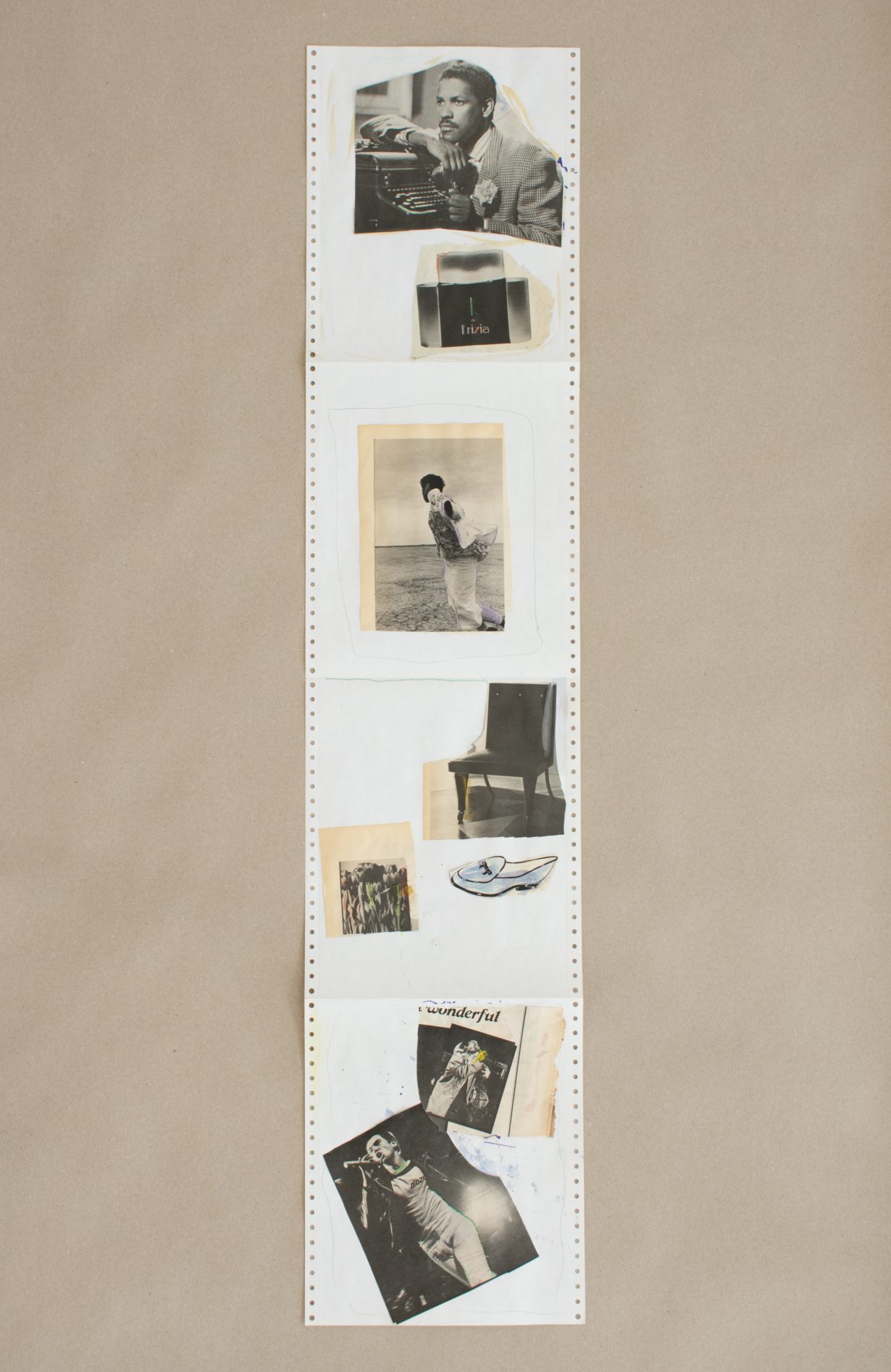
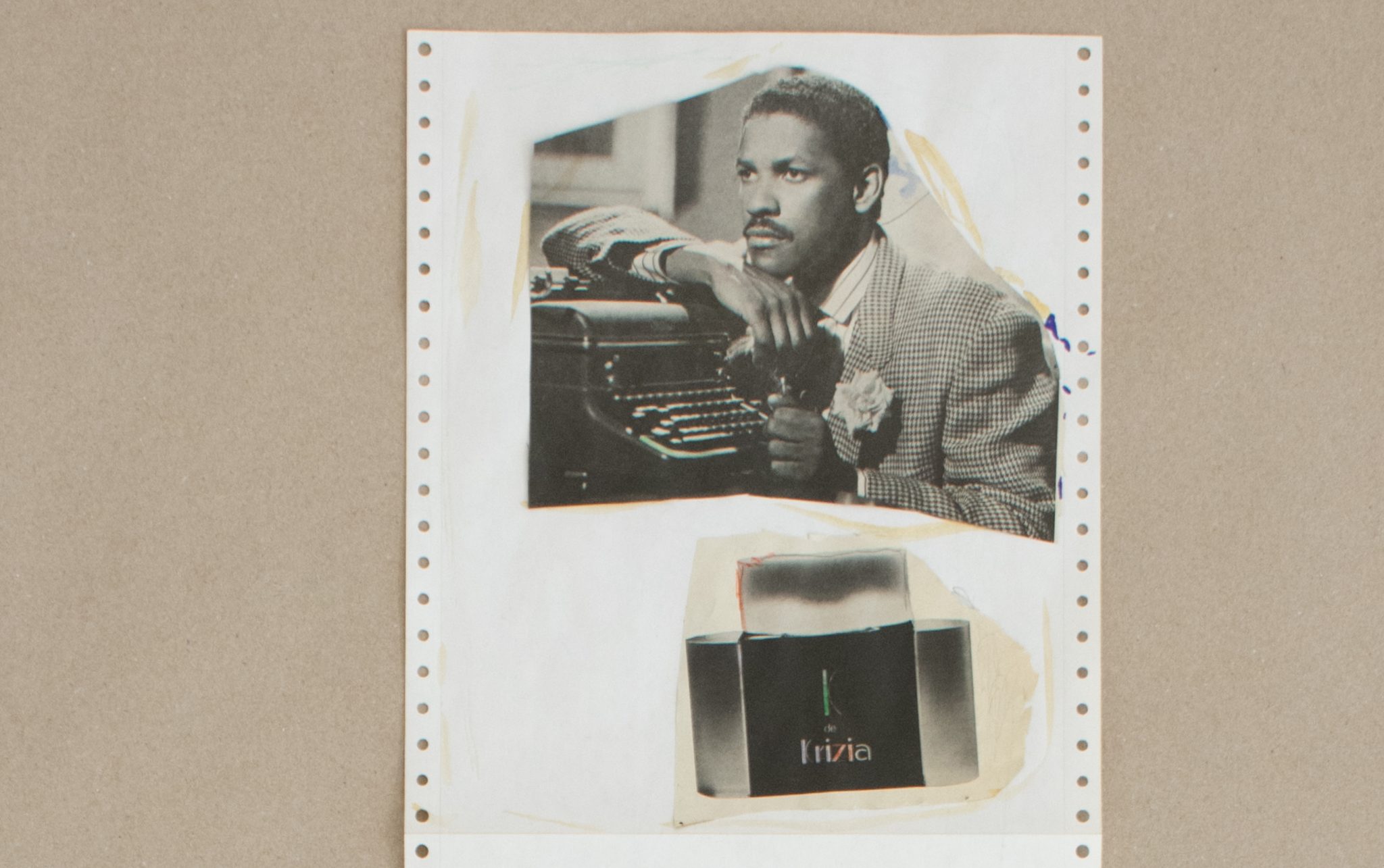
It is not always in the best interest of an idea to become formal and legible, and it is always worth asking what a concept loses by the time it reaches – or produces – its public. Yusuf Hassan’s collages try to undercut the compressive and sterilising nature of mass communication by harkening to the slapdash punk and queercore zines that sustained networks of subculture beginning in the seventies. The BlackMass Publishing founder glues yellowing clipped text with agitated phrases like ‘SLUM’, ‘TEEN IDOLS’ and ‘HEADACHE’ alongside pictures of punk and jazz musicians and sundry objects – a leather chair, a blue penny loafer. There’s a haphazard quality to the cutting, pasting and marking of these photos, which, together with the substrate’s perforated margins, evoke the expansive, inchoate and vital impulses found in the pages of a personal scrapbook.
Here and elsewhere, On the Air recalls the shaggy years of DIY aesthetics that petered out in the late 1990s, though its laconic curating resists waxing nostalgic about a pre-internet era. Instead, the works amplify coarser aspects of the artistic process – a thorny retort to the flattening effects of distribution.
On the Air at Ulterior Gallery, New York, 13 June – 17 July
From the September 2026 issue of ArtReview – get your copy.