And is the quest to document the world ever more than just a bid for control?
Look up. This sprawling group exhibition, presented in two phases and titled after the Palomar Observatory at the California Institute of Technology, attempts to convey through art what the observatory does through its mountain telescope. The breadth of works about outer space spill out of the Renaissance Society’s gallery, into the University of Chicago’s Cobb Lecture Hall and onto the building’s facade, where artists Sarah and Joseph Belknap have installed a handmade solargraphy camera that will produce a yearlong exposure of the sun.
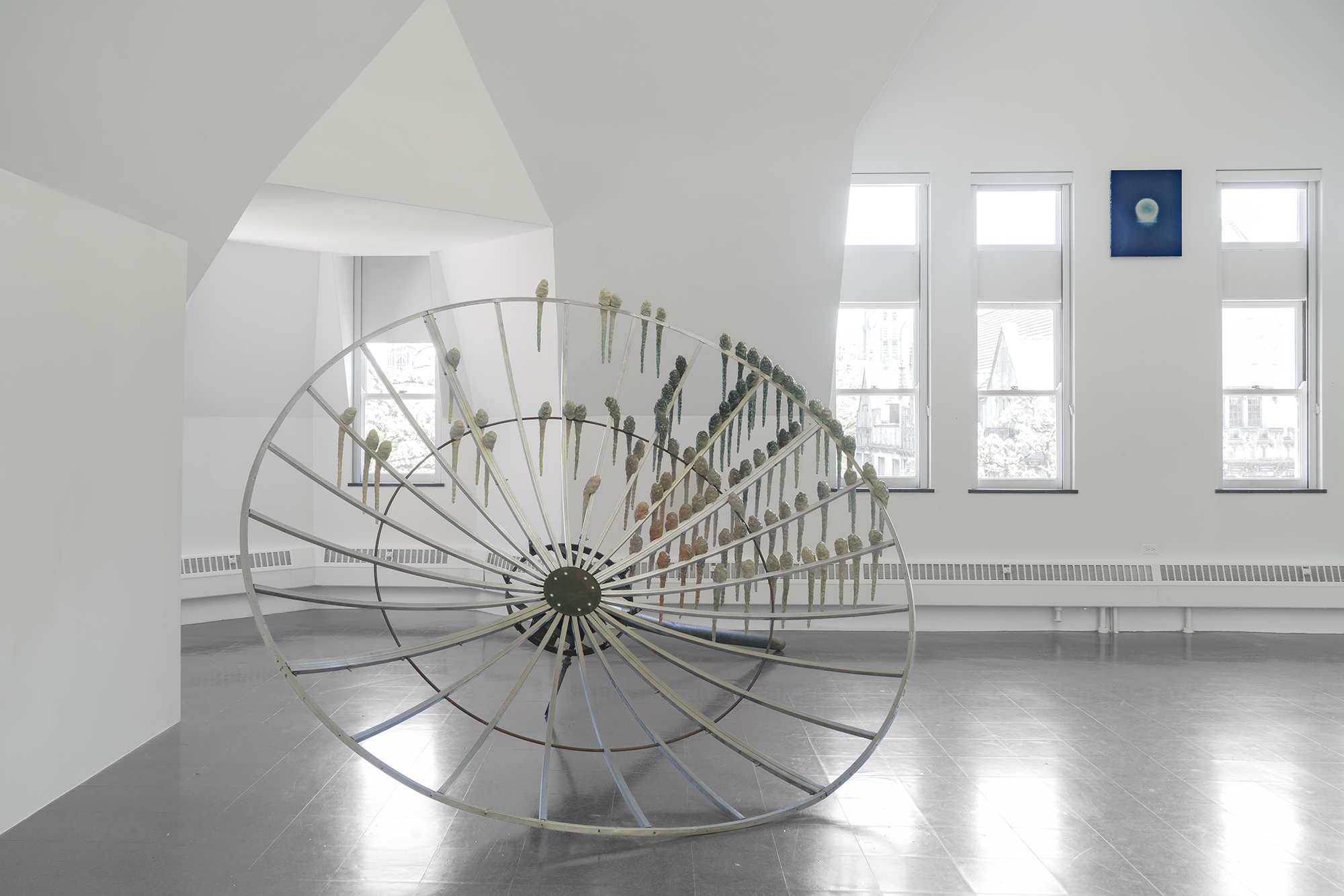
Palomar attempts to survey the sky by constellating disparate works representing a convoluted array of ideas. There’s Erin Shirreff’s single-channel Moon (2010) playing by itself on a pedestalled television, Tony Lewis’s stenographic drawings clustered in twos and threes, John Opera’s Sun/Sky series (2011/2026) displayed high overhead. The effect is disorienting, though at least Eadweard Muybridge’s collotype Animal Locomotion-Plate 755 (1887) and Kathleen Ryan’s sculpture Satellite in Repose (2018) – two anchor-pieces that remain on view from May through July as other works rotate around them – both feature birds. Muybridge’s scientific photograph captures one flap of a pigeon’s wings, while Ryan’s metal satellite-dish is home to a surreal flock whose crumpled ceramic bodies bear traces of force from the artist’s hands. The former makes us reconsider what we think we see, the later what we believe is real.
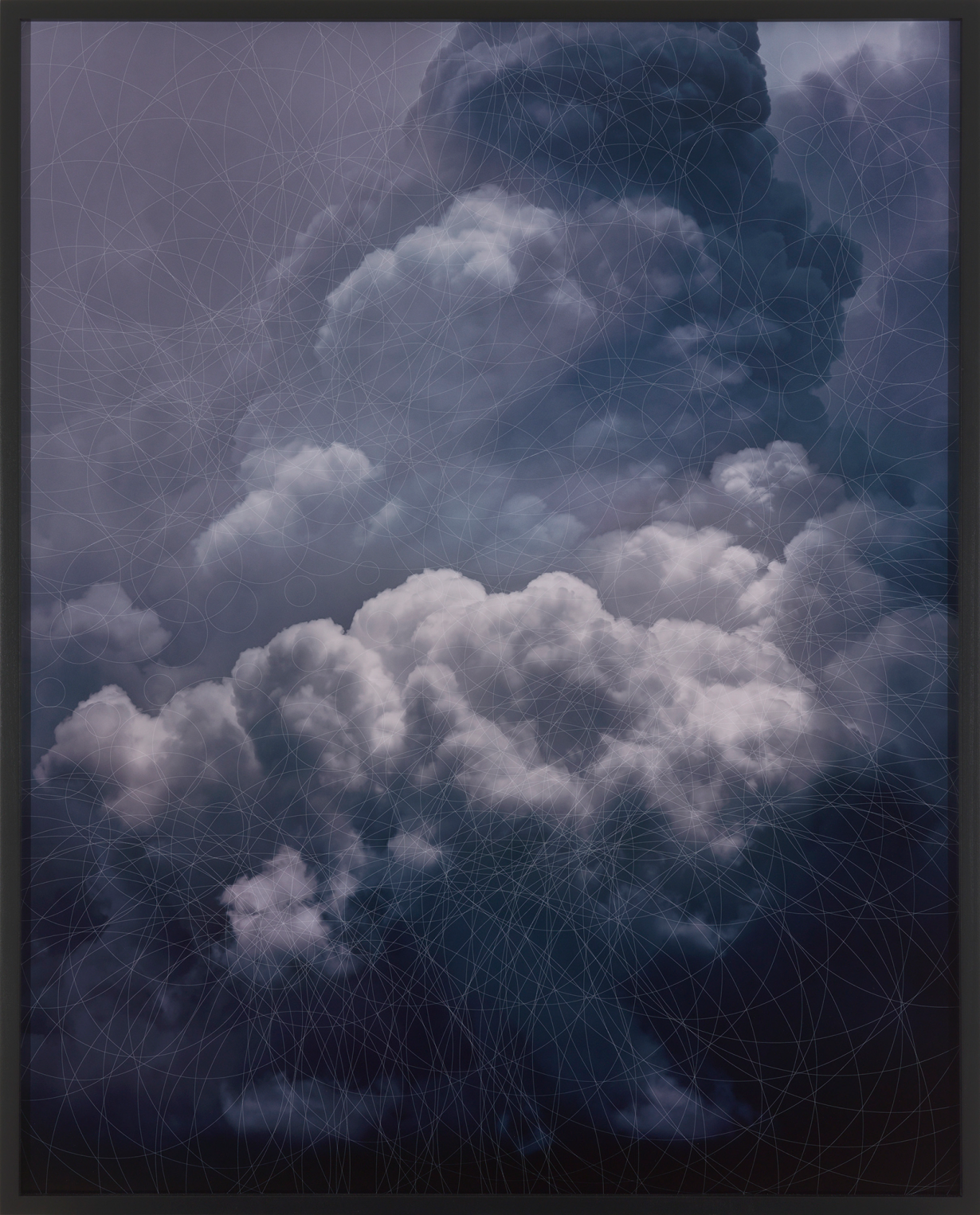
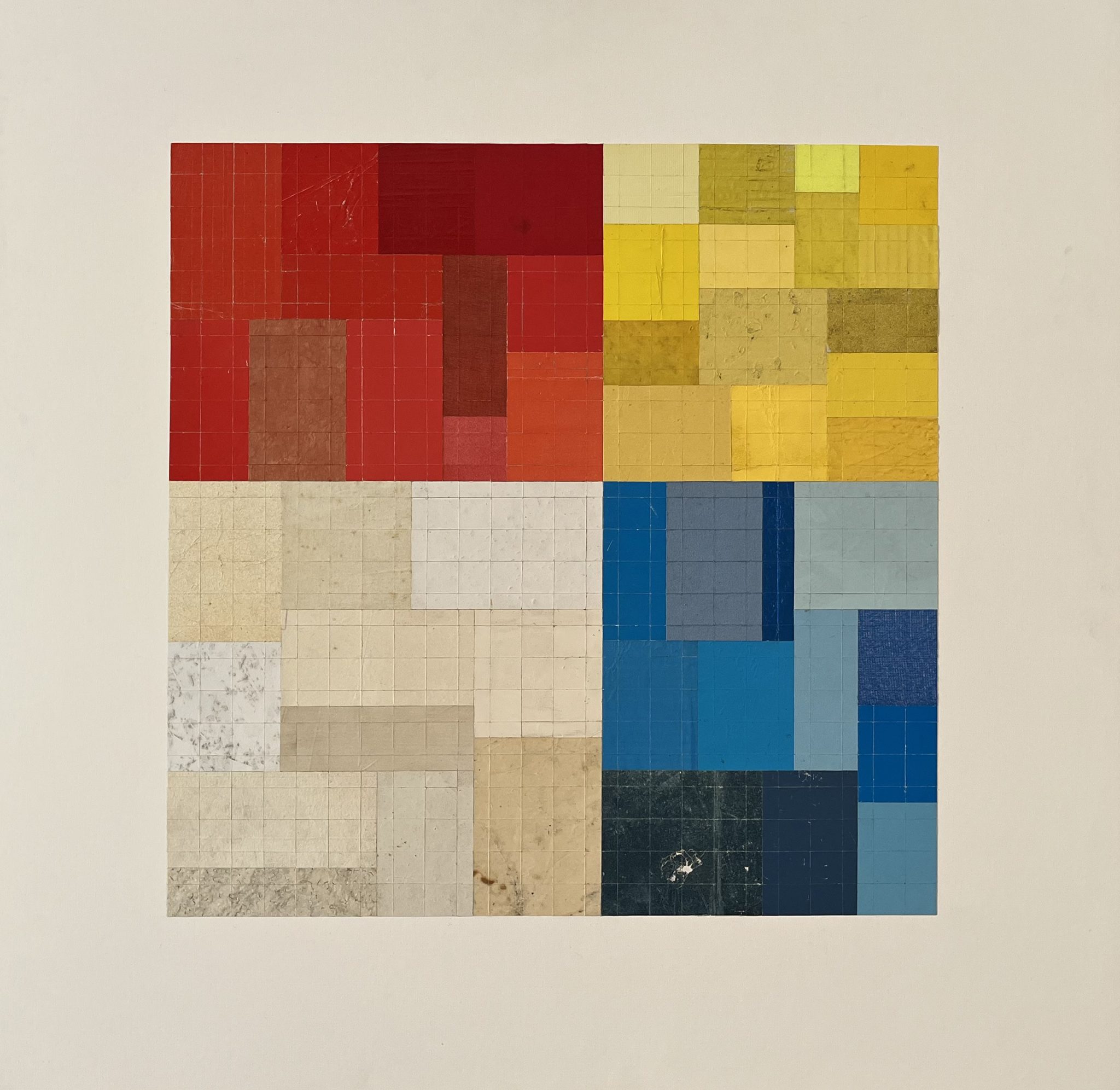
Works in the show by all-in-one artists, researchers and activists like Samira Yamin and Lawrence Abu Hamdan appear to depict atmospheric conditions but point obliquely to fraught historical and current events. Faint concentric circles emanate from the centre of Yamin’s All the Skies Over Syria (2018–21), a collage made from bits and pieces of Time-magazine photos depicting grey, dust-filled skies in Syria published between the start of the country’s civil war and 2019. A storm brews in Abu Hamdan’s Air Conditioning (2022), inkjet prints that translate the data relating to the Israeli F-35 planes and drones that have been detected illegally occupying Lebanese airspace since 2006 into dark, dense, ominous clouds.
Palomar slips almost imperceptibly from these critical, contemplative works into a kind of soft landing, deferring to what one might call stellar aesthetics to hold its curatorial conceit intact; Heji Shin’s photographs Enredo (2024) and Amor Eterno (2024), for instance, are exposures of fireflies in mating season that merely look like stars. But the exhibition is sly in another sense: namely, in the way the first act shifts subtly into the second. In Palomar: Part 1, for example, Sarah and Joseph Belknap’s archival pigment prints 4 months of the sun and 12 months of the sun (both 2014) – created from the duo’s screenshots of images of the star taken by a NASA space- craft – were in black-and-white. In Palomar: Part 2 similar prints reappear in full colour. Meanwhile, the Belknaps’ outdoor camera, slightly visible from one of the gallery’s windows, continues to record the firmament. The quest to document its ever-changing conditions is a bid for control. Palomar can only, at any given time, offer a snapshot of the sky.
Palomar, The Renaissance Society, Chicago, 2 May – 7 June (Part 1); 10 June – 12 July (Part 2)
From the September 2026 issue of ArtReview – get your copy.
Read next The Webb Telescope Shows the Universe as We Hope to See It